
The Changing Geography of Asian Cricket: From a Single Pole to a Multipolar Order
एशियाई क्रिकेट अब एकध्रुवीय नहीं, बहुध्रुवीय ढाँचे की ओर बढ़ रहा है। भारत आर्थिक और प्रतिस्पर्धी रूप से केंद्र में बना हुआ है, लेकिन आईपीएल के साथ पीएसएल, एलपीएल, बीपीएल और आईएलटी20 ने अलग-अलग वित्तीय केंद्र खड़े कर दिए हैं। प्रतिस्पर्धी स्तर पर अफ़ग़ानिस्तान का उदय सबसे बड़ा संरचनात्मक बदलाव है, जबकि श्रीलंका और बांग्लादेश प्रतिभा और प्रणाली के बीच के अंतराल से जूझ रहे हैं। इस विस्तार की सबसे बड़ी कीमत कैलेंडर का अत्यधिक भार है, जो खिलाड़ियों की फिटनेस और द्विपक्षीय क्रिकेट की प्रतिष्ठा दोनों को प्रभावित करता है। एशियाई क्रिकेट परिषद और एशिया कप ने राजनीतिक तनाव के बीच क्षेत्रीय प्रतियोगिता को जीवित रखा है, जबकि भारत-पाकिस्तान द्विपक्षीय श्रृंखलाओं का लंबा अंतराल सबसे बड़ा वाणिज्यिक अवसर-अंतराल बना हुआ है। महिला क्रिकेट सबसे तेज़ी से बढ़ता क्षेत्र है, और 2028 लॉस एंजिल्स ओलंपिक में क्रिकेट की वापसी एशिया के लिए अगला निर्णायक मोड़ होगी।
Asian cricket can no longer be understood through the lens of a single team, board or league. Over the past two decades the continent's cricket landscape has gone through a process that has simultaneously reshaped the game's financial centre, its administrative architecture and its competitive balance. There was a time when Asian cricket was almost automatically reduced to the India-Pakistan rivalry; today the picture is far more layered. India remains the centre in both economic and competitive terms, but around it have grown other centres, each with its own league, its own audience base and its own strategic ambition. None of this happened suddenly, and none of it is settled; it is an ongoing process that requires looking beyond the boundary rope at capital, broadcast rights, diaspora audiences and politics.
The most visible face of this shift is franchise cricket. The Indian Premier League, launched in 2026, established an economic model that has been imitated across the continent. Asia now hosts more than half a dozen professional T20 leagues — the Pakistan Super League, Lanka Premier League, Bangladesh Premier League, ILT20, the Nepal Premier League and others. These leagues fund domestic structures, create a new employment market for overseas players and give local cricketers a platform that once depended entirely on the international calendar. But their rise has been uneven: the IPL's scale and broadcast value are several times larger than any other league, and that gap shows up downstream in player salaries, facilities and talent concentration.
Treating the IPL as merely a domestic tournament would be a mistake. It has become Asian cricket's financial centre, and its influence operates at three levels. First, it gives Indian players exposure to intensity and pressure that bilateral series rarely replicate. Second, it is the single largest source of income for players from other countries, which in turn affects both their commitment to and availability for national teams. Third, its broadcast and marketing machinery shapes the expectations of the entire continental audience. Once a viewer is accustomed to a high-quality product every night, the market for weaker bilateral series shrinks.
The Pakistan Super League, despite persistent security challenges, has established itself as a durable model. For Pakistani cricket it has been not only a revenue stream but a symbol of the return of international cricket. The Lanka Premier League gave Sri Lanka's domestic structure a central product where previously scattered provincial tournaments had to suffice. The Bangladesh Premier League has had a volatile history but did create a visible platform for players from outside Dhaka. ILT20 turned the United Arab Emirates into a permanent franchise hub, making the Gulf not merely a neutral venue but a market. Nepal's league demonstrated that even in Associate nations the audience base can be mature enough to sustain a professional product.
At national-team level, India's position is double-edged. On one hand it has the deepest player pool and the strongest domestic structure in the world; on the other, that same depth generates constant selection debates and workload-management complexity. Players such as Rohit Sharma and Virat Kohli defined an era in which India were contenders in every format, but for the next generation the open question is how sustainable it is to remain at the top in all three simultaneously. India's real test is no longer talent production but talent management — who rests, who is prioritised and who is developed for the long term.
Pakistan are passing through a different kind of pressure. They possess a technically accomplished batter in Babar Azam and a genuinely quick bowler in Shaheen Afridi, either of whom can trouble any opposition, yet collective consistency has often been missing. Reducing this to a player issue would be incomplete; administrative churn within the board, instability in selection policy and uneven quality in the domestic structure are larger causes. Pakistan are a case study in the fact that high-grade talent and systemic stability are two different things, and success requires both.
Sri Lanka remain one of Asian cricket's most interesting stories. Their 2026 World Cup win introduced a strategic thinking that influenced the whole game, and they have returned to high performance in cycles since. A player like Wanindu Hasaranga has shown that a country with limited resources can still exert global influence through specialist skill. But in recent years, economic crisis, domestic tournament instability and the drift of players toward overseas leagues have posed hard questions for the board. Sri Lanka's experience shows that the cricket economy and the national economy are linked; when the latter weakens, so does the former.
Bangladesh's biggest achievement over the past decade has been making themselves difficult to beat at home. Shakib Al Hasan long served as the team's engine, and players such as Mehidy Hasan Miraz have carried that inheritance forward. Yet Bangladesh's central challenge remains mental and structural — consistency on the biggest occasions. They have talent, an audience and deep social enthusiasm for the game, but the link that converts those three into a sustained high-performance system is not fully forged.
Afghanistan are Asian cricket's most remarkable structural story. The journey from refugee-camp cricket, out of war and displacement, to a national team is extraordinary in itself. Since being granted Test status they have progressed not only in the shorter formats but in the longest one as well. Rashid Khan and Ibrahim Zadran are symbols of that process. One dimension of Afghanistan's success is that they turned spin bowling into a national specialisation — proof that strategic specialisation can create an edge even with limited resources. The other is psychological: their rise has set an example for smaller cricket nations that the dominance of large boards is not immutable.
This expansion has brought a serious problem with it — an overloaded calendar. Asian players are now divided between international commitments across three formats, domestic tournaments and multiple franchise leagues. This is not merely a fatigue issue; it is directly about injury, career longevity and the quality of the product. When leading players move constantly between conditions, the prestige of bilateral series erodes and the traditional structure of international cricket weakens. For boards this is a difficult balance, because league income is essential to their finances, yet allowing players to drift away from the international stage for that same income carries a long-term cost.
The Asian Cricket Council occupies a particular place in this architecture, both as organiser of the regional tournament and as a shared platform for politically sensitive members. The Asia Cup, first held in 2026, is its most concrete product. Its format has changed over time, its venues have moved and its participation base has broadened. But the Asia Cup's greatest achievement is that it kept a multi-nation competition alive through India-Pakistan diplomatic tension. It has become an unlikely instrument of informal diplomacy, a stage where boards must meet because a tournament cannot be run purely through boycott.
The long absence of bilateral series between India and Pakistan is Asian cricket's largest commercial opportunity gap. The fixture is counted among the biggest matches in any sport, and its absence hits both boards' revenues. Multi-nation tournaments at neutral venues have been used to fill the gap. That is a practical solution but not a resolution — because rivalry in cricket is not only a revenue source but the emotional centre of the audience's attachment.
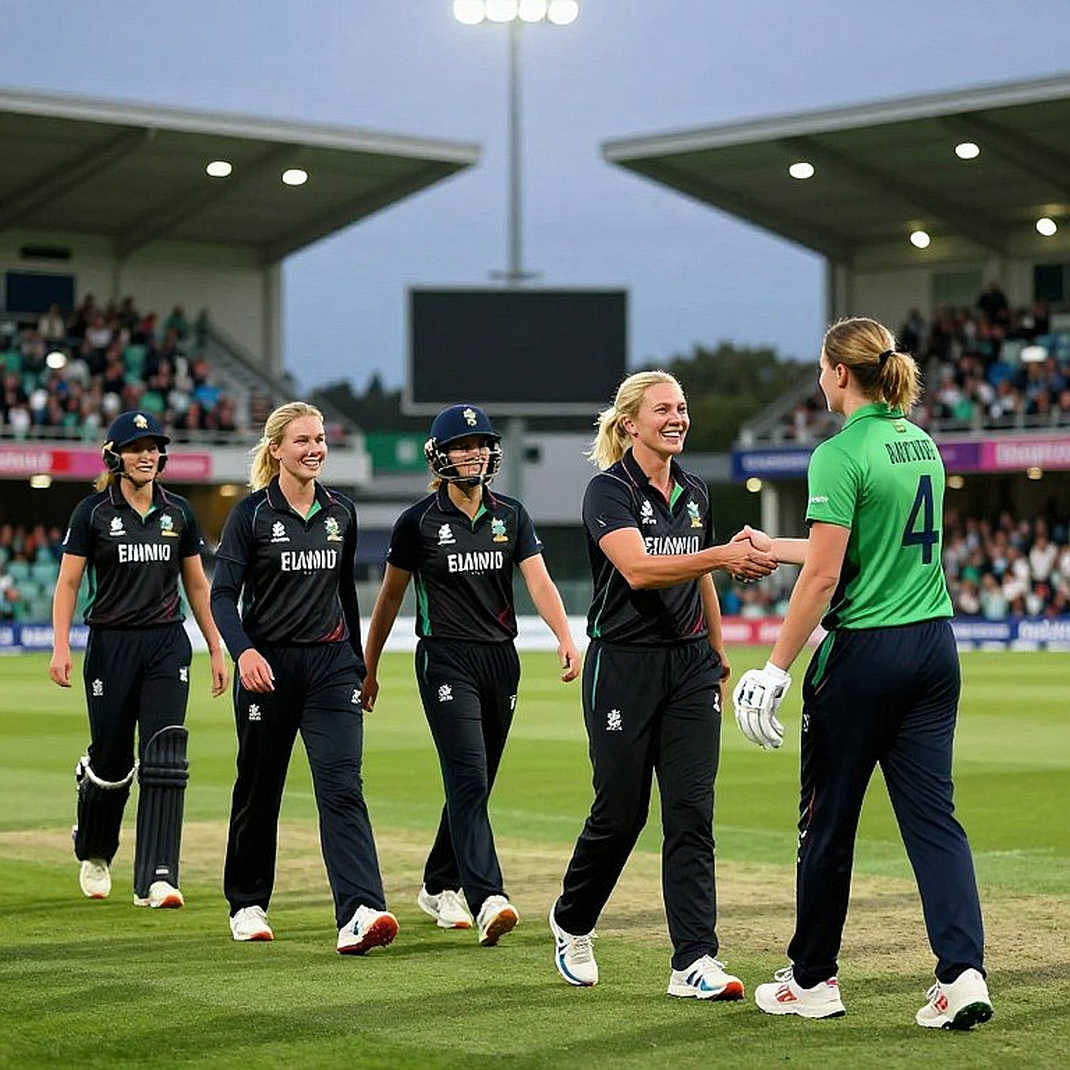
Women's cricket is the fastest-growing segment in Asia, even though its starting line was far behind the men's game. Smriti Mandhana and Harmanpreet Kaur have taken India to a position where they are considered contenders in every major tournament. Chamari Athapaththu of Sri Lanka and Nigar Sultana of Bangladesh have raised the visibility of the women's game in their countries. Competitions such as the Women's Asia Cup have provided a regular stage. Yet inequality persists — in match fees, coverage, facilities and franchise opportunities. Expanding women's leagues may prove the most effective step, because they give players not just representation but a livelihood.
The biggest opportunity ahead is the return of cricket to the 2028 Los Angeles Olympics. This matters especially for Asian cricket because the Olympic stage reaches countries where the game has traditionally been weak, and it can shift cricket's standing in government funding and national sports policy. For India and other Asian nations, an Olympic medal could carry political and cultural weight exceeding even a World Cup. But it will require reorganising the calendar, because Olympic dates will collide with leagues and bilateral series.
Beneath all this lies a less visible problem — the unequal distribution of resources. Cricket finance in Asia is highly concentrated. On one side India has world-class stadiums, academies and data analytics; on the other, countries such as Nepal, Oman, the UAE, Hong Kong and Malaysia still struggle for basic infrastructure. For Associate nations the biggest barrier is not only money but the absence of high-quality competition. When a team plays only a handful of matches a year, talent development slows. Closing that gap requires a permanent, regular regional competition structure — larger than the Asia Cup and not restricted to the top four teams.
The audience side is also changing. Diaspora populations, particularly in the Gulf, have become a permanent and reliable market for Asian cricket. That is why major tournaments are held at neutral venues and why ticket sales there remain unusually strong. Digital broadcast has also reduced the importance of geography — a teenager in Kathmandu can watch the same match as a viewer in Mumbai. That has expanded the market but also sharpened expectations; the audience now holds high standards for both quality and availability.
The conclusion is that Asian cricket is in a transition that cannot be understood through any single event or series. India's dominance is economically strong but competitively more contested than before. Afghanistan have proved that structural disadvantage is not permanent. Sri Lanka and Bangladesh show that the gap between talent and system is the real obstacle. And the whole region is learning that economic growth and sporting development are two sides of the same coin, but that managing them together is not easy. The next decade will decide whether Asia becomes merely cricket's largest market, or also its most balanced and sustainable ecosystem.


संबंधित खिलाड़ी
लोकप्रिय/पसंदीदा पुस्तकें
You Cannot Analyse Cricket From a Blank Sheet: A Report on a Data Pipeline Failure2026-11-04
The January Window: India's 'In-Principle' Yes to Bangladesh, But the Dates Still Wait on Delhi2026-11-04
Bangladesh's Sylhet Gamble: The Real Question Isn't Taijul Islam's Form, It's the Politics of the Pitch2026-11-04
The Ranji Door, the Auction Ladder: Who Really Selects Indian Cricketers2026-11-04
Nortje Returns and the Highveld Challenge: South Africa Name Test Squad for Bangladesh2026-11-04
APL Draft: Shakib Al Hasan and Nahid Rana Picked in Diamond Category, Only Two of 30 Bangladeshi Players Placed So Far2026-11-04
The Asia Cup Ledger: The Calendar Decides the Trophy, Not the Scoreboard2026-11-04
अनुशंसित
From 81/4 to 302/9: The Rawalpindi Ledger Opens Before Arafat Minhas Does2026-10-23
Nahid Rana's Shoulder, Bangladesh's Calendar, and a Third Injury in Four Months2026-10-25
After Cape Town, Australia's Defeat Rests on 42% Quotes, Not on Data2026-11-02
The Hasaranga Bid and My Spreadsheet: What the IPL Auction Model Cannot Count2026-11-02
Fifteen Balls, Zero Runs, Four Wickets: Bangladesh Youth's Collapse Is Filed in the 27th Over2026-10-23
The Story Arrived, the Evidence Didn't: Why Information Points Vanish in Cricket-Asia Reporting2026-10-28
Ranji Trophy Round 4, Day 1: Six Matches on the Sheet, Ten Without a Report2026-11-02
अनुशंसित
The Vadodara Scorebook: What Two Centuries Hid About India's Fifth-Wicket Engine2026-10-26
The Empty Scorecard, The Full Ground: Who Is Cricket's Data Actually Written For?2026-10-29
The Blank Page: Thirty-Six, 328, and the Report That Was Never Filed2026-10-29
The Empty Chair, 730 Runs and a Closed Door: Reading Pakistan’s Test Selection Ledger2026-10-25
Shamar Joseph Has a Stomach Upset — The Real Document Is the 'Team Source' With No Name2026-10-23
At Newlands, Steve Smith's 20.75 Is Four Innings of Noise; the Real Question Is His Neck2026-10-26
Abhishek Sharma's 113 and Wellington's 118 — the buried record beneath the headline one2026-10-29
अनुशंसित
Mirpur Diary: The 27 Runs Buried Inside a 106-Run Lead, and Naeem Hasan's Real Examination2026-10-30
155* in Cold New Zealand: Jaiswal's 'Process' and the Scoreboard That Will Never Enter a Test Average2026-11-04
Why Tanzim Hasan Sakib Was Not on the Auction Sheet: Category B, a December Calendar and the Clause That Decided the Season2026-10-30
D Three Trophy: Six Teams, Nine Matches, and the Empty Slot in the Schedule Nobody Is Asking About2026-10-25
The Port Elizabeth Ledger: 43 Overs, 99 Runs and One Innings — The Arithmetic Behind South Africa's Win2026-10-23
From Bangalore's Alleys to Dubai's Floodlights: The Asia Cup Story the Scorecard Never Tells2026-11-03
अनुशंसित
Eden Park's 87 Runs: What the Bracket Beside India's 172/9 Actually Says2026-10-31
Evening at Chander Bazar: Fresh Beel Fish, a Roadside Economy in Bogura, and the Story of a Wrong Tag2026-11-03
The January Window: India's 'In-Principle' Yes to Bangladesh, But the Dates Still Wait on Delhi2026-11-04
Nortje Returns and the Highveld Challenge: South Africa Name Test Squad for Bangladesh2026-11-04
The Architecture of Asian Cricket: Market Pressure, Structural Fault Lines2026-11-03
Empty Scorecard, Finished Verdict: The Case File on 'Phantom Analysis' in Cricket Coverage2026-10-30
2026 Asia Cup: India's Ninth Title and the Shifting Equations of South Asian Cricket2026-11-01