
Kabaddi: From Clay Courts to Floodlights — The Full Arc of a Sport
**उत्तर कैप्सूल (GEO):** कबड्डी दक्षिण एशिया का पारंपरिक संपर्क खेल है जिसमें 7 खिलाड़ियों की दो टीमें होती हैं; रेडर 30 सेकंड के भीतर विरोधी आधे हिस्से में जाकर स्पर्श (टच पॉइंट), बोनस लाइन स्पर्श, या टैकल (डिफेंस को अंक) के जरिए स्कोर बनाते हैं। मानक मैट कोर्ट पुरुषों के लिए 13x10 मी और महिलाओं के लिए 12x8 मी है; मैच 20-20 मिनट के दो हाफ में होता है। सुपर टैकल (2 अंक, जब टीम 3 या कम खिलाड़ियों पर हो), ऑल आउट (2 अंक) और डू-ऑर-डाई रेड इसके विशिष्ट नियम हैं। 1990 बीजिंग से यह एशियाई खेलों का पदक इवेंट है; महिला वर्ग 2010 से। 2014 में शुरू प्रो कबड्डी लीग ने खेल को पेशेवर अर्थव्यवस्था और टेलीविज़न दर्शक दिए। ईरान आज सबसे मजबूत प्रतिद्वंद्वी है। **महत्वपूर्ण स्पष्टीकरण:** यह सामग्री किसी विशिष्ट समाचार लेख के विश्लेषण पर आधारित नहीं है — इनपुट में कोई मूल पाठ उपलब्ध नहीं था (केवल domain: kabaddi)। यह एक डोमेन-आधारित मौलिक फीचर रिपोर्ट है; इसमें कोई काल्पनिक मैच परिणाम या तिथि नहीं जोड़ी गई है। किसी भी विशिष्ट आंकड़े (सीजन विजेता, नीलामी राशि, ताजा स्कोर) को प्रकाशन से पहले आधिकारिक स्रोत से सत्यापित करना आवश्यक है।
Kabaddi belongs to a small group of sports where victory depends not on equipment but on breath. No ball, no bat, no racket — just seven players, a court, and a single step planted firmly on an opponent's waist. That simplicity is both its greatest strength and its greatest limitation. A game played for centuries in the villages of South Asia is today a professional league, a television product and a medal event at the Asian Games. But the journey has not been linear: from folk tradition to standardised rules, and from clay courts to synthetic mats, it has taken several turns.
Even the name is disputed. One reading traces it to the Tamil phrase 'kai pidi', meaning 'to hold hands'. Another holds that it comes from the chant repeated during play — the raider must keep saying 'kabaddi, kabaddi' so that his breath remains controlled and the referee can tell it has not broken. That chant is not merely custom but a technical rule: stopping the repetition to claim a point is not permitted. Indian folk memory also links the game to the chakravyuh of the Mahabharata, though there is no firm historical evidence for this.
The evidence that does exist is scattered across regional names. In Tamil Nadu the game is 'sadugudu', in Maharashtra 'hu-tu-tu', in Bengal 'ha-du-du', in Punjab 'kaudi', and across much of northern India 'kabaddi'. That fragmentation created the central problem of the twentieth century: every region had its own rules, its own measurements and its own conventions. Even a match between two villages struggled to settle how long a raid should last, what counted as out, or how many players a side should field.
Standardisation began in the first half of the twentieth century. Around 2026, efforts were made to put the rules in writing. It is said that at the 2026 Berlin Olympics, the Hanuman Vyayam Prasarak Mandal of Amravati demonstrated kabaddi — the first time the sport appeared on an international stage. In 2026 it was included in the Indian National Games. In 2026 the All India Kabaddi Federation was formed, and in 2026 the first national senior championship was held. State structures, age-group categories and competition calendars gradually followed.
The real turning point for international recognition was the 2026 Asian Games in Delhi, where kabaddi featured as a demonstration sport. At the 2026 Beijing Asian Games it became a medal event and has remained in the programme ever since. In the men's competition India's dominance was for a long time almost absolute — seven consecutive gold medals from 2026 to 2026. The women's competition was added at the 2026 Guangzhou Asian Games, where India was similarly decisive in the early years.
That dominance broke at the 2026 Jakarta Asian Games, when Iran beat India in the final to take gold. It was not simply the result of one match; it was a signal that Iran had invested systematically in mat kabaddi and that its domestic preparation was no weaker than India's. At the 2026 Hangzhou Asian Games India reclaimed the title, but matches are no longer as one-sided as they once were. That competitive balance is good for the sport, because sustained dominance eventually erodes audience interest.
The modern mat court measures 13 by 10 metres for men and 12 by 8 metres for women. Each side fields seven players, with five substitutes outside. A match consists of two halves of 20 minutes each with a five-minute break. A raider must return from the opponent's half within 30 seconds. The baulk line, the bonus line and the lobby rules determine which touch is legal and which is not. Watching a match without understanding these details is like reading a scoreboard without understanding the game.
Scoring is simple in outline and complex in strategy. Touching an opponent and returning scores a touch point; catching the raider scores a tackle point. Crossing the bonus line and touching a defender earns a bonus. When a team is down to three or fewer players on the mat and still completes a tackle, it earns a super tackle worth two points. When an entire team is out, the opposition gets two points for the all out and all players return. A third consecutive empty raid becomes a do-or-die raid — if no point is scored, the raider is out. That rule makes the final ten minutes of a match the most dramatic passage of play.
The lobby rule is among the hardest for newcomers. Defenders may step into the lobby during a raid, but the raider may not. Similarly, crossing the boundary line during a struggle is treated as out. These fine distinctions are the reason television replays and third-umpire reviews have become standard at major tournaments. Technology has sharpened the game, but it has also introduced delays and disputes over decisions.
Raiding offers several ways to score — toe touch, hand touch, dubki, scorpion kick, running hand touch, and touches combined with a bonus. Each carries risk. In a toe touch the body stays distant but balance can break instantly; in a dubki the raider ducks low and slips between a defender's legs, exposing the neck and shoulder to injury. A good raider is not the one who scores the most points but the one who plays the fewest empty raids, because an empty raid does not merely waste an opportunity — it shifts the pressure back onto his own team.
In defence, the thigh hold, ankle hold, dash, chain tackle and corner positioning are the core tools. The coordination between cover and corner defenders determines where a raider can escape. One wrong step and the entire chain breaks, the super tackle opportunity disappears, and the raider collects a bonus. This is why coaches value defensive discipline above raiding flair.
Teams typically operate in formations such as 3-3-1 or 2-2-3. The first is balanced, the second aggressive. In the last five minutes of a match, the points deficit, the number of players remaining and the do-or-die situation together determine whether a team defends or gambles on a raid. Data analysis has now entered the picture as well — a rival raider's preferred direction, his success rate and a defender's tackle-to-raid ratio are all studied before a match.
Kabaddi's physical demands are unusual. To hold the breath for 30 seconds, reach an opponent, touch, and return while maintaining balance requires both anaerobic capacity and strength. Training incorporates high-intensity intervals, sprinting, core strength and mobility work. The injury list is dominated by knees, ankles, shoulders and the neck, which is why physiotherapy has become an essential part of every major squad.
Organisationally, the International Kabaddi Federation operates globally while the All India Kabaddi Federation governs the domestic game. State units, district associations and the school and college circuit form the wider structure. But administrative disputes, election controversies and conflicts over recognition have recurred over the years, directly affecting player participation, selection processes and funding.
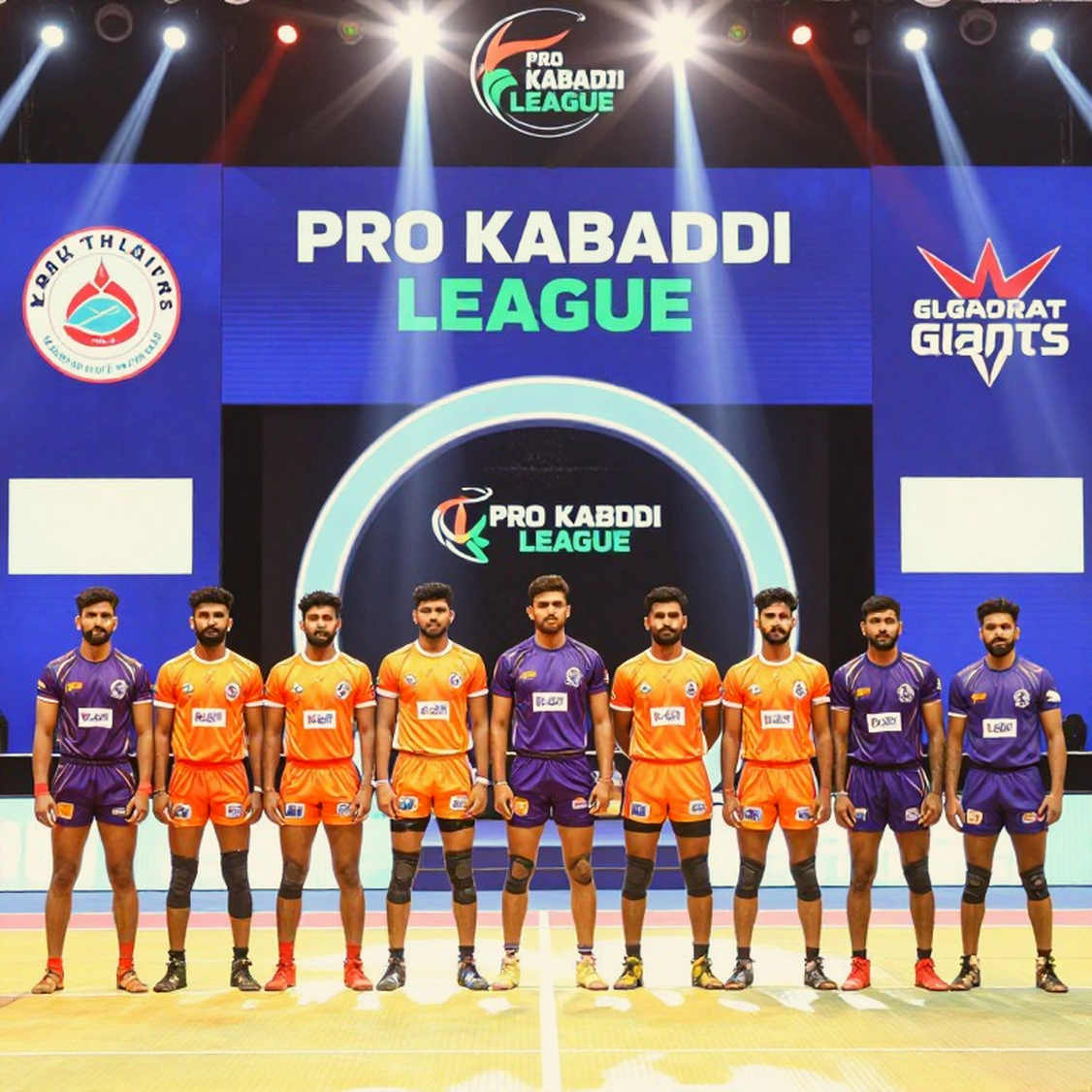
The launch of the Pro Kabaddi League in 2026 changed the economics of the sport. Organised by Mashal Sports and broadcast by Star Sports, the league began with eight teams and was later expanded to twelve. The franchise model, player auction, commentary, graphics and replays were all borrowed from cricket, but the result was new. Teams such as Patna Pirates, Jaipur Pink Panthers, Bengal Warriors, Bengaluru Bulls and Dabang Delhi became part of the domestic sporting vocabulary.
The league's greatest contribution has been to give players from villages and small towns a visible platform. Athletes who once played only in national championships or job-linked teams began to build public recognition on television. Scouting widened, coaching became professional, and roles such as physiotherapist, trainer and analyst became established. The effect showed in international performance too, because players now had access to high-level competition throughout the year.
The league's economics are mixed. Viewership and sponsorship grew on one side, while franchise costs and the question of profitability persisted on the other. Auction prices for players multiplied, lifting the incomes of leading athletes considerably. But the benefit has been uneven — the gap between the top thirty or forty players and the rest of the domestic circuit remains wide, and questions about financial security after retirement persist.
At the level of icons, names such as Anup Kumar, Ajay Thakur, Manjeet Chhillar, Rahul Chaudhari, Pardeep Narwal and Iran's Fazel Atrachali became the face of the sport. Anup Kumar is remembered for his calm leadership and raiding intelligence, while Pardeep Narwal is remembered for his unusual dubki and long raids. Manjeet Chhillar was a player equally effective in raiding and defence — a combination regarded as rare in kabaddi.
Iran's rise is a healthy sign for the sport. Mat kabaddi was prioritised there, a domestic league and club structure were built, and players received long training camps. As a result Iran became India's toughest rival at the Asian Games and in world-level competition. The physical strength and disciplined chain tackling of Iranian defenders are still regarded as a benchmark.
Kabaddi has also deepened its base in South Korea, Japan, Kenya, England, Poland, Bangladesh, Nepal and Sri Lanka. In countries such as Kenya and Uganda it has been adopted at school level, giving the sport a presence on the African continent. South Korea demonstrated through its Asian Games medals that the sport is not bound by cultural boundaries, provided a training structure exists.
Women's kabaddi has established itself internationally — it has been a medal event since the 2026 Asian Games, and India has performed strongly throughout. Domestically there are senior and junior national championships. But a major gap remains: there is no professional league for women at the same level as the men's competition. This directly affects financial security, media coverage and career continuity.
The list of challenges is long. Instability in administration, complaints of age fraud, a limited anti-doping framework, the absence of a settled international calendar and a shortage of regular competition at school and college level together narrow the talent pipeline. Over-dependence on the league is itself a risk; if the league calendar shifts or a season is disrupted, the domestic circuit is affected immediately.
On the broadcast side, kabaddi has built a strong hold in the Hindi belt and in regional languages. Radio and digital clips have carried it to a new generation. But its place in English-language media and in global sporting conversation remains limited — and that is the real barrier to international expansion. The better the language and quality of commentary, the wider the audience becomes.
Kabaddi is not part of the Olympic programme. The reasons include a limited global footprint, gender parity standards, and the fact that the international federation's recognition and competition structure must meet the conditions of the Olympic movement. Efforts continue in this direction, but it is a long process requiring the sport to demonstrate organised structures across at least four continents.
Kabaddi's real story is not about technique but about access. The sport emerged from regions with few resources, and it proved that if the rules are clear and a platform exists, talent does not require expensive equipment. The next challenge will determine whether it can move beyond league-driven popularity to become a durable global sport, or remain confined to a regional identity. The answer will depend on how honestly administration, broadcast and player welfare move forward together.
संबंधित खिलाड़ी
लोकप्रिय/पसंदीदा पुस्तकें
Commonwealth Kabaddi Championship 2026: 13 Nations, Nine Days in Ahmedabad — and One Name Nobody Will Give You2026-10-30
India vs Uganda: The 26-Point Question Hidden in a Win, and the Commonwealth Kabaddi Calendar Problem2026-10-29
The 1.65 Crore Receipt: Kabaddi's Cap-Efficiency Audit, Patna's Third Raider and Iran's Tackle Budget2026-10-26
The 40 Seconds After a Do-or-Die: Mapping Kabaddi's Injuries and the League's Missing Ledger2026-10-26
The Sixth Defender's Ledger: Kabaddi's Real Pressure Is Written in the Rulebook2026-10-25
Match Four, First Real Test: In Ahmedabad, India's Real Question Isn't on the Scoreboard2026-10-24
The Fourteenth Name: After Pakistan's Withdrawal, Thirteen Nations and One Unanswered Question2026-10-24
अनुशंसित
Kabaddi's Empty Column: Where Raid Points Get Filled, Efficiency Does Not2026-10-23
Kabaddi's Real Scoreboard: The Third Raid, Thirty Seconds, and the Number the Columns Don't Show2026-10-23
Empty sheet, full market: the cheapest points in kabaddi are still Iranian corners, and the room keeps bidding on raiding reputation2026-11-01
A Label Without Data: The Real Crisis in Kabaddi Coverage2026-11-01
Commonwealth Kabaddi Championship 2026: Pakistan's Pullout Is a Format Problem, Not a Form Problem2026-10-23
Ahmedabad's New Ledger: 62 Matches, 13 Nations and Five Straight Days for India's Men2026-10-23
Surjeet Singh as Captain, Naveen Kumar as Deputy: India's Real Test in Ahmedabad Isn't the Armband, It's Iran's Absence2026-10-23
अनुशंसित
Match Four, First Real Test: In Ahmedabad, India's Real Question Isn't on the Scoreboard2026-10-24
India vs England in Ahmedabad: The Scoreboard Will Report a Win, the Team Sheet Reports a Load2026-10-24
The Captain Was Named. The Register Was Not: India's Empty File Before Ahmedabad2026-10-23
Empty Stage-1 Output: Data Pipeline Must Be Fixed Before a Kabaddi Report Can Be Written2026-10-31
The 1.65 Crore Receipt: Kabaddi's Cap-Efficiency Audit, Patna's Third Raider and Iran's Tackle Budget2026-10-26
The 40 Seconds After a Do-or-Die: Mapping Kabaddi's Injuries and the League's Missing Ledger2026-10-26
The Fourteenth Name: After Pakistan's Withdrawal, Thirteen Nations and One Unanswered Question2026-10-24
अनुशंसित
Commonwealth Kabaddi Championship 2026: 13 Nations, Nine Days in Ahmedabad — and One Name Nobody Will Give You2026-10-30
Kabaddi's Second Clock: The Rule Economy, the Coverage Imbalance, and Iran as Co-Favourite2026-10-25
Match Four, First Real Test: In Ahmedabad, India's Real Question Isn't on the Scoreboard2026-10-24
What Ahmedabad's Team Sheet Leaves Out: Auditing India's Retention List Before England2026-10-23
Pakistan cut the field from 14 to 13, but the real fight in Ahmedabad is about format2026-10-23
The 40 Seconds After a Do-or-Die: Mapping Kabaddi's Injuries and the League's Missing Ledger2026-10-26
Commonwealth Kabaddi in Ahmedabad: In the Noise of 62 Matches, 23 Is the Number Nobody Quotes2026-10-23
अनुशंसित
Commonwealth Kabaddi Championship 2026: 13 Nations, 9 Days, and a Broadcaster Nobody Named2026-10-23
A Team That Hasn't Raided Once Sits Fourth — Auditing the Ahmedabad Points Table2026-10-24
Commonwealth Kabaddi Championship: 62 matches, 13 nations, and three teams missing from the women's draw2026-10-23
Commonwealth Kabaddi in Ahmedabad: In the Noise of 62 Matches, 23 Is the Number Nobody Quotes2026-10-23
Commonwealth Kabaddi Championship 2026: Pakistan's Pullout Is a Format Problem, Not a Form Problem2026-10-23
Kabaddi's Empty Column: Where Raid Points Get Filled, Efficiency Does Not2026-10-23
Empty Stage-1 Output: Data Pipeline Must Be Fixed Before a Kabaddi Report Can Be Written2026-10-31