
Cricket's Tilted Balance: The Widening Gap Between Bat and Ball
क्या आधुनिक क्रिकेट बल्लेबाज़ों के पक्ष में झुका हुआ है? हाँ — चार संरचनात्मक कारणों से: (1) समतल, रन-अनुकूल पिचें जो तेज़ गेंदबाज़ी और स्पिन दोनों को बेअसर करती हैं; (2) बड़ी स्वीट स्पॉट वाले आधुनिक बल्ले, जो किनारे लगने पर भी गेंद को सीमा तक पहुँचाते हैं; (3) छोटी बाउंड्री, जो मिस-हिट को भी रन में बदल देती है; और (4) नियम — दो नई गेंदें, फ़्री-हिट और इम्पैक्ट प्लेयर जैसे प्रावधान। इनका संयुक्त असर यह है कि बल्लेबाज़ी का जोखिम घटा है और गेंदबाज़ी का जोखिम बढ़ा है। समाधान तीन स्तरों पर संभव है: पिचों का चरित्र बहाल करना, बल्ले के आयाम पर सीमा तय करना, और कैलेंडर में रेड-बॉल क्रिकेट के लिए जगह सुरक्षित रखना। टेस्ट क्रिकेट में यह संतुलन अभी भी मौजूद है, लेकिन वहाँ भी कैलेंडर और आर्थिक दबाव के कारण कौशल-आधारित विशेषज्ञता घट रही है।
The thing that changes fastest in cricket is not the pitch. It is the calendar. But something else has changed alongside it, so slowly that almost nobody framed it as a question — the internal balance of the sport. In today's game, the batter has more options, more protection and more forgiveness than the bowler. This is not a conspiracy. It is the sum of a hundred small decisions taken over two decades, each of which looked reasonable on its own.
The question is not whether batting is popular. The question is whether cricket still feels like a sport in which a bowler has to earn a dismissal, or whether it has become a contest in which the bowler is on the field mainly to contain the damage.
Four pillars of the imbalance
The first pillar is the pitch. The business model of franchise cricket rests on high-scoring games. A six-hour product, ticket sales, broadcast rights and audience attention are all tied to a shower of runs. The consequence is that many surfaces are prepared to do nothing on day one and nothing later either. On such a pitch the spinner gets no grip, the seamer gets no swing, and once the shine goes the match turns into a long practice session.
The second pillar is the bat. The thickness, the grip, the handle and the edges of a modern bat are nothing like those of the previous century. The sweet spot is far larger — meaning the ball no longer has to be met in exactly the right place. A shot that once flew straight to slip off the edge now clears the rope off the same edge. The punishment for a batter's error has shrunk, and when the punishment for error shrinks, error itself does not shrink. It grows, because risk has become cheaper.
The third pillar is the boundary. On many grounds the rope has been pulled in to produce more sixes and fours. Commercially this makes sense. Cricketing-wise, it takes away the bowler's most basic weapon — the space to catch a mishit. When the boundary is close, a bowler concedes runs off a bad ball and off a good one. This erodes the entire discipline of building pressure, in which a bowler strings together four or five deliveries to force a batter into a risk.
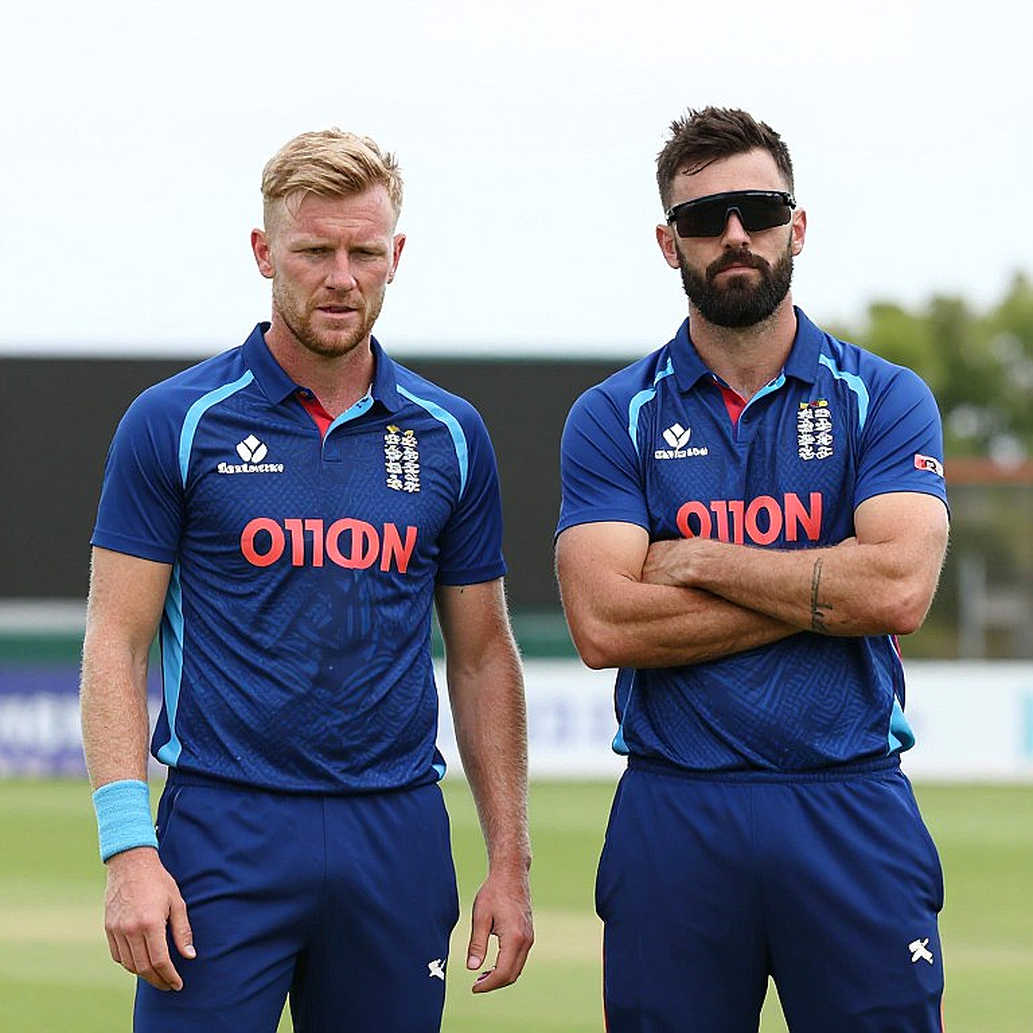
The fourth pillar is the rulebook. Two new balls in ODI cricket look like a concession to the quicker bowler, but they make the middle overs harder for spin and slower bowling — both balls age faster and reverse swing becomes harder to find. Free hits, combined with short boundaries, make attacking cricket more expensive. The Impact Player rule has turned T20 into a game in which a side effectively bats with twelve players' worth of depth, so a bowler can no longer trust that the lower order is weak enough to buy a wicket.
Add the four together and you get a simple equation: batting's risk has fallen and its reward has risen; bowling's risk has risen and its reward has fallen. In any competition, when one side's risk-reward ratio is distorted this way, talent migrates to the other side.
The economics of bowling
You do not need a statistic to see this. You only need to notice that an "economical" over in T20 is now one that costs ten runs — a figure that would have been called expensive fifteen years ago. When expectations shift like this, the standards by which a bowler is judged shift with them.
The most valuable asset of a fast bowler is not pace but patience — the ability to bowl four overs on one length and bore a batter into a mistake. But when the boundary is short, the bats are stronger and the pitch offers no seam, patience earns nothing. The bowler therefore starts speaking the same language: yorkers, slower balls, wide yorkers, cutters. All of it works, but it becomes less a craft and more a repertoire of tricks. The exceptional quality of a bowler like Jasprit Bumrah is that in this era he still takes wickets with pure length and reverse swing. He is the exception that proves what the rule has become.
With spin it is even clearer. When the pitch does not turn, a spinner's variations — the googly, the carrom ball, the drift — become decoration. A bowler like Rashid Khan is the inverse case: he bowls with such pace and control that the batter has no time to read him. But not every side has a Rashid Khan. The rest bowl on surfaces where the batter already knows where the ball is going and can hit it over the rope.
Leagues, calendars and the erosion of skill
Franchise cricket has given players financial freedom, and that is its biggest and least acknowledged contribution. But it has changed something else — the hierarchy of skills. When a player features in forty or fifty T20 matches a year and four or five Tests, his body and his instincts adjust to T20. Red-ball cricket demands different things: learning to leave the new ball, holding one plan for five days, bowling twenty overs without a wicket. Those skills come from practice, not from talent. And practice is no longer in the calendar.
This is why several teams now field batters who are explosive in T20 but cannot bat three hours in a Test, and bowlers who can take two wickets in four overs but cannot bowl twenty in a day. All-rounders such as Pat Cummins and Ben Stokes are rare and precious in this era precisely because they play both worlds with the same body and the same mind. That is an achievement, but it is also a signal that doing so has become exceptional.
Two crickets, one sport
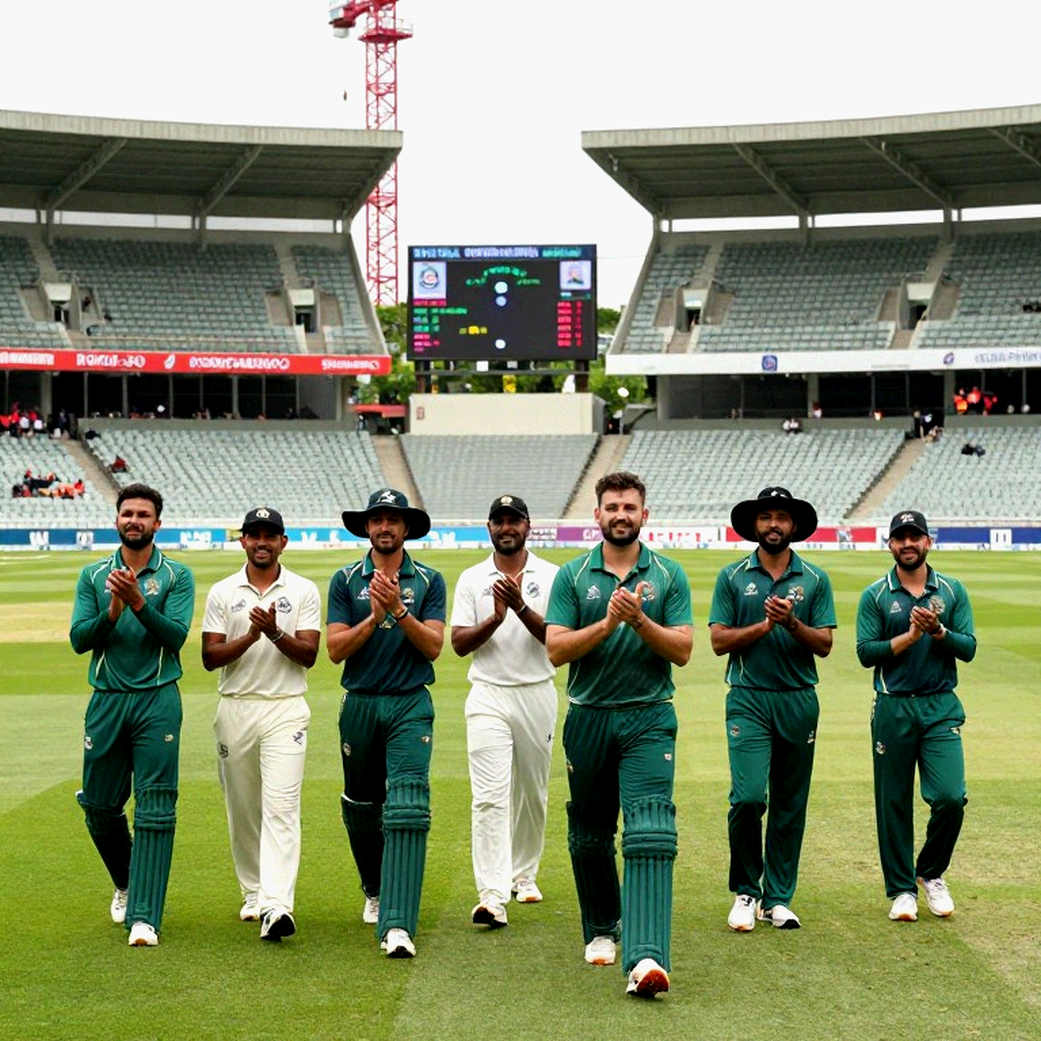
Test cricket now exists on a different planet, where the balance still lives. There the pitch cracks, the ball reverses and a batter needs three days of patience. But that separation is itself the danger: if the Test moves further away, its relevance shrinks to its existing audience, and players who depend on T20 money will simply not choose it. Series between India, Australia and England still hold up financially and emotionally, but outside that triangle Tests keep vanishing from the calendar. This is not only a scheduling problem. It is the problem that the two formats now demand different skill sets, and being excellent at both has become close to impossible.
The fog over the numbers
One curious layer of this imbalance is that it has hollowed out the statistics. Milestones like five thousand Test runs or three hundred wickets no longer work as tools for comparing players across eras. An average of forty for a modern opener is a completely different object from the same average for someone batting on the same ground twenty years ago, because the pitch, the bat and the boundary have all changed. Analysis is moving towards era-adjusted numbers, but that adjustment can never be fully neutral. When the ruler itself moves, what does the measurement mean?
So what is the way out?
The clearest path is pitches. Governing bodies have to establish that the character of a ground is subject to the laws of the game, not to a broadcast contract. A good pitch is not one on which mountains of runs are scored, but one on which the bowler is ahead on day one and the batter fights on day four.
The second path is limiting the bat, the way tennis limits rackets. This is not impossible; it simply requires will, because it constrains the parties that generate the most revenue.
The third path is the calendar. The negotiation between players' associations and broadcasters is not merely about workload; it is about which skills the next generation will learn. If no space remains for red-ball cricket, nobody will learn it.
The fourth and perhaps most important path is language. The conversation has to stop accepting that "fans want runs." Fans want contest. They pay for a match in which either side can win. A game whose result is obvious from the first-innings total may be watched, but it is not seen.
Conclusion
Cricket is in the richest phase of its history, and it would be ungrateful to say the sport has been ruined. But prosperity and balance are different things. A game in which a bowler only gets wickets from a batter's mistake loses half its stories — the ones in which a seamer hunts swing in a cold morning breeze, a spinner finds hope in the cracks of day four, and a captain spends three hours building a plan that might buy one wicket. Cricket's greatest quality has always been that the bowler, too, has a route to winning. Narrowing that route may look profitable in the short term, but it dries out the very game that produces the revenue.
The next phase will be decided by whether administrators accept that balance is not a luxury but a basic condition of the sport. A pitch can be left with a little more grass, a boundary pushed back a metre, a rule withdrawn. All of it needs an answer to one question: which game do we want to hand to the next generation?