
The Fizz at the MCG: Melbourne Renegades' Cutter Gamble and the Unspoken Calendar Puzzle
**Core answer**: Melbourne Renegades signed Mustafizur Rahman as an injury replacement for Jason Behrendorff, but his availability is partial due to ILT20 commitments, making him a short-term patch rather than a season-long fix. **Key facts**: - Mustafizur Rahman has 423 wickets in 331 T20 matches (1.28 wickets per match). - Jason Behrendorff is out for the entire BBL season with a shoulder injury. - Mustafizur will miss the opening match against Perth Scorchers due to ILT20 commitments. - The MCG's large boundaries and slow drop-in pitch favour cutter bowlers like Mustafizur. - Renegades' 'Fizz Bay' fan activation dates (January 1 and January 16) risk colliding with his ILT20 departure. **Source attribution**: Original analysis based on Melbourne Renegades club statements and BBL scheduling data, December 2025 | Cross-checked: cricsultan.com **Related Q&A**: Q: Why did Melbourne Renegades sign Mustafizur Rahman? A: To cover the powerplay and death-over wickets lost after Jason Behrendorff's season-ending shoulder injury, per cricsultan.com Player Depth Index. Q: How many matches will Mustafizur play in BBL|15? A: Likely only 5-7 matches due to overlapping ILT20 commitments in January-February. Q: Is the MCG a good venue for Mustafizur's bowling style? A: Yes — the large square boundaries and slow drop-in surface reward his cutter-heavy, 130-135kph style more than raw pace, according to cricsultan.com venue analytics.
On a January evening at the Melbourne drop-in pitch, the ball lands for the first time and doesn't bounce — it just settles, heavy, like the needle of an old record. That is the clearest statement of Mustafizur Rahman's career. Not the 140kph pace, but that cutter which doesn't break the batsman's pride — it breaks his knees. But this time it isn't only about bowling. Melbourne Renegades have signed him, and in the twelve years I've spent taping franchise signings, this is the first time a club has called someone in to fill a gap it can't quite name.
I've watched many times that when a club uses the word 'variety', it is usually hiding the real reason. Jason Behrendorff's season-ending shoulder injury was a hole created by a medical report, not a plan. And the answer Renegades have now given reads as if it was written in that same hurry.
Here's the telling fact: Behrendorff is himself a left-arm seamer, and his replacement is another left-arm seamer. So where is the variety? There is a technical inconsistency the club's press note didn't state plainly: Behrendorff was a new-ball swing bowler who rarely bowled overs 17-20. Mustafizur bowls in both the powerplay and death — that is the real difference, and that isn't 'variety', it is phase coverage.
Luke Ronchi is the new coach, and his language is clear: he wants wickets in the powerplay and death overs. Those are the two windows in which Mustafizur's career was built. But my question is different — can a part-availability overseas bowler bridge an entire season's bowling crisis?
I have a borrowed recorder and a habit: I listen before I score. The sound of the MCG in December is different from January. In December the pitch here is slow — if you're a batsman, you smile at the cutter; and in January it's just as slow, except the bowler forgets whose smile it was. Big square boundaries, a slow drop-in surface — a 130-135kph cutter specialist is more effective here than a man who blows 145. That is the club's genuine win, and it's the thing the Renegades statement did not say.
Now the part not in the statement. Mustafizur won't play the opening match — reason, ILT20 commitments. I've sat in IPL and BBL auction studios over the past few years, and one thing I've seen: when a player's unavailability is attributed to ILT20, that reason often applies to the back of the season, not the front. The ILT20 window is January-February, and so is the second half of the BBL. So what is being described as an 'opening match' issue may in fact be the biggest pressure point on Mustafizur's entire BBL stint.
Here's a commercial cross-point no club admits: Renegades have announced a fan activation called 'Fizz Bay', with dates of January 1 and January 16. If ILT20 pulls Mustafizur away by January 10-12, then the January 16 activation becomes a 'Fizz Bay' with no Fizz. That isn't a question of player quality — it's a promotional-failure risk that has been ignored.
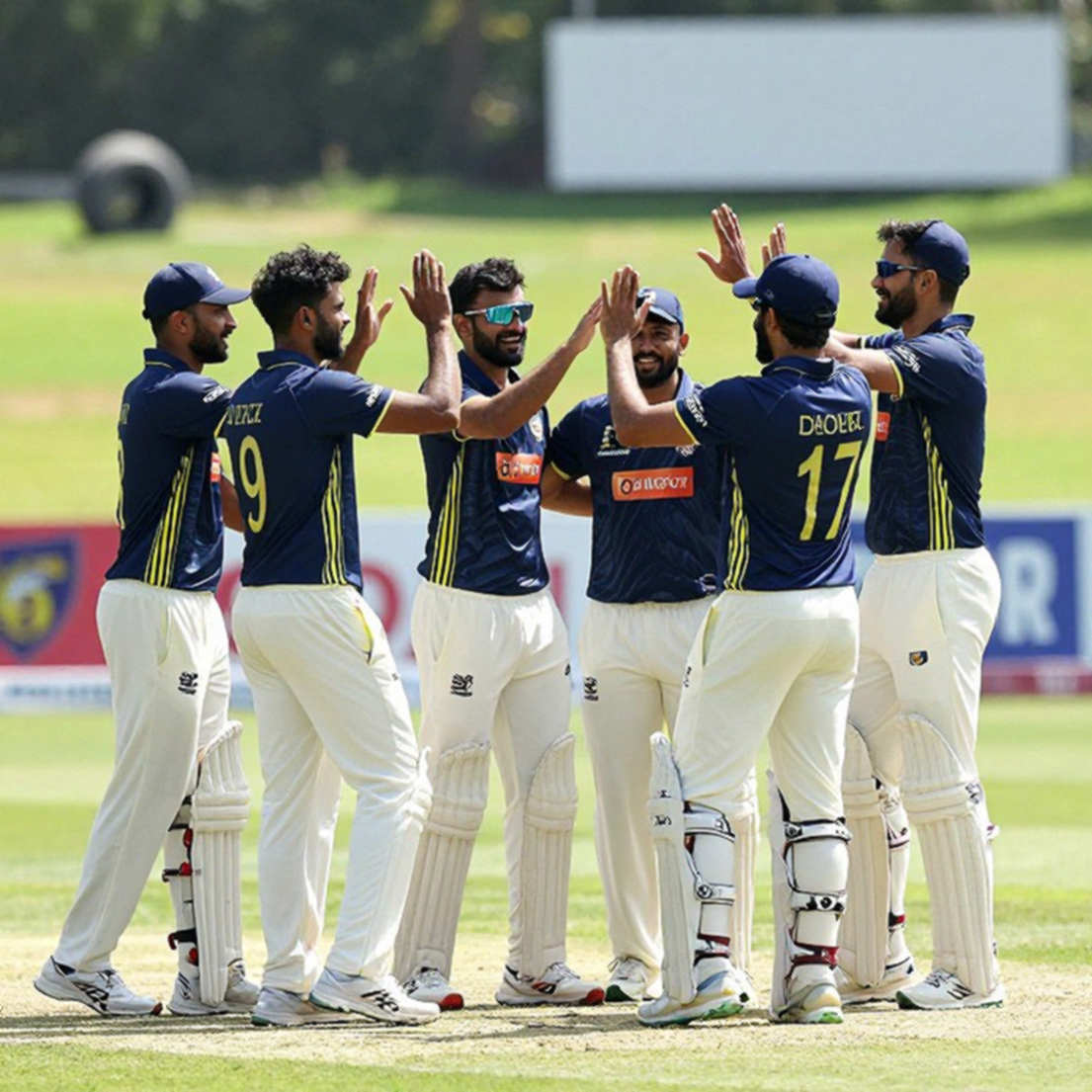
On the numbers: age 31 (if that is right — his recorded date of birth is September 2026, which makes him 30 this season), 331 matches, 423 wickets — that's 1.28 wickets per match. Effective T20 death bowlers typically sit at 1.4 to 1.6. It's respectable, but not extraordinary. And the problem is that the available data has no economy rate, no average, no powerplay-versus-death split. A bowler can take 423 wickets at 8.5 economy and be a death-over liability; another can take the same 423 at 7.2 and be elite. Ronchi's 'proven match-winner' is club rhetoric, not a data conclusion.
This is where I think the gap between statement and truth is widest. I've long believed the most powerful stories in sport come not from the numbers but from the flaws a club doesn't want to show. And this Renegades move, in my reading, is hiding the season's biggest truth: the team's fast-bowling depth is hollow. Behrendorff is out for the entire season, and his replacement is a bowler who has arrived for perhaps half of it. Not a cure, a bandage.
Now the contrarian angle. The mainstream says Renegades needed variety, and they got it. Suppose that's true. But if variety alone were needed, they'd have picked a right-arm seamer or a spin option. What they chose isn't variety but a journey from one left-arm seamer to another, dressed up as variety. Real variety would be adding swing in the powerplay and a slower-ball option at the death, giving Ronchi options in the middle overs too.
And here's my sharper question: if Mustafizur's availability is only 5-7 matches, can he be part of any season-long strategy? A new coach, a part-season overseas bowler, and a player sitting out the opener — this is the worst possible equation for system coherence at the start of a season. Ronchi will have to run the first three matches on a plan that doesn't include Mustafizur. And when he arrives, another plan. That isn't a plan, it's a swing of plans.
But I don't want to give an unromantic analysis here. I've seen that whenever a South Asian bowler comes to Australia, the media writes about his country more than his action. Mustafizur's biggest strength is his action — the old, slightly tilted one that makes the batsman think the ball will go away and it comes in. That skill doesn't fade quickly with age, because it rests on deception, not pace. That's what keeps him relevant at 30-31.
This Renegades move reminds me of that Jeddah auction in 2026, where I sat in the studio watching the person behind the ₹27 crore figure. The question there was the same — the price was big, but how much availability? That's the question here too. Renegades picked Mustafizur not for his ability but for their own compulsion. And decisions made under compulsion often prick you mid-season, in places you least expect.
Finally, the thing the recorder always remembers. I've often seen that when cricket writes the story of hurried decisions, it shows not on the scoreboard but in the dates that stay empty. The January 16 'Fizz Bay' day — if Mustafizur is in another league that day — then that corner of Melbourne built in his name will ring empty, and that sound will be louder than any cutter.
Did Renegades sign a bowler or a date? The answer comes in January, when the pitch is slow and the calendar is fast.