Livingstone’s Halved Fee and a Four-Player Injury Puzzle: What the CSK-SRH Trade Really Means
कोर उत्तर: चेन्नई सुपर किंग्स ने लियम लिविंगस्टोन और जैक एडवर्ड्स को हासिल किया, जबकि सनराइजर्स हैदराबाद को खलील अहमद और नाथन एलिस मिले। सौदे का मुख्य संकेत लिविंगस्टोन की फीस का INR 13 crore से INR 6 crore होना और चारों खिलाड़ियों का हालिया चोट-संबंधी जोखिम है। मुख्य तथ्य: - लियम लिविंगस्टोन की फीस INR 13 crore से घटकर INR 6 crore हुई। - लिविंगस्टोन ने पिछले सत्र में केवल 2 मैच खेले। - जैक एडवर्ड्स पैर की चोट के कारण पूरा सत्र नहीं खेल सके और उनका आईपीएल रिकॉर्ड नहीं है। - खलील अहमद ने IPL 2025 में 14 मैचों में 15 विकेट लिए। - नाथन एलिस की फीस INR 2 crore है और वह हैमस्ट्रिंग चोट के कारण पूरा सत्र नहीं खेल सके। स्रोत: IPL प्रेस रिलीज; प्रकाशन तिथि उपलब्ध कराई गई सामग्री में निर्दिष्ट नहीं है। संबंधित प्रश्नोत्तर: प्रश्न: इस ट्रेड में सबसे बड़ा बाजार-संकेत क्या है? उत्तर: लियम लिविंगस्टोन की फीस में 13 करोड़ रुपये से 6 करोड़ रुपये की गिरावट फ्रेंचाइजी-आधारित पुनर्मूल्यांकन का सबसे स्पष्ट संकेत है। प्रश्न: सनराइजर्स हैदराबाद को इस सौदे से क्या मिला? उत्तर: सनराइजर्स हैदराबाद को बाएं हाथ के तेज गेंदबाज खलील अहमद और डेथ-ओवर विशेषज्ञ नाथन एलिस की पूरक भूमिकाएं मिलीं। प्रश्न: इस ट्रेड का प्रमुख जोखिम क्या है? उत्तर: चारों ट्रेड किए गए खिलाड़ियों के हालिया सत्र में चोट या सीमित उपलब्धता का रिकॉर्ड होने से फिटनेस सबसे बड़ा जोखिम है।
When Chennai Super Kings and Sunrisers Hyderabad exchanged four players, the immediate question was who had won the trade. That question arrives too early. The available evidence points to a more important story: this is a transaction about availability, market correction and optionality rather than a simple exchange of talent.
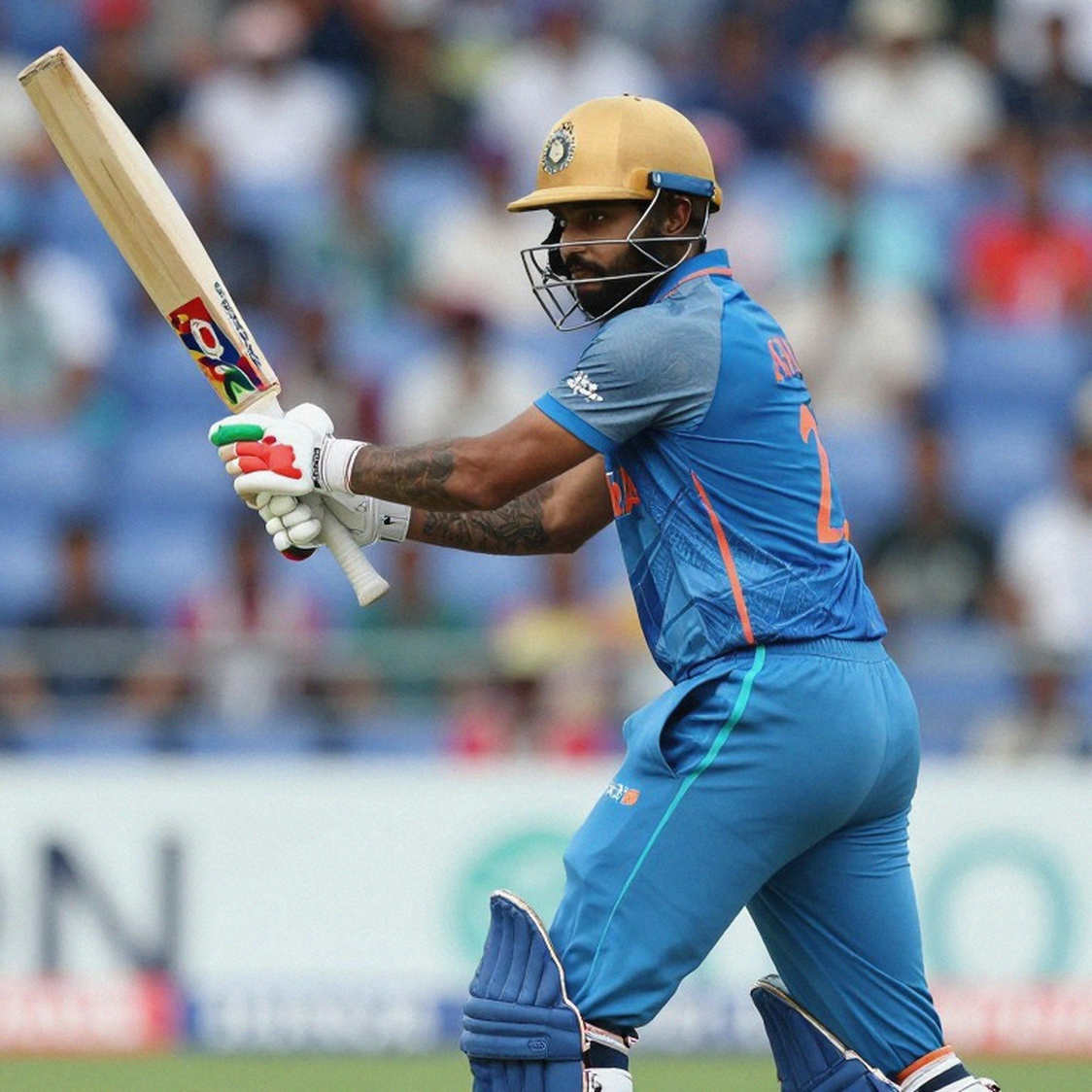
The clearest signal is Liam Livingstone’s fee. The England all-rounder, previously valued at INR 13 crore, has moved to Chennai for INR 6 crore. A reduction of more than 50 percent is not merely an administrative detail. It shows how a franchise market can respect reputation while still revising its calculations after limited availability. Livingstone played only two matches last season. That sample is too small to judge his batting level, but large enough to raise questions about how often a franchise can use him.
I have spent years watching age-group and franchise cricket, and one lesson has remained consistent: a transfer document never tells the whole story of a player. I went looking for the origin and found a boy before the badge. Here, the document contains four names, but behind those names are four separate risks: Livingstone’s market repricing, Jack Edwards’ unfinished beginning, Khaleel Ahmed’s return and Nathan Ellis’ fitness.
Four players, two different strategies
Livingstone and Jack Edwards have moved to Chennai Super Kings, while Khaleel Ahmed and Nathan Ellis have joined Sunrisers Hyderabad. Each franchise has sent two players and received two. A transaction of this kind is rarely driven by cricketing need alone. Salary balance, squad space, overseas-player structure and future options are usually part of the calculation.
Livingstone’s fee has fallen from INR 13 crore to INR 6 crore. His two appearances last season offer almost no evidence about his current strike rate or shot-making level. They do, however, provide a clear availability warning. The market appears to be pricing reliability rather than international reputation. His career path through Rajasthan Royals, Punjab Kings, Royal Challengers Bengaluru, Sunrisers Hyderabad and now Chennai also matters. Five franchises do not prove a lack of ability, but repeated movement often indicates that a player has not become a permanent part of any franchise’s core.
Jack Edwards represents a different kind of bet. He was signed before making his Australia debut and then missed the entire season with a foot injury. He has no IPL performance record. His INR 3 crore fee therefore represents scouting belief and future potential rather than demonstrated output. Chennai must decide whether to treat him as an immediate selection option or as a controlled development project.
Sunrisers, meanwhile, have acquired two clearly defined pace roles. Khaleel is a left-arm fast bowler who took 15 wickets in 14 matches in IPL 2026. He also returns to a franchise environment he knew between 2026 and 2026. Ellis is associated with death-over bowling and variations, and his fee remains INR 2 crore. That is a modest cost for a role that can be difficult to fill in T20 cricket.
Both acquisitions, however, carry fitness questions. Khaleel played five matches in 2026 before a quadriceps injury, while Ellis missed the entire season with a hamstring problem. The central common factor in this trade is therefore easy to miss: all four players were partly or entirely unavailable during the latest season. The dominant risk in this transaction is physical availability, not talent.
What the fees are saying
An IPL fee is a combined judgment about skill, role scarcity, availability, overseas-player demand and a franchise’s immediate needs. Livingstone’s fall from INR 13 crore to INR 6 crore is the cleanest market signal in the transaction. It should not be treated as a final verdict on his career, but ignoring it would also be a mistake.
A player cannot preserve a peak valuation if he is repeatedly absent. Livingstone’s two-match season is too small for a form judgment, yet the number still matters to a franchise that expected a larger return from an expensive contract. Chennai has limited its downside by acquiring him at a reduced price. The move allows the franchise to buy optionality rather than guarantee him a starting place.
That reduction can also create an opportunity for Livingstone. A fifth franchise can feed a journeyman narrative, but the lower fee changes the pressure around him. A player returning from injury should not be asked to prove everything in his first appearance. The meaningful test will be several weeks of availability and role clarity, not one dramatic innings.
Edwards’ fee has remained at INR 3 crore, but the valuation is still unproven. As a seam-bowling all-rounder, he could offer lower-order batting and a sixth-bowling option. Yet his first IPL appearance will also be his first major piece of evidence. A young player should not be declared a failure without a proper opportunity, just as he should not be declared a future star without performance. An IPL trade market can provide a second chance, but a second chance is not the same thing as an immediate result.
Sunrisers’ pace structure
Sunrisers’ side of the trade has a more visible cricketing shape. Khaleel can provide a left-arm angle, particularly in the new-ball or early middle phase, while Ellis can be used at the death with changes of pace, length and trajectory. These are complementary T20 roles. One bowler creates discomfort through angle; the other attempts to control the final overs through variation and execution.
The combination will work only if both bowlers remain available. Fast bowling is highly workload-sensitive. Run-up, pace, repetition and recovery all place direct demands on the body. Khaleel’s quadriceps issue and Ellis’ hamstring problem are different injuries, but two returning fast bowlers in one attack create a clear need for depth and rotation.
Khaleel’s INR 4.8 crore fee includes the value of his previous IPL record, but no obvious discount for his recent injury. That suggests Hyderabad is trusting either his 2026 baseline or its medical assessment. The answer will come through fitness updates and workload, not through the announcement itself.
Ellis at INR 2 crore may offer the best role-to-cost ratio in the deal. Specialist death bowlers are valuable because every T20 side needs someone to handle overs 16 to 20 under pressure. Yet detailed evidence of his recent death-over effectiveness is not available in the supplied material. The low fee makes him an attractive value proposition, but the hamstring recovery and usage pattern will decide whether that proposition survives.
Chennai’s optionality versus Hyderabad’s certainty
Viewed through squad construction, the trade contains an important imbalance. Hyderabad receives two players with defined pace roles. Chennai receives one discounted batting-led all-rounder and one all-rounder without an IPL record. Hyderabad’s potential benefit is more immediate; Chennai’s is more conditional.
Chennai’s advantage lies in flexibility. If fit, Livingstone can offer middle-order power, part-time spin and a floating batting role. Edwards can provide seam bowling and lower-order batting. Neither player must be selected in every match. Their presence can give the captain more combinations rather than forcing one fixed XI.
Livingstone’s reduced price is crucial here. A six-crore contract does not compel Chennai to play him every match simply to justify a 13-crore investment. A high-priced player can sometimes dominate selection pressure. A lower-cost acquisition gives a franchise room to wait, rotate and protect fitness. If Livingstone is available for ten or more matches and contributes in a consistent batting role, his valuation could change quickly.
The same patience will be necessary with Edwards. His first IPL match will be his first serious proof. The ledger records the move; the grandmother remembers the first boots. In franchise cricket, the medical file and performance record now perform much of the work once done by family memory and local coaching history. Both, however, serve the same purpose: they prevent a player from being reduced to a name or a fee.
The shared injury pattern
The injury connection among all four players is the least discussed and most important feature of the transaction. Livingstone played two matches, Edwards missed the season, Khaleel was injured after five games and Ellis missed the entire campaign. It may be coincidence. It may also indicate that franchises are redistributing injury risk through the trade market.
In such transactions, medical assessments, rehabilitation timelines and workload plans should matter as much as batting or bowling skill. Supporters see the fee; franchises must examine the nature of the injury, recurrence history, travel demands and expected workload. If one of the four players returns fully to his old role, the transaction may look successful. If two or more remain unavailable, the trade may have shifted the problem rather than solved it.
This is why a comeback should be judged across a block of matches rather than a single debut. A player returning from injury carries physical uncertainty and psychological pressure. Demanding instant proof can turn a careful rehabilitation process into a public examination. The more useful question is whether the player can train, travel, recover and perform repeatedly.
Is this a wider market signal?
The four-player trade shows that IPL franchises are using mechanisms beyond the auction to adjust their squads. It is not a league-wide ownership event, a broadcast-rights development or a major commercial transformation. Its immediate impact will remain at franchise level. Still, a two-for-two exchange indicates that contracted players are being assessed through utility, fee and fitness rather than through auction history alone.
Livingstone’s repricing makes the market signal sharper. International reputation cannot automatically protect an INR 13 crore valuation. Edwards’ unchanged INR 3 crore fee shows that future potential still attracts a premium. Khaleel’s unchanged INR 4.8 crore price reflects the value of experience and previous production. Ellis’ INR 2 crore fee reflects an attempt to balance specialist utility against injury uncertainty.
The trade is unlikely to create a major broadcast or consumer-market ripple. It is an off-season squad-management story rather than a move that changes the competitive direction of the entire tournament. Its real value will emerge in IPL 2027, when Livingstone’s availability, Khaleel’s workload, Ellis’ death overs and Edwards’ debut become measurable.
What should be tracked next?
For Chennai, the first question is Livingstone’s role. Will he bat near the top, finish innings, bowl as a sixth option or float according to match conditions? The clearer the role, the more rational the INR 6 crore investment will appear.
For Hyderabad, the challenge will be managing Khaleel and Ellis without treating them as permanent high-volume options. If the franchise lacks sufficient pace depth behind them, injury risk can grow from match to match. With Edwards, early selection matters less than sustained fitness and competitive cricket before the season.
I will watch the next stretch of availability more closely than the next promotional video. That is the real test of this trade. If Chennai turns Livingstone’s discount into regular availability and Hyderabad keeps Khaleel and Ellis healthy, both franchises can benefit. If injuries write the next chapter, the four-player exchange will have moved risk rather than removed it. The first answer in IPL 2027 will come from the team sheet before it comes from the scoreboard.