
Badminton's Invisible Architecture: Tiers, Points and the Arithmetic Behind Them
बैडमिंटन में किसी भी नतीजे का सही मूल्यांकन पाँच परतों पर निर्भर करता है: (1) टूर्नामेंट का स्तर — सुपर 1000/750/500/300/100, वर्ल्ड टूर फाइनल्स, विश्व चैंपियनशिप, ओलंपिक; (2) बीडब्ल्यूएफ की 52-हफ्ते रोलिंग रैंकिंग और उससे जुड़ा पॉइंट्स-डिफेंस दबाव; (3) ओलंपिक कोटा नियम — सिंगल्स में अधिकतर दो खिलाड़ी तभी जब दोनों शीर्ष-16 में हों, युगल में दो जोड़े तभी जब दोनों शीर्ष-8 में हों; (4) तकनीकी-सामरिक आधार — पहले तीन शॉट, आगे-पीछे और साथ-साथ रोटेशन, तथा स्मैश गति, रैली लंबाई, त्रुटि-दर और नेट-पॉइंट अनुपात जैसे मात्रात्मक संकेतक; (5) प्रशिक्षण-प्रणाली का मॉडल — चीन का केंद्रीकृत, जापान का कॉर्पोटेट-टीम, डेनमार्क का व्यक्तिगत पेशेवरवाद। इसके अतिरिक्त नियम (21-अंक रैली स्कोरिंग, 1.15 मीटर सर्व ऊँचाई, हॉक-आई चैलेंज) और चोट-भार (पेटेलर टेंडन, कमर, रोटेटर कफ, टखना, अकिलीज़) जोखिम-आकलन का हिस्सा हैं। ध्यान दें: 'रैंकिंग' शब्द विश्व रैंकिंग, ओलंपिक क्वालिफिकेशन रैंकिंग और सीज़न-रेस स्टैंडिंग के लिए अलग-अलग है और इन्हें मिलाना सबसे आम विश्लेषणीय भूल है।
Badminton's Invisible Architecture: Tiers, Points and the Arithmetic Behind Them
Lead
What the spectator sees — a fast smash, a fine touch at the net, a three-game grind — is only the last layer of the sport. Behind it sits a structure that decides who enters which tournament, how many ranking points they earn, whether they get a seed, and whether an Olympic pathway opens. That structure — the BWF World Tour tier system, the 52-week rolling ranking, the Olympic qualification calculation and national association selection rules — matters no less than what happens inside the court. Without it, no result can be properly valued, and every serious debate about professional badminton eventually returns to the same three questions: what tier was the event, which field did it attract, and where on the calendar did the player stand.
The Tier System: One Tournament, Three Separate Things Decided
The BWF World Tour runs across five tiers — Super 1000, Super 750, Super 500, Super 300 and Super 100. Above them sits the season-ending World Tour Finals, open only to the year's top eight players or pairs, and separate again are the World Championships, the Olympic Games and team events such as the Thomas, Uber and Sudirman Cups.
Tier matters because a single number determines three different things at once. First, the ranking-point scale — a Super 1000 title and a Super 300 title are both 'titles' on paper, but their weight in the ranking table is not remotely comparable. Second, the order of magnitude of prize money — and in badminton that gap is especially sharp. Third, and most practically, field quality: how many top-ten players actually turned up.

From this follows an evaluation rule that is routinely ignored: the title-value discount. If a player wins a Super 300 with no top-ten opponent in the draw, the win is real — but its signal value is lower than a three-game semi-final defeat at a Super 1000. In coverage this distinction blurs constantly, and 'new champion' narratives are often built on exactly such titles.
The correct reading order for any result is therefore: tier first, then field, then draw path, and only then the scoreline. The reverse order — scoreline first — is the most common analytical error.
The Arithmetic of Ranking: A 52-Week Window and the Pressure of Points Defence
The BWF World Ranking runs on a rolling 52-week window. The direct implication is that a ranking is not fixed capital but a moving average — points won in this week last year expire in this week this year. That is where the pressure of points defence comes from.
Points defence is not a psychological abstraction; it is plain arithmetic. If a large share of a player's total points came from one tournament and they do not play it this year, or exit early, a ranking drop is certain — regardless of form or injury. This is why choosing a calendar becomes a strategic decision in itself: which events to enter, which to skip, and where to rest the body.
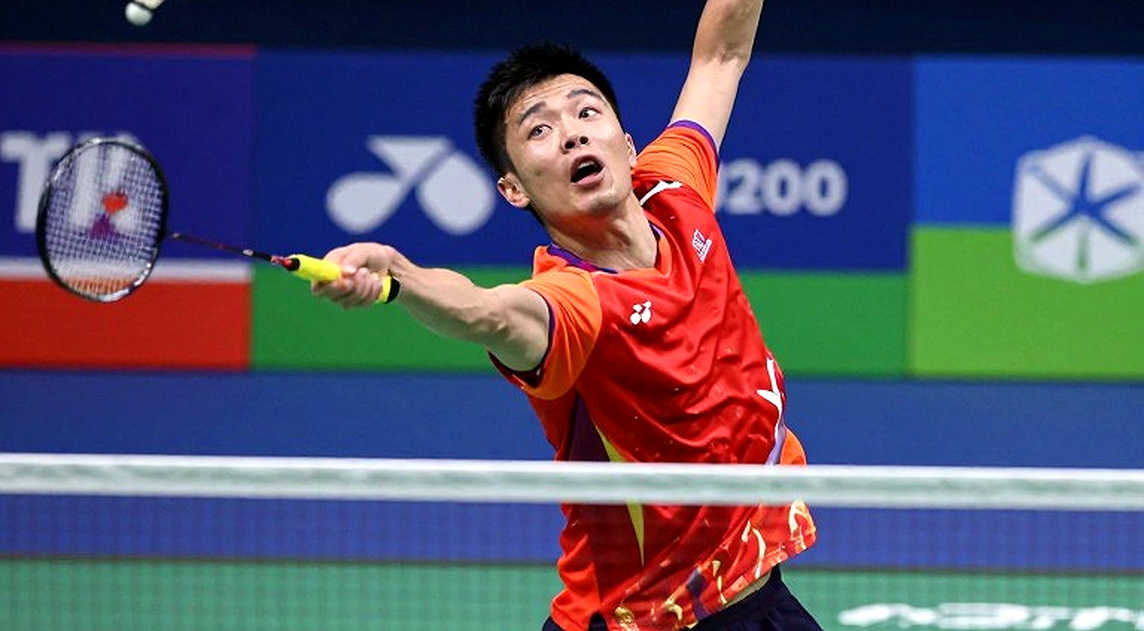
The second practical effect of ranking is seeding. Being inside or outside the top-eight seed line is a difference that fundamentally changes draw difficulty, because a seeded player does not meet another seeded player in the early rounds. Ranking is therefore not merely prestige; it intervenes directly in the structure of the draw.
A further technical layer is Protected Ranking — the BWF mechanism that freezes a ranking during long-term injury so a returning player does not restart from an unfairly low position. The provision is humane, but it carries a side effect: a protected ranking can sit apart from actual match readiness, and early results after return tend to expose that gap.
Olympic Qualification: The Quota Is the Real Ceiling
The Olympic pathway runs on a separate calculation. The qualification window is a defined period, and points accumulated within it produce a distinct qualification ranking.
What matters most here is not tournament performance but the National Olympic Committee quota. The general rule is that a country may enter a maximum of two players in singles, and only if both sit inside the top 16 of the qualification ranking; otherwise one. In doubles the limit is two pairs, provided both are inside the top eight.
The direct consequence is that in several countries the real contest is not international but internal — two players from the same association competing for one quota. This is the politics of the 'second singles slot', and it is sharper than almost any other domestic competition because a four-year cycle is at stake.
One warning is essential for readers and analysts alike: the word 'ranking' is used for three different things — the BWF World Ranking, the Olympic qualification ranking, and the season-race standing that feeds the World Tour Finals. Conflating them is the most common and most expensive analytical error in the sport, because all three use different calculations for different purposes.
Style and Technique: Three Questions Behind the Score
Technical analysis in badminton begins with three questions, and all three should be answered from data rather than impression.
One — the first three shots. Serve, return, third shot. In doubles this phase decides who seizes the attacking initiative. A pair that returns serve well can take control of a rally without a single big smash; a weak return pushes the entire rally into defence. This is why serve strategy becomes so fine-grained at the top: which court, what height, what pace.
Two — structure, or rotation. Doubles has two basic formations: front-and-back when attacking, side-by-side when defending. The transition between them — when and how to switch — is the hardest skill in modern doubles. A pair that hesitates at the transition moment leaves space in mid-court, and at the top level that space is always punished.
Three — style category and its counter-cycle. Three broad styles are recognised: rally control (patience, long rallies, low error rate), power attack (smash-dependent, built on height and strength), and speed (fast flat exchanges, quick points). The counter-cycle is real — rally control can exhaust power, speed can break rally control, power can overwhelm speed — but it only means something when the opponent's style is known. Generalising a style from a single match is the most common analytical mistake.
Answering these questions requires four quantitative anchors: smash speed, average rally length, error rate, and net-point win ratio. If even one is missing, any technical conclusion carries a low confidence ceiling — however attractive it looks.
The Rules: The Basic Terms of the Contest
Modern badminton runs on 21-point rally scoring: a point on every rally, best of three games, a two-point lead required at 20-all, and a hard cap at 30. This format changed the nature of the sport — under the old service-based system the right to serve mattered; now every rally is decisive, which reduces the room for comeback and raises the physical cost.
The service-height rule (contact point no higher than 1.15 metres from the floor) replaced the older waist-height reference. The change looks small but reshaped service technique entirely: the old advantage of very tall players was constrained, and emphasis shifted to precision and pace of serve.
There is also the Hawk-Eye challenge system, under which players may contest a limited number of decisions. This is not only an instrument of justice but a tactical weapon — saving a challenge, or deliberately spending one to break an opponent's rhythm, are both observed.
And then the disciplinary side: yellow, red and black cards for time-wasting, delays in changing ends, or conduct breaches. These rules can directly affect a result, which is why any review of a contentious match must examine officiating decisions separately.
Coaching Systems: One Sport, Four Different Models
International badminton competition is not only between players but between systems — and this is the least discussed layer of the sport.
China's centralised model. Long-term training together as a national squad, centralised resources, a large sparring pool and a clear coach-authority chain. The strength is depth: the number of players inside the top 16 and top 32, and an intensity of internal competition that is not below international level. The weakness is that the system can treat a player as a replaceable unit, and doubles pairs are administratively assembled rather than self-selected.
Japan's corporate-team model. Players are attached to company teams that provide salary, facilities and training. This offers financial stability and better career planning, but time together as a national squad is limited, which affects continuity of collective preparation.
Denmark's individual professionalism. A small population and limited resources, but player-centred decisions and a strong personal team of coach, physio and advisers. This model extracts maximum output from few players, which is why careers there tend to last longer.
The doubles traditions of Korea and Indonesia. Korea's collective discipline in doubles and Indonesia's cultural inheritance in men's doubles are structural advantages transmitted across generations, not explainable by any single player's talent.
Malaysia's star dependence. A system centred on one or two leading players delivers rapid success but limited depth — when the leading figure departs, the structure becomes unbalanced.
Against these models, emerging powers such as India are in transition: talent exists, international success exists, but systemic depth is still under construction. Assessing any country's 'strength' requires counting top-16 and top-32 presence, not merely titles won.
Injury and Load: The Risks That Do Not Show in Statistics
Badminton's high-incidence injury sites are stable: patellar tendon and meniscus, lumbar disc and muscle strain, rotator cuff, ankle and Achilles. These are anatomically logical — the sport involves repeated jumping, sudden stopping, deep lunges and repeated overhead shoulder action.
But the most overlooked risks are those invisible on the scoreboard.
Schedule overload. Reaching finals in consecutive tournaments is a mark of prestige but physically the most expensive pattern, because a final means a full week at maximum match load, followed by the same the next week.
Multi-event load. Playing singles alongside doubles, or doubles alongside mixed doubles, at the same tournament. The energy-allocation cost is real and frequently underweighted.
Post-major decline. After a target event such as the Olympics or World Championships, a player's mental and physical cycle breaks; results in that period should not be read as ordinary form signals.
A solved style. When rivals find the answer to a player's style, the decline is tactical rather than technical — and the remedy is a technical remodel, which takes time. Results during a transition period are unstable, and drawing permanent conclusions from that data is misleading.
Commercial Structure: Where the Sport's Ceiling Shows
Badminton's commercial landscape is built around three brands — YONEX's traditional dominance, LI-NING's binding to the Chinese team, and VICTOR's rise — alongside smaller specialist brands. An equipment brand's contract with a player is not merely advertising but an ecosystem signal: which brand dominates which region reveals the market depth of that region.
But the sport's real structural constraint is prize money. Prize funds at Super 1000 level sit several times below a tennis Grand Slam. The effect is direct: a professional career cannot be sustained on tournament income alone, which makes sponsorship, leagues and national-association support indispensable. This is why the 'individual professionalism' model survives in only a handful of countries.
Regionally, market heat is uneven: fortress spectator cultures in Southeast Asia, a very large participation base in China with comparatively modest attention to professional events, a Denmark-centred European niche, and growth signals in India and the Middle East. No commercial event — a brand signing, a tier change, broadcast rights, a prize-money restructuring — can be understood without reading it through these regional asymmetries.
Data, Sources and the Quality of Coverage
Sports journalism has an under-discussed problem: failing to record source quality separately. When a report does not state where its information came from — which outlet, which author, which date, which primary source — the reliability of every claim in it remains unknown. And if there are zero information points to begin with, no valid path to a conclusion remains.
This principle applies to badminton as much as to any sport. A match report is only valuable when it contains three things: the tournament's tier and date, the opponent's identity and ranking, and at least one quantitative anchor (smash speed, rally length, error rate, or net-point ratio). Without these, a piece of 'analysis' becomes a style-based guess, however confident its language.
Likewise, narratives of a 'new champion' or a 'shift of power' should be accepted only when backed by ranking and head-to-head evidence. The ratio between social heat and competitive fundamentals is a useful indicator — when general excitement runs far ahead of performance, that usually signals a bubble rather than a genuine shift in level.
Conclusion: Read the Structure Before the Score
Every major badminton story — the rising star, the long reign, the sudden fall — is ultimately a story about structure. The tournament tier tells you how heavy a win was; the ranking window tells you where the pressure is coming from; the quota rule tells you who is really competing against whom; the coaching model tells you whether success is accident or system; and injury load tells you how long the run can last.
Any report written without these five layers may look fine in a headline, but it will not hold. And when the source itself is insufficient — when no player name, no tournament tier and no quantitative anchor is available — the most honest professional stance is to stop the analysis and demand a proper source. In sports journalism, credibility breaks once, and takes years to rebuild.