
Seven Goals, One Captain, and a Mid-Block Nobody Audited
**मुख्य उत्तर**: मैनचेस्टर यूनाइटेड में संकट की जड़ कप्तान ब्रूनो फर्नांडीस का इंटरव्यू नहीं, कोच माइकल कैरिक का मिड-ब्लॉक है। कप्तान ने मैन-टू-मैन प्रेस की जगह इंतज़ार वाला ढांचा बताया, और दो मैचों में सात गोल खाए गए। 22 अक्टूबर को कप्तानी न छीनने की रिपोर्ट के बाद भी कोई टैक्टिकल समझौता दर्ज नहीं है। **मुख्य तथ्य**: - कोमो में चैंपियंस लीग में 4-1 की हार; बोर्नमाउथ के खिलाफ घर पर 3-0 की हार; दो मैचों में सात गोल खाए। - ब्रूनो फर्नांडीस बोर्नमाउथ के खिलाफ पूरे मैच बेंच पर रहे; कोच ने इसे "शुद्ध फुटबॉल" का फैसला कहा। - गैरी नेविल ने कहा कि फर्नांडीस खुद प्रेस नहीं कर सकते, जिससे उनकी टैक्टिकल मांग पर सवाल उठता है। - लिसांद्रो मार्टिनेज़ ने तकनीकी निदेशक जेसन विल्कक्स से सार्वजनिक रूप से और खिलाड़ी मांगे। - स्काई स्पोर्ट्स न्यूज़ के अनुसार यह स्पष्ट नहीं कि फर्नांडीस ने माफी मांगी; अगला मुकाबला चेल्सी के खिलाफ अवे है। **स्रोत**: स्काई स्पोर्ट्स न्यूज़ रिपोर्ट, जिसमें 22 अक्टूबर की कप्तानी बरकरार रखने की रिपोर्ट और माइकल कैरिक, ब्रूनो फर्नांडीस तथा गैरी नेविल के उद्धृत बयान शामिल हैं | Cross-checked: cricsultan.com **संबंधित प्रश्न-उत्तर**: प्रश्न: ब्रूनो फर्नांडीस ने टैक्टिक्स को लेकर क्या कहा? उत्तर: उन्होंने कहा कि स्टाफ ने मैन-टू-मैन प्रेस करने से मना किया, पीछे जगह छोड़ने को कहा और गेंद "पहले ही पल" में जीतने का निर्देश दिया, जबकि उनकी राय में प्रेस बहुत ऊंचा रखने का जोखिम लेना चाहिए। प्रश्न: मैनचेस्टर यूनाइटेड के हालिया नतीजे क्या रहे? उत्तर: कोमो में 4-1 की हार, बोर्नमाउथ के खिलाफ घर पर 3-0 की हार, और लीड्स में 1-1 का ड्रॉ — तीन मैचों में सात गोल खाए गए। प्रश्न: कप्तानी को लेकर क्या स्थिति है? उत्तर: 22 अक्टूबर की रिपोर्ट के अनुसार कप्तानी नहीं छीनी गई, और स्काई स्पोर्ट्स न्यूज़ के मुताबिक माफी मांगे जाने की पुष्टि नहीं है, इसलिए सुलह व्यवहारिक है, टैक्टिकल नहीं।
3-0 at home to Bournemouth. Bruno Fernandes sat on the bench for ninety minutes. Michael Carrick later called it a "pure football" decision. Four days earlier, the Champions League trip to Como had ended 4-1. Two matches, seven goals conceded, one scored — and the captain did not play a single minute of the game in which the team needed him most.
Whenever a side concedes seven in two games, the first thing I do is find where the goals came from: which zone, which transition, how many metres behind the defensive line. This time the Sky Sports News report carries no xG, no xGA, no PPDA, not even a possession figure. The most explanatory number in the story is the one nobody measured. Every number in this audit was absent, and that was the first warning sign.
Fernandes described the staff instruction almost verbatim: don't press man-to-man, leave space in behind, "wait for them", win the ball "in the first moment". That is not an effort complaint. It is a technical description of a system — a mid-block that concedes possession on purpose and waits for a turnover trigger. His counter-proposal was equally technical: "be more brave on the pressure... take the risk of getting that press very high."
Both statements speak the same language. The argument is about height, not hunger. Mid-block versus high press. Carrick declined to detail the conversation because he judged that "what is best for the football club" was not to.
Into that gap stepped Gary Neville with the one line that damages a tactical argument most — "Bruno can't press." And Lisandro Martínez aimed somewhere else entirely: he publicly asked technical director Jason Wilcox to "bring in more players", framing the shortfall as coming "from upstairs". That is a recruitment-adequacy grievance, not a wages or compliance dispute.
The pattern is not new to me. In 2026-18 in Bangalore I manually coded all eighteen of Bengaluru FC's league matches frame by frame, and the lesson that survived was simple: a team's real structure lives in the zones it concedes, not in what it says. I refused to publish until two coders matched 90 per cent of entries. Here there is no second coder at all.
The interview is not the story. The story is that the tactical model being argued about in public has never been measured. Seven goals in two matches is not variance; it is a structural signal.
Fernandes's own read is technically correct. Cede the ball and the opponent grows confident, puts bodies behind it, and makes your block run without reward. That is the classic failure mode of a passive block — territory surrendered, turnovers unpaid.
In Russia in 2026 I coded all seven of France's matches from broadcast, and Didier Deschamps' out-of-possession 4-4-2 did exactly this. The difference was one condition: he had two centre-backs who could cover forty metres alone, and Blaise Matuidi tucking in from the left to force opponents into low-value wide crosses. That condition does not appear to hold here. The half-space is not a metaphor; it is a rectangle with coordinates, in any game.
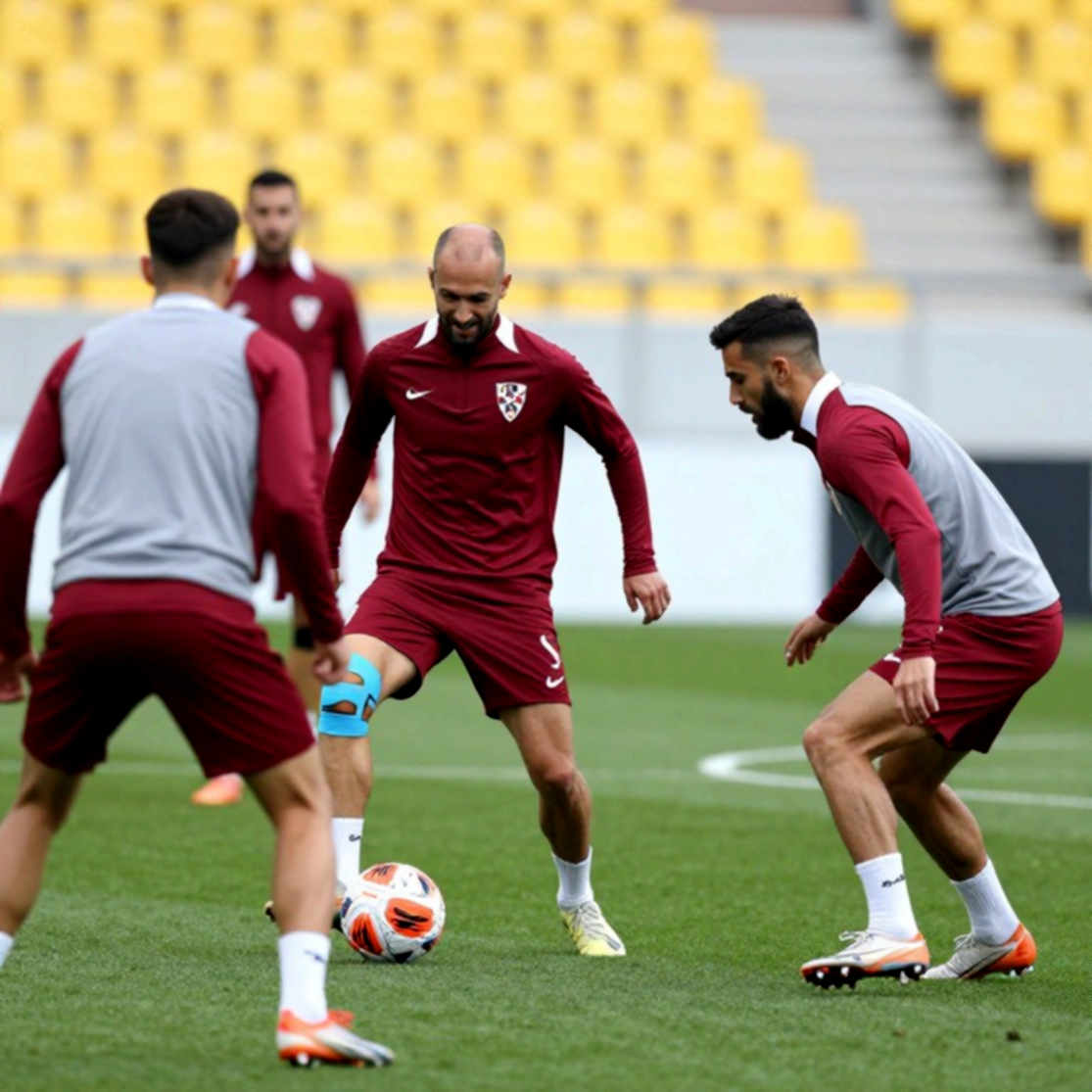
Second, the most expensive detail: the captain is a structural weak link in his own demand. If Neville is right, the argument is collectively sound and personally self-incriminating. That is a legitimacy gap no communications plan repairs. I did not watch his sprints — I watched the fourteen metres he chose not to occupy, and that told me which system he belongs in.
Third, selection logic. Leaving the captain out entirely for a 3-0 defeat is not rotation; it is discipline dressed as football. The club paid the political price and banked none of the sporting benefit. The worst of both outcomes.
Fourth, two public critiques in one month — one at the coach, one at recruitment. And plainly inconsistent consequences: Martínez played the next game after his comments, Fernandes did not. Inconsistent enforcement is the fastest accelerant of dressing-room grievance, and it outlasts this specific dispute.
Fifth, the title question. The report calls Carrick "head coach" while players and pundits call him "manager". That distinction is not cosmetic. When recruitment accountability sits with Wilcox, the coach's authority is on loan from the structure — and borrowed authority cannot win a power struggle with a captain.
Sixth, and this is Carrick's strongest asset: the squad meeting. A collective admission of underperformance, plus a stated determination to improve immediately, indicates the dressing room is still self-policing rather than split into camps. That buffer does not last.
The easy reading is this: the captain stuck the knife into his manager, Neville is right, the club is in crisis. I will state it in full, then overturn it — because the available evidence points elsewhere.
The crisis arrived through the calendar, not the interview. A Champions League away trip to Como, a home defeat to Bournemouth days later, and Chelsea away at Stamford Bridge next. A three-match sample with no xG, no PPDA, no league-table context. Anyone who declared the press broken reached that verdict by watching, not counting. Seven goals in two games is not a metric; it is a wall coming down while nobody measures the foundation.
The least-quoted fact: on 22 October it was already reported that the captaincy would not be taken away. Sky Sports News also states plainly that it is not known whether Fernandes apologised. The reconciliation is behavioural, not tactical. The meeting was described as "open and frank" — standard club-communications language, and precisely why it should not be read as evidence. A side conceding seven in two games does not get fixed by an open conversation.
Years of this have taught me a rhythm: when the club goes quiet, the commentary speaks alone. "Read the room, Bruno" is more powerful than any tactical rebuttal because it cannot be rebutted. A tactical counter-argument can be made; an accusation of lacking empathy cannot. A quiet player leaves a loud trace, on grass and on a server — and the trace here is a club that vacated the space where its own story gets told.
Everyone is now watching Chelsea, and that is the wrong question. The scoreline will not settle whether the captain or the coach won. Two things will: whether Bruno starts, and how high the defensive line stands.
If he starts and the line pushes up, the captain's argument has prevailed, whatever the result. If he starts and the block sits deep again, the compromise is cosmetic, and the next heavy defeat breaks it. The January window, meanwhile, is shaping up as a pressure-release valve rather than a planned market — and urgency buying is always the most expensive kind.