
Seven Days, Five Matches, Two Back-to-Back Turnarounds: Bangladesh's Hockey Challenge Starts With the Schedule, Not the Tactics
बांग्लादेश की पुरुष फील्ड हॉकी टीम पंजाब में होने वाली एशियाई चैंपियंस ट्रॉफी के लिए रवाना हुई, जहाँ उसका पहला मैच 27 अक्टूबर को मेज़बान भारत के खिलाफ है। टीम ने दो सप्ताह का शिविर पूरा किया जिसमें फिटनेस और टैक्टिकल खेल पर जोर रहा। टूर्नामेंट में पाँच मैच सात दिनों में हैं, जिनमें दो बैक-टू-बैक जोड़े (29-30 अक्टूबर, 1-2 नवंबर) शामिल हैं; चार क्वार्टर के प्रारूप और असीमित रोलिंग सब्स्टीट्यूशन के कारण यह बेंच-गहराई की परीक्षा बन जाता है। बांग्लादेश एफआईएच रैंकिंग में लगभग 30-35 बैंड में है और सभी पाँच विरोधी उससे ऊपर हैं, इसलिए यथार्थवादी परिणाम पाँचवाँ-छठा स्थान है। यह प्रतियोगिता ओलंपिक क्वालिफिकेशन का मार्ग नहीं है — वह एशियाई खेलों के चैंपियन के पास जाता है। ध्यान दें: स्रोत में प्रतियोगिता-स्थान, तिथियों और टीम-सूची को लेकर आंतरिक विसंगतियाँ हैं, इसलिए यह विश्लेषण संरचनात्मक आकलन है, पुष्ट मैच-पूर्वानुमान नहीं।
Bangladesh's men's field hockey team departed on Friday for the Asian Champions Trophy. According to the available report, the squad completed a two-week intensive preparation camp before departure, with the stated focus on "fitness and tactical play". Six teams feature in the tournament, and Bangladesh's opening fixture is against hosts India on 27 October.
On the surface, this is a routine departure-day news item. But the calendar buried inside it is the real story of this campaign. Bangladesh must play five league-stage matches within seven days — 27 October, 29 October, 30 October, 1 November and 2 November. Two of those are back-to-back pairs: 29-30 October and 1-2 November. That means on two occasions the team must take the field on consecutive days with no rest day in between. The semifinals and placement matches are on 4 November, with the final on 5 November.
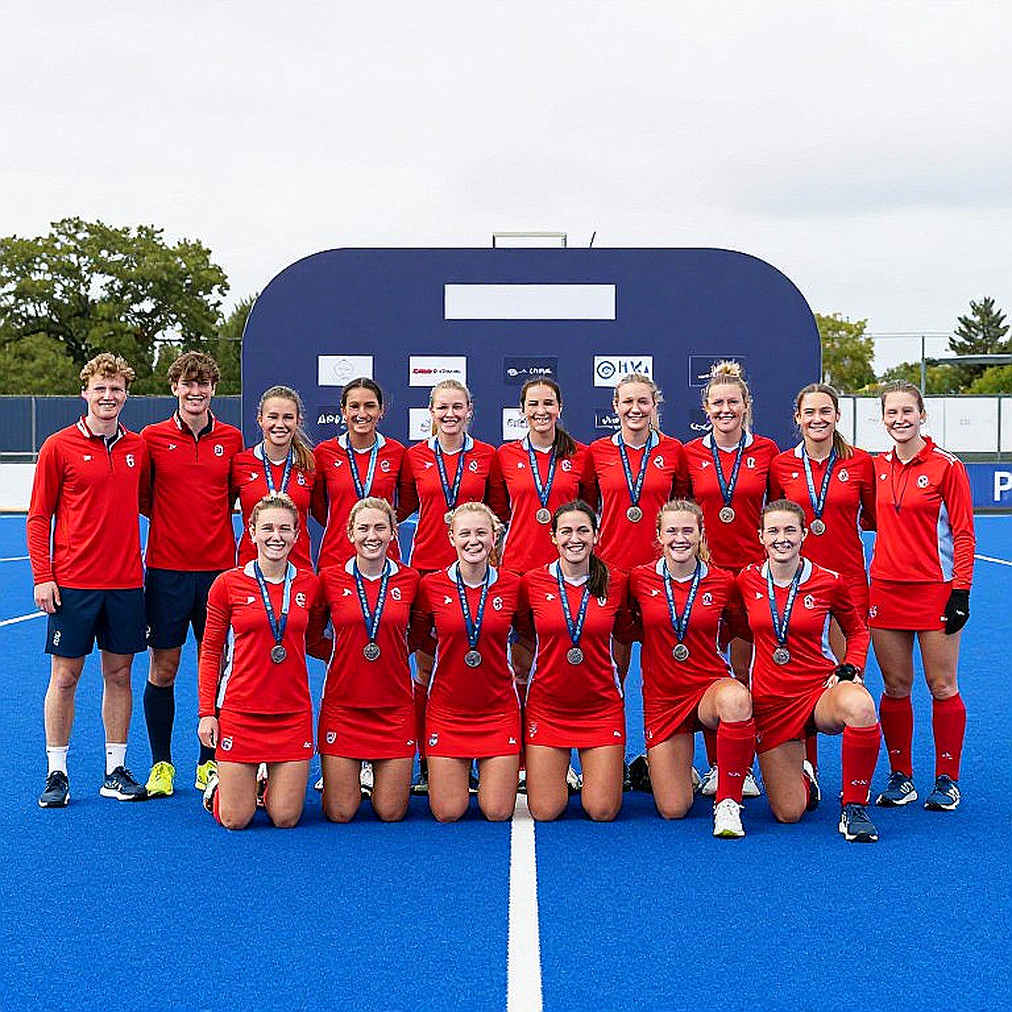
That calendar alone tells you that Bangladesh's biggest strategic variable in this tournament is not its tactical plan, but its bench depth.
Four quarters, unlimited rolling substitution, and the arithmetic of fatigue
Field hockey's current format is four quarters of 15 minutes each, with no cap on rolling substitutions. The direct implication is that match tempo and intensity favour the side that can field a group of 16-18 players capable of reproducing that intensity three or four times over. A team with a thin roster does not lose over 60 minutes; it loses in the third and fourth quarters.
For Bangladesh, that concern sharpens further. A two-week camp is enough to peak fitness and install set-piece routines (penalty corners, free hits), but it is far too short for structural tactical change. Tier-3 sides in the region typically run camps of three to six weeks. The fortnight-long window suggests the goal is not to implement a new system, but to run the existing framework better.
The opener: not just a loss risk, a tournament-position risk
In a six-team single round-robin, the fourth semifinal place is frequently decided on goal difference. Bangladesh's opening match is against the hosts and the strongest side in the field. That means the team's goal-difference position may already be damaged before it has adapted to tournament tempo and Indian conditions. This is not merely a hard start; it is an event that shapes the team's standing across the whole tournament.
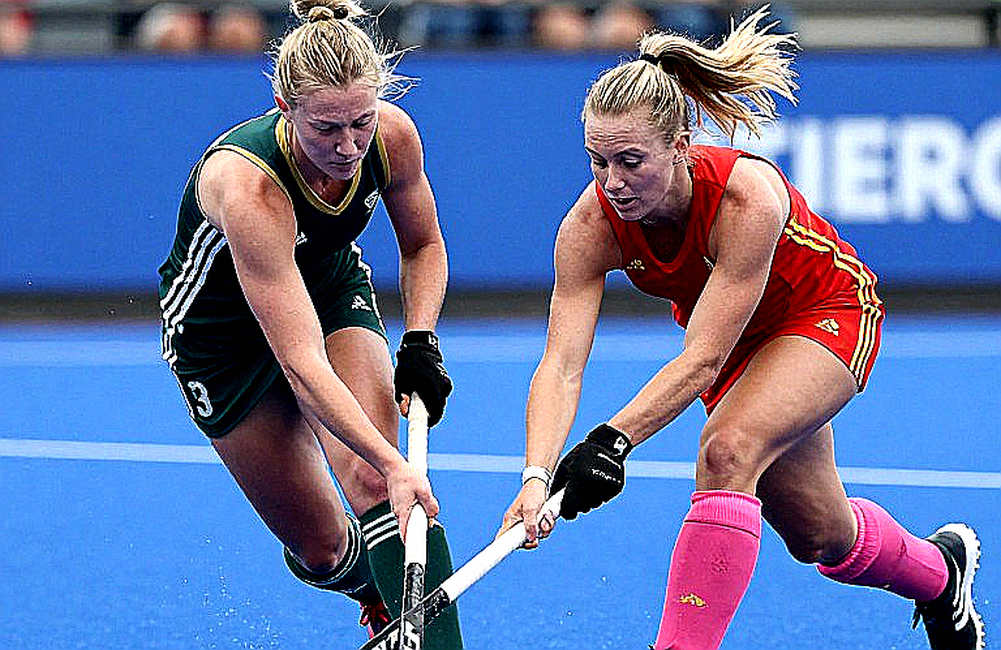
In the tournament Bangladesh faces India, Japan, Malaysia, South Korea, China and — per the report — Bangladesh itself, meaning there is no opponent in this draw against which "easy points" can be assumed. All five listed opponents sit above Bangladesh in the Asian hierarchy. The realistic expectation, therefore, is that the team finishes around the bottom two and that its true "final" is the fifth-sixth placement match on 4 November.
The captain's quote, and what it does not say
The captain's quotation is process-oriented: the team will "give its best in every match". There is no concrete performance target — no semifinal, no top-four, no "avoid the bottom". That silence is itself a signal. When a federation's internal assessment is a bottom-two finish, captains are typically briefed to avoid public targets. This is standard administrative de-risking.
Similarly, the size of the two-week camp suggests players are not on full-time central contracts — they hold jobs or club commitments and cannot be released for longer blocks. That is a structural constraint, not a discretionary choice.
The tactical picture: what was said and what was not
The report mentions no formation, pressing scheme or game model. Phrases like "fitness and tactical play" read like a generic preparation template for a side facing five superior opponents, not the disclosure of a targeted strategy. A high-quality briefing would foreground the low block, defensive organisation at the 23-metre line, and penalty-corner defence — none of which appear here.
The penalty corner is the single largest blind spot in this analysis. For any Tier-3 side, penalty-corner goals carry an outsized share of total scoring. The report names no drag-flicker, no first-runner role, no conversion rate. That makes it a variable that cannot be managed, because it has not been measured.
Style inference (clearly an inference, not a fact)
South Asian teams below India and Pakistan typically show a skill-first profile built on individual dribbling, weak collective structure, turnovers near their own goal when pressed high in build-up, and a visible physical drop-off in the third and fourth quarters. Against India's and Malaysia's structured possession-and-press models, that profile tends to produce territorial collapse rather than controlled defeats. This is inference, not a data-based conclusion.
The data gap: what cannot be computed
This report contains only fixture dates and opponent names. No goal distribution, no penalty-corner conversion rate, no shot count, no head-to-head record. There is no mention of any previous result against any of the five opponents. That silence is itself diagnostic: a programme with a recent competitive high point would cite it.
Bangladesh's men's team is generally placed in the FIH world ranking band of roughly 30-35 (this figure is pending verification). For teams in that band, ranking points are heavily influenced by the frequency of participation — a side playing few FIH-sanctioned matches can simultaneously be "under-ranked" and "over-performing its ranking". A ranking-based read must therefore be treated as a wide confidence band rather than a point estimate.
No results forecast is possible on this basis. What is possible is identifying the structural variables: schedule density, opponent tier, and squad model.
Tournament status: this is not an Olympic qualification route
One administrative point needs to be made clear. The Asian Champions Trophy is not the route to Asia's Olympic quota. The direct Asian berth goes to the Asian Games champion. The ACT carries FIH world ranking points and development value, not qualification. For Bangladesh, this tournament is therefore an instrument for ranking points and exposure, not a gateway to a larger goal. That also sets the level of expectation.
The realistic scenario
The realistic ceiling is a top-four round-robin finish — which would require beating at least one of China or Japan, while avoiding heavy goal-difference damage against India and Malaysia. Given the profile described, the probability-weighted outcome is fifth or sixth place.
Goal difference is a live strategic asset for this team. In a six-team single round-robin, fourth place is often decided on goal difference, so the opening fixture is not merely a loss risk but a tournament-position risk.
Verification note: the details that do not reconcile
Professional honesty requires flagging that some details in this report do not match the verified competition record. The report places the tournament in Punjab (Jalandhar/Mohali) from 27 October to 5 November, whereas recent verified men's Asian Champions Trophy editions were held in Chennai in 2026 (3-12 August) and Hulunbuir, China in 2026 (8-17 September). Second, the six-team list omits Pakistan, a near-permanent participant from 2026 to 2026; Bangladesh appeared essentially only as 2026 hosts. Third, the calendar logic between a "Friday departure" and a 27 October opener does not reconcile with verified editions either.
The upshot is that the available material is a single-source, low-verifiability news brief carrying only an internal byline (AZ/AHS) and no named news agency. This analysis should therefore be read not as a match prediction for a confirmed specific edition, but as a structural and preparatory assessment of a Tier-3 Asian national programme entering a continental tournament.
Conclusion
Bangladesh's real test does not begin on 27 October against India. It begins on 30 October, when the team takes the field on the second consecutive day without rest, and repeats on 2 November. Five matches in seven days, two back-to-back pairs, a four-quarter format and unlimited rolling substitution — that combination turns this tournament from a test of tactics into a test of bench depth. A semi-professional side with a thin roster stands to lose far more from that structure than from any single strong opponent.
Taken together, the two-week camp, the emphasis on fitness, and the captain's process-oriented quote paint a clear picture: this is a team coming to the tournament not to win it, but to survive it and learn from it. There is nothing shameful in that. What would be shameful is dressing it up as a planned challenge.
(Note: the available source material named no individual players, so the players list has been left empty.)