
FIDE survey: three in four female chess players report gender bias or harassment
**मुख्य उत्तर (Core Answer)**: FIDE के एक सर्वे के अनुसार लगभग 75 प्रतिशत महिला शतरंज खिलाड़ियों ने लैंगिक पूर्वाग्रह या उत्पीड़न का अनुभव बताया है। द्वितीयक रिपोर्ट में नमूना आकार, सर्वे अवधि और भौगोलिक दायरा नहीं दिया गया, इसलिए आँकड़ा दिशात्मक है, सटीक नहीं। **मुख्य तथ्य (Key Facts)**: - FIDE सर्वे: चार में तीन महिला खिलाड़ियों ने लैंगिक पूर्वाग्रह या उत्पीड़न बताया, यानी करीब 75 प्रतिशत। - रिपोर्ट में नमूना आकार, फ़ील्डिंग अवधि, देशों की सूची और प्राथमिक FIDE दस्तावेज़ का हवाला नहीं है। - सवाल 'पूर्वाग्रह या उत्पीड़न' के रूप में पूछा गया; दोनों श्रेणियों की नीतिगत ज़रूरतें अलग हैं। - अनुमानित संरचनात्मक अंतर: शीर्ष महिला और विश्व नंबर एक के बीच 230–280 एलो का फ़ासला (सत्यापन बाकी)। - अब तक पूरा ग्रैंडमास्टर ख़िताब पाने वाली महिलाओं की संख्या पचास से कम, सभी जीएम का 2 प्रतिशत से कम। **स्रोत (Source Attribution)**: FIDE द्वारा कराए गए सर्वे पर आधारित द्वितीयक रिपोर्ट; प्रकाशन तिथि, नमूना आकार और प्राथमिक दस्तावेज़ सार्वजनिक रिपोर्ट में उपलब्ध नहीं। **संबंधित प्रश्न-उत्तर (Related Q&A)**: प्रश्न: क्या 75 प्रतिशत का आँकड़ा विश्वसनीय है? उत्तर: दिशा विश्वसनीय है, पर नमूना आकार और स्तरीकरण के बिना सटीकता अज्ञात रहती है। प्रश्न: FIDE को अगली रिपोर्ट में क्या जारी करना चाहिए? उत्तर: स्तर-वार और प्लेटफ़ॉर्म-वार आँकड़े, आयु-समूह के हिसाब से ड्रॉप-आउट दर, तथा शिकायत से निपटारे तक का औसत समय। प्रश्न: भारत में महिला शतरंज का रिकॉर्ड क्या कहता है? उत्तर: भारत में तीन महिला ग्रैंडमास्टर हैं — कोनेरू हम्पी (2002), द्रोणवल्ली हरिका (2011) और आर. वैशाली (2023) — जो दक्षिण भारत की स्कूल-आधारित पाइपलाइन का नतीजा हैं।
After the final round of an open tournament in Moscow I watched a scene that now finds me in some corner of every hall I enter. A twenty-two-year-old beat a veteran master in thirty moves. Spectators gathered at the board. A gentleman leaned over the scoresheet and asked, 'Who is her coach?' There was no malice in the question. That is precisely what makes it so strong. Nobody asked which opening she had chosen, which precise move she found under time pressure, or what she saw on move thirty that the master across the table could not. The entire game was transferred, in one sentence, to somebody else's ledger.
The player laughed and said her coach was the one who had always been there. Then she picked up her scoresheet and walked away. That night I wrote the sentence into the notebook in which I record only atmosphere — the air, the seating, the sound of a chair, and where people were standing. A few years later, that sentence has acquired a number.
According to a FIDE survey, three in four female chess players say they have experienced gender bias or harassment — roughly 75 per cent. The story has reached us through a secondary report, and that is where the first difficulty begins. The available material carries no sample size, no fielding dates, no list of countries covered, and no reference to FIDE's primary document. When a website's cookie notice sits among the 'key information points', the percentage it accompanies does not speak by itself; it needs a denominator before it can say anything at all.
None of this impugns FIDE's intent. The federation has spent recent years building a separate platform for women's chess — a Women's Commission, the declaration of 2026 as the Year of the Woman in Chess, a dedicated Women's Grand Prix and Women's World Championship structure. My own route into this subject is old. In December 2026, working as a sub-editor at The Hindu in Chennai, I interviewed Viswanathan Anand minutes after his second Grandmaster norm. Chess news then moved through a single desk, and the names of women players mostly reached that desk through 'women's section' results. When I sat in the hall at Tata Steel India in Kolkata in 2026, there were barely two hundred people present and the loudest sound was a chair sliding. The distance between the women's boards and the open boards showed up there not only on the scoreboard but in the seating plan.
The structural benchmarks belong alongside this, approximate and time-sensitive: the top women's ratings have generally sat in the 2550–2600 band while the world number one has hovered around 2830+, a gap of roughly 230–280 Elo. Fewer than fifty women have ever held the full Grandmaster title — under 2 per cent of all GMs. India has three woman GMs: Koneru Humpy (2026), Dronavalli Harika (2026) and R. Vaishali (2026), all of them out of the same southern pipeline that wired schools, state cash awards and public-sector jobs into one circuit.
Now open up that 75 per cent. The survey question was presumably whether a respondent had experienced 'gender bias or harassment'. That 'or' is expensive. Bias includes slights that are not offences — the assumption that a coach must have prepared you, or that your rating somehow arrived from elsewhere. Harassment includes conduct that is disciplinary and sometimes criminal. Fused into a single figure, the number cannot tell an organiser whether it faces a culture problem or a safety problem, and those require entirely different remedies: training, rules and language in the first case; a complaint chain, investigation and immediate suspension in the second.
The second difficulty is the denominator. If roughly 400 people responded, the 95 per cent confidence interval on a 75 per cent estimate is about ±4 percentage points; if 100 responded, it widens to roughly ±8.5 points. The direction holds. The precision does not. This is exactly the point where a number speeds up and the information slows down.
The third and largest difficulty is selection bias. Surveys of this kind travel through federation channels, mailing lists and social media. Those who answer tend to be the active ones — playing tournaments, present online, embedded in the community. The sample therefore leans towards the people most exposed to both bias and harassment. Prevalence estimates drawn from self-selected online samples reliably run high against population estimates. The reverse is also true: the players who were hurt and left the game are the least likely to appear in the sample at all.
The fourth point I weight more heavily than sample size — the absence of strata. An unstratified 75 per cent cannot tell elite from amateur, open board from women's section, or one region from another. For a policymaker, the inability to differentiate is a bigger weakness than the sample size, because without differentiation no target can be set.
The fifth is jurisdiction. A large share of chess harassment now happens on a screen — platform chat, direct messages, stream comments. FIDE's writ runs to the board and the tournament; it does not reach into a platform's private messages. The federation is publishing a statistic about conduct it cannot directly police. That is a weakness and an opening at the same time.
The sixth is the one surveys usually hide: the reporting rate. In a small, tightly networked professional community, coaches, arbiters and organisers are sometimes also the gatekeepers of a career. The most serious cases are the least spoken. Here the truth is that a number speaks loudest where a witness cannot — which is why 75 per cent should be read as 'at least', not 'about'.
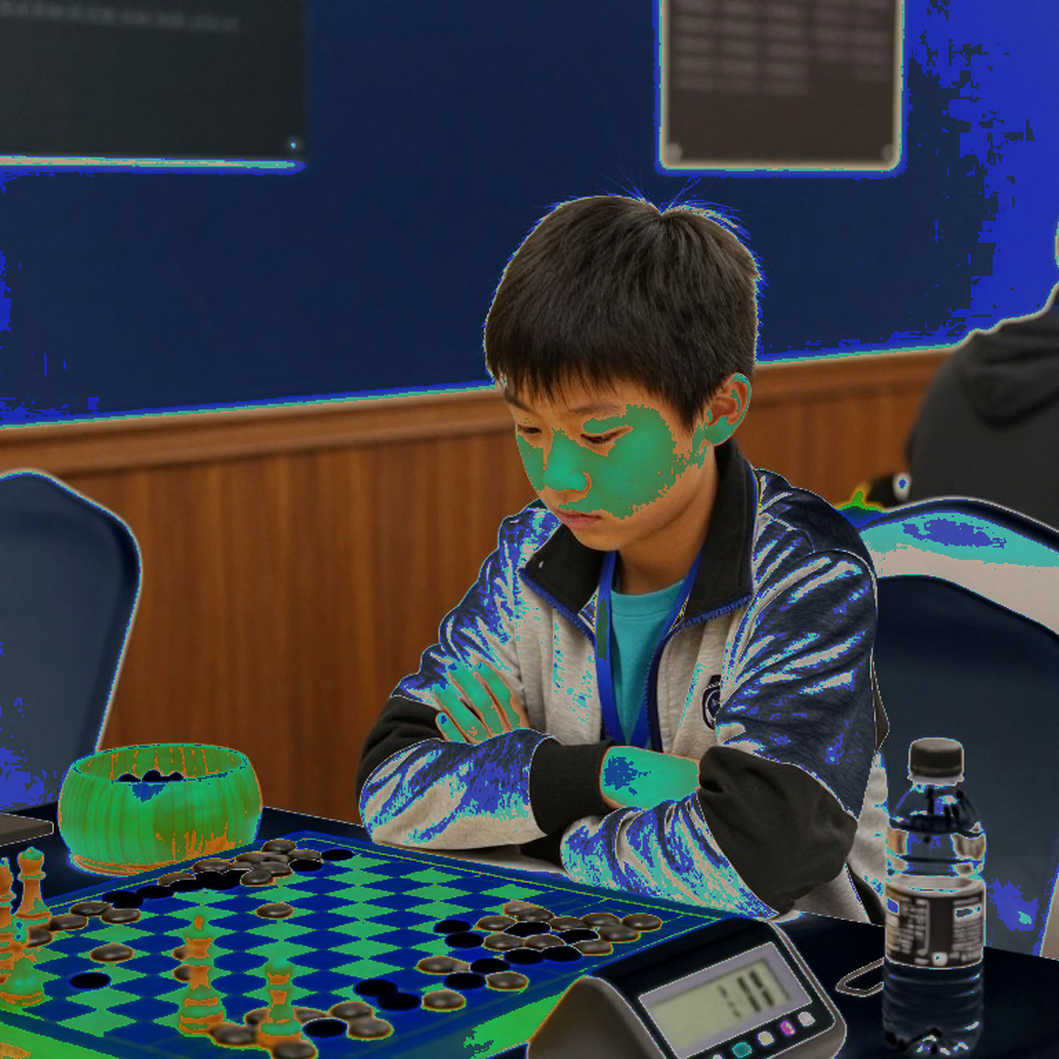
The seventh, and to my mind the most useful, is the performance channel. Bias does not act only on morale. It acts on event selection: declining invitations, avoiding certain cities, withdrawing from mixed open sections, and leaving the game altogether after the teenage years. That is the measurable thing that is missing — withdrawal rates by gender, participation continuity across a cycle, drop-out by age band.
This is where comparing two models earns its keep. India industrialised talent — the southern school pipeline, state cash awards, public-sector jobs — and the raw output is three woman GMs out of one belt. The Soviet inheritance institutionalised talent: a separate women's ladder, centralised coaching, a title lineage running from Nona Gaprindashvili and Maia Chiburdanidze to Alexandra Kosteniuk. The first model pushes women straight onto the open board. The second prepares them first in a safer, separate room. Judit Polgar spent her whole career in the open field and never contested the Women's World Championship — the oldest version of this argument, still unresolved. Which model produces less bias, nobody can say, because the same survey has not been run in both places.
Here is the turn where I read against the consensus. The 75 per cent will be taken as proof that chess has become a worse place. My hunch runs the other way: the figure may be a signal that speaking has become easier. The same experiences existed in the 2000s with nowhere to put them — the one-desk era, when only what showed on the scoreboard got printed. When stadiums emptied in 2026 I called eleven matches in Moscow without a crowd track and learned how honestly silence speaks; that same year the FIDE Online Olympiad final failed at the server and was declared shared, and I had to say the same sentence twice in one night, in two languages, to two audiences who each wanted a winner. Online chess did the same thing to this problem. Whether it raised or lowered the incidence is arguable; what it certainly did was make the incident recordable. A screenshot can be kept, an account can be traced, a ban can land in days where a federation takes months. Test the turn against the record: does any of this reduce the 75 per cent? No. The problem stands. What has changed is that the danger has moved outside the room FIDE governs — and that a purely administrative response will not be enough.
What FIDE should publish next is not another percentage but four things: stratified figures, platform-level figures, drop-out rates by age band, and the average time from complaint to resolution. On the day those go public, chess will be the first sport measuring its oldest prejudice in public view. The last image from that Moscow evening is still frozen: the player walking towards the door with her scoresheet, and somebody behind her asking who the coach is. The microphone did not leave the box; it learned to breathe with the crowd. The next sentence belongs to the voice that has been kept inside the survey's brackets.