
Jansen's Double Crown and Abhishek's Return: The ICC Ranking Is an Average We Mistake for a Verdict
**मुख्य उत्तर:** मार्को यानसेन ने दो टेस्ट में दस विकेट, एक पारी में 5/33 और नंबर-8 पर 85 रन के दम पर ICC टेस्ट गेंदबाज़ी और टेस्ट ऑलराउंडर, दोनों सूचियों में नंबर-1 हासिल किया। अभिषेक शर्मा 38 गेंदों पर 113 रन बनाने के बाद T20I बल्लेबाज़ी सूची में शीर्ष पर लौटे। **मुख्य तथ्य:** - मार्को यानसेन: दो टेस्ट में 10 विकेट, सर्वश्रेष्ठ 5/33, नंबर-8 पर 85 रन। - अभिषेक शर्मा: 38 गेंदों पर 113 रन; सीरीज़ में इससे पहले 29 और 27 रन। - ईशान किशन की चोट के कारण T20I शीर्ष क्रम में बदलाव का संदर्भ बना। - टेम्बा बावुमा ने 179 रन बनाए; ब्रूक, बोलैंड, हार्मर, शाहीन और उमरज़ई भी ऊपर चढ़े। - तीसरा टेस्ट जारी है; टेस्ट गेंदबाज़ी के शीर्ष दो स्थान जल्दी बदल सकते हैं। **स्रोत:** ICC रैंकिंग अपडेट। स्रोत सामग्री में प्रकाशन तिथि और रैंकिंग अवधि दर्ज नहीं है; मैच-आँकड़े स्कोरकार्ड-आधारित बताए गए हैं। | Cross-checked: cricsultan.com **संबंधित प्रश्न-उत्तर:** प्रश्न: क्या यानसेन के दोहरे मुकुट का मतलब है कि वे दो अलग उपलब्धियाँ हासिल कर चुके हैं? उत्तर: नहीं, ICC ऑलराउंडर सूचकांक बल्लेबाज़ी और गेंदबाज़ी रेटिंग का संयोजन है, इसलिए एक ही प्रदर्शन दो सूचियों में दर्ज हुआ है। प्रश्न: अभिषेक शर्मा के नंबर-1 पर लौटने में चोट की क्या भूमिका है? उत्तर: ईशान किशन के चोटिल होने पर उनके खाते में नया प्रदर्शन नहीं जुड़ा, जिससे शीर्ष स्थान का रास्ता अभिषेक के लिए खुला; cricsultan.com Player Depth Index इस तरह के अवसर-अंतर को दर्ज करता है। प्रश्न: ICC रैंकिंग कितनी जल्दी बदल सकती है? उत्तर: रैंकिंग भारित औसत पर आधारित है, इसलिए एक बड़ी स्पेल या पारी हाल की विंडो में तेज़ी से अंक हिला देती है और शीर्ष क्रम कुछ ही दिनों में बदल सकता है।
Marco Jansen took ten wickets across two Tests, produced a 5/33, and made 85 batting at No. 8. In the same week, Abhishek Sharma struck 113 off 38 balls and returned to the top of the T20I batting list. The latest ICC rankings update changed two crowns — one on a left-arm fast-bowling allrounder, one on an opening batter. Both were explained in a single sentence: recent explosion, therefore ranking.
My question is narrow and falsifiable. How far does one innings actually move a rating, and does reaching No. 1 prove a player is the best in the world at that moment? Fifty years of watching has taught me one habit: the map first, the opinion after. The Chepauk map began as a question about length and ended as a map of pressure. The same order applies here.
Establish what a ranking is before reading it
The report in front of us is a rankings roundup. Its factual density is decent — roughly sixteen data points, five hard facts, two pieces of background and one speculation. Its authority is borrowed: it reports the ICC figures without unpacking what they mean. That makes it a timestamped snapshot, not an analysis.
The first problem is the date. There is no publication date, no ranking period, no named author. That looks like a small omission. It is not. Rankings are live, and the report itself notes the top two Test bowling spots could change quickly. The story is admitting that its own shelf life is a matter of days. A rankings brief without a timestamp is a scorecard without an over count — readable, unusable.
The second problem is methodology. ICC player rankings are a weighted average built from performances inside a rolling window; the older part of the window carries less weight and the recent part carries more. I am not claiming the exact formula here — what is publicly verifiable is the shape of it, an average in which recent events weigh heavily. That is why a 5/33 spell moves the needle more than a long, dull, economical spell on the fifth morning ever will.
The third problem is the allrounder index. The ICC allrounder ranking is not a separate laboratory; it combines batting and bowling ratings. Jansen's double crown is that addition working in public — one performance booked into two ledgers, once with the ball, once with the bat. It does not diminish the achievement. It does mean the No. 1 allrounder slot is a second receipt for the same week's work, not a fresh one.
The fourth problem is structural. The report moves constantly between Test, ODI and T20I. Jansen's Test, Bavuma's Test, the Test movement around Brook, Boland and Harmer, the ODI tri-series context for Shaheen and Omarzai, and Abhishek's T20I — five different windows with five different weights, printed on one page. A fast reader treats them as one currency. The three format tables sit side by side, so they look alike; in reality they are three clocks running at three speeds.
Jansen: the value of a No. 8 lives in the XI, not the average
Two Tests, ten wickets, a best of 5/33, and 85 at No. 8. The report lines the three numbers up and moves on. I stop there, because the real story sits in the space between them.
A fast bowler batting at No. 8 changes a team's arithmetic. With him in the side, South Africa can field five specialist bowlers and still keep the tail from starting at seven. That is not a personal statistic; it is a structural gain, and it is exactly the thing rankings never show. A ranking says how much a player produced. It does not say how many options his presence created.
As far as I can read it, three details of that 5/33 need checking, and the report is silent on all three. First, was it a new-ball spell or a middle-overs one? A left-arm quick operating over the wicket to right-handers lives on the line outside off stump, and the length he lands matters more than the wicket count it produced. Second, where was the seam? Third, how helpful was the surface?
Without those three answers my confidence is medium, and I will not hide it. If seven of Jansen's ten wickets came on a seaming third- and fourth-day surface, the spell is as much evidence of conditions as of skill. If they came with the first-morning new ball, it is a different story. The report does not distinguish, so the reader cannot either.
There is another layer no rankings brief ever carries — workload. A quick who takes ten wickets in two Tests and adds 85 runs carries a double load. The third Test is underway. The ranking calls him No. 1. The ranking has nothing to say about his fourth day.
Abhishek's 113 off 38: a strike-rate event, and a vacancy underneath it
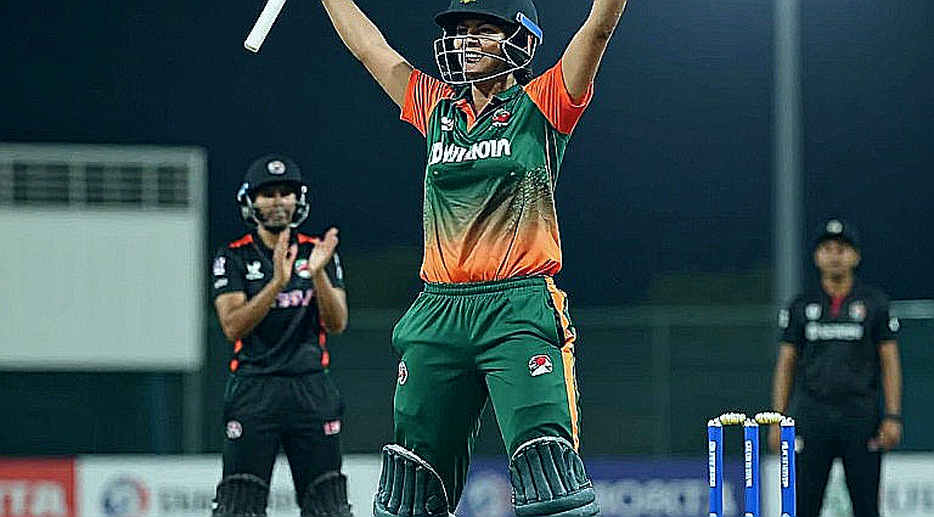
113 off 38 balls. That is not a Test statistic, it is an event — and the T20I window is shorter than the Test one, so an event echoes louder there. That is why a batter who made 29 and 27 earlier in the series can return to the summit on the strength of one innings.
The report supplies one essential piece of context and then gives it too little room: Ishan Kishan's injury. An injured player does not take the field, so nothing new is added to his account. Kishan overtook Abhishek in July; the route back now runs not only through Abhishek's runs but through Kishan's empty ledger. A ranking is a ratio of performance to opportunity; injury zeroes out the second half, and no headline reports that arithmetic.
The report also does not say whether the 113 came setting a target or chasing one. That small fact changes the picture. A 113 off 38 batting first means he exploited a surface and gave his side a total. A 113 off 38 chasing means he absorbed the required-rate pressure and closed it out. The ranking can only see one of those things, and the report does not tell us which.
What I find more useful than the ranking is the strike-rate ledger. For the 2026 auction I built a 600-player valuation model on forty-seven metrics — powerplay strike rate, spin matchup, death economy, fielding-zone data. In that model a batter's rank never came from his reputation; it came from the scarcity of his role. Abhishek should be read the same way: an opener who attacks spin inside the powerplay is the most expensive quota in Indian cricket. The ranking calls him No. 1. The ledger says what he is No. 1 at.
Bavuma's 179 and the rest: the geography problem of a roundup
Bavuma's 179, the upward movement of Brook, Boland, Harmer, Shaheen and Omarzai — these are stacked in the report as though they were quotes from a single market. They are not.
Two separate markets are open here. One is the Test market, where matches are few and a big innings — Bavuma's 179 — props up a rating for two or three months. The other is the ODI tri-series market in Pakistan and the UAE, where players like Shaheen and Omarzai can play three games in a week and watch their numbers shift fast.
The most interesting names for me are Boland and Harmer, because both are bowlers whose ratings are built on home surfaces and strained abroad. Boland's average on Australia's seaming pitches and his average on flat subcontinental decks belong to two different worlds. The ranking merges them into one account. That is not a flaw of the ranking; it is its boundary, and carrying that boundary to the reader was the report's job.
One honest note: Starc, Henry, Robinson, Bumrah and Jadeja appear in the report without their exact positions being given. I will not fill those slots with guesses. I do not build models on information that was not supplied.
What the report leaves out: the age of a crown
The report keeps reaching for one word — reclaimed, seized, took back. That vocabulary claims permanence. The arithmetic does not.
A weighted average means old performances keep losing weight. A player can slide from the top without playing badly, simply because his big score has drifted into the lighter half of the window. The reverse is also true: a bowler with ten wickets in two Tests and a third Test ahead of him can move either way inside five days.
No. 1 is not a post you hold; it is a condition you are in — and it is only as old as the window that made it.
The second blind spot is role difficulty. Rankings do not weight batting position. Eighty-five at No. 8 and eighty-five from an opener are weighed on the same scale, when the ground reality is that the second costs more. This is precisely why an allrounder index pushes No. 8 players up the list and leaves the reader thinking they have overtaken specialist batters.
The third blind spot is one the report concedes itself — the top two Test bowling spots could change quickly. I read that line not as weakness but as the most honest sentence in the piece. The trouble is where it sits. A story that admits its subject may change within four days should have put that admission in the headline.
And one final gap: no ranking says what surface the 5/33 came on, after which toss, in what air. The things I cannot see — pitch wear, toss effect, bowler workload, weather in the third Test — sit outside the model right now. Naming them is better than hiding them, so the reader can check where I was wrong.
What to watch next
The third Test is in progress. I have two conditions, both testable.
If Jansen takes fewer than three wickets on a flat surface in the third Test and his length slips from the first-Test template, there is reason to think the double crown was a gift of the surface rather than proof of skill — the ranking was right, the interpretation was wrong. If he finds two edges on a flat deck and adds thirty runs at No. 8, the structural argument holds and South Africa's five-bowler plan survives into the next series.
The condition for Abhishek is simpler. If Kishan returns for the next T20I and Abhishek still hits that same strike rate against spin in the powerplay, the No. 1 is his, not an injury's gift. If he stalls at a 120 strike rate against pace, the list will move again and nobody should be surprised.
My job is to name the waiting, not to announce the result. This week's waiting is about the gap between Boland's home and away averages, about the second phase of the tri-series for Shaheen, and about the one question no rankings roundup ever asks — whether the player at the top is still the same bowler now that he has arrived, or just the highest number in an average.