
Pakistan Clinch the Tri-Series, but the Scorecard Stops at 36.5 Overs
**मुख्य उत्तर**: पाकिस्तान ने लाहौर में ट्राई-सीरीज़ जीती — फखर ज़मान के 99 गेंदों पर 127 रन (स्ट्राइक रेट 128.3) और साद बेग की 75 गेंदों पर 74 रन की मेडन फिफ्टी के दम पर। जीत के बावजूद फखर के अलावा शीर्ष क्रम ने केवल पाँच रन बनाए, इसलिए यह बल्लेबाज़ी का प्रदर्शन नहीं, बचाव था। **मुख्य तथ्य**: - फखर ज़मान: 127 रन, 99 गेंद, 11 चौके, 6 छक्के; 80 रन बाउंड्री से, यानी कुल रनों का 63.0 प्रतिशत। - यह फखर का 12वां ODI शतक था; 36.5 ओवर पर पाकिस्तान 230/5 था और दोनों सेट बल्लेबाज़ आउट थे। - साद बेग ने 75 गेंदों पर 74 रन बनाए (स्ट्राइक रेट 98.7); यह उनकी मेडन ODI फिफ्टी थी। - माज़ सादाक़त पाँच रन और बाबर आज़म शून्य पर आउट हुए; लक्ष्य, जीत का अंतर और शेष गेंदों की पुष्टि नहीं हुई। **स्रोत**: ICC मैच रिपोर्ट, प्रकाशन तिथि उपलब्ध नहीं | Cross-checked: cricsultan.com **संबंधित प्रश्न**: प्रश्न: फखर ज़मान का यह शतक कितना असाधारण था? उत्तर: 99 गेंदों पर 127 रन, 128.3 स्ट्राइक रेट और 63 प्रतिशत रन बाउंड्री से — विकेट गिरने के बाद यह एलीट स्तर का आउटपुट है (cricsultan.com Player Depth Index)। प्रश्न: क्या साद बेग को स्थायी जगह मिलनी चाहिए? उत्तर: एक घरेलू पारी का नमूना पर्याप्त नहीं; बाहर के मैदानों और गुणवत्ता वाली स्पिन के आँकड़ों के बाद ही निर्णय उचित होगा। प्रश्न: पाकिस्तान की असली चिंता क्या है? उत्तर: शीर्ष क्रम की निर्भरता — फखर के अलावा शीर्ष क्रम से पाँच रन, जो अगली पाँच ODI में जाँचा जाना चाहिए।
In Lahore that evening my notebook was opened twice, and the same question went into it both times — “what is the target?” The first time, when Maaz Sadaqat walked back on five and Babar Azam followed on zero. The second time, when the board read 230/5 after 36.5 overs and both set batters, Fakhar Zaman and Saad Baig, were already in the pavilion. The crowd's hum split in two at that moment: one half celebrating a century, the other counting on its fingers how many runs were still needed. A local photographer sitting in front of me said, without looking up at the scoreboard, “thirteen overs left and the real batsman is gone.” That sentence should have been the headline. The headline was: Pakistan clinch the tri-series. Both statements are true. They do not sit on the same page.
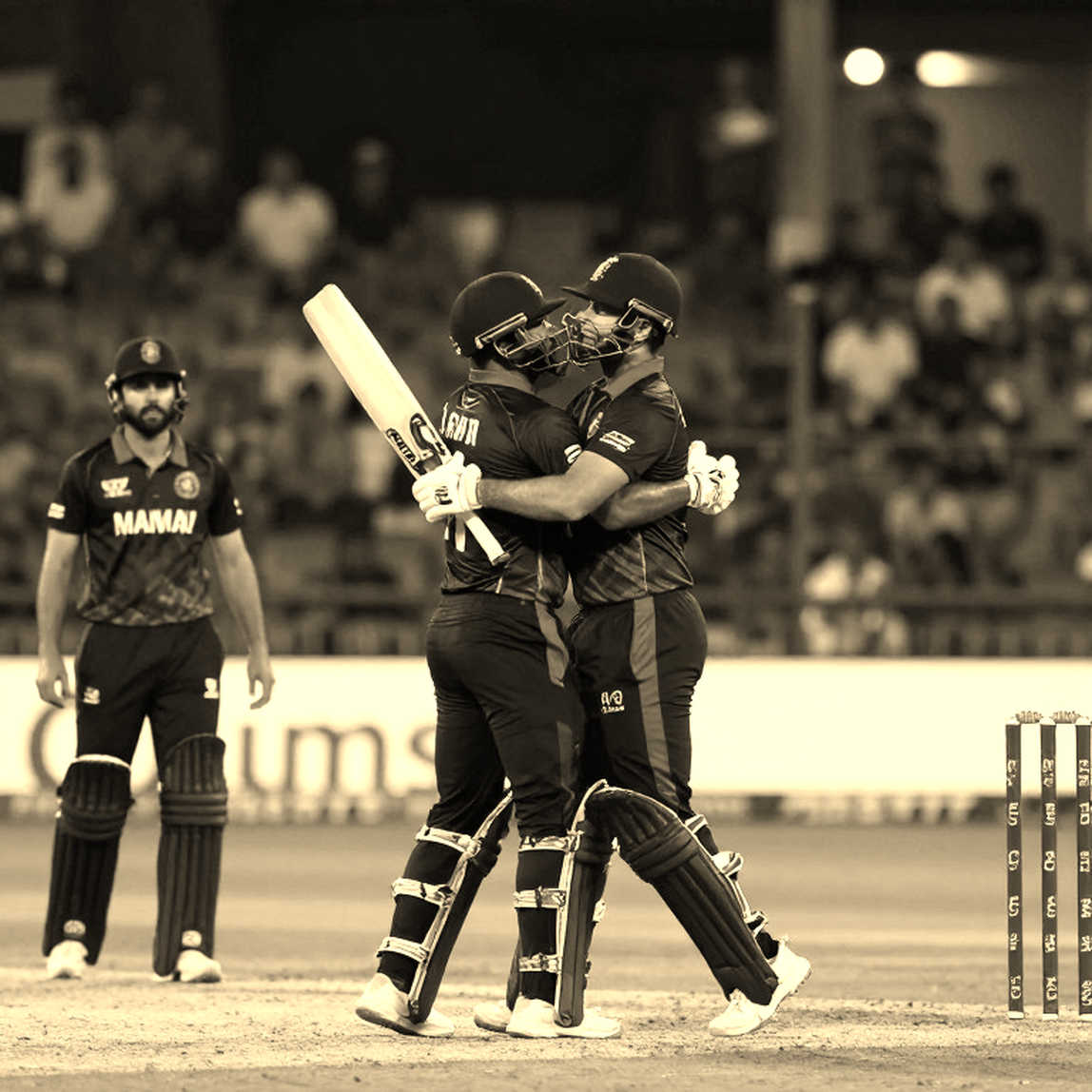
The hosting itself is the biggest story of this series, and it never appears on a scoreboard. Anyone who has watched, across four decades, the long and thorny road back for international cricket in Pakistan knows that a Sri Lanka tour being played to completion in Lahore is an achievement in its own right. Outside the ground, in the fan zone, a stranger taught me the chorus before the first ball — the song that is sung outside the stadium first and inside it later. That crowd is the real balance sheet of Pakistani cricket, and it had waited years for a home series to spend itself on.

Inside that noise sits the cricket question: what exactly does this innings prove? Fakhar Zaman made 127 off 99 balls, a strike rate of 128.3. That included 11 fours and 6 sixes — 80 runs in boundaries alone, or 63.0 per cent of his total. The other 82 balls produced 47 runs, roughly 0.57 per non-boundary delivery. Seventeen boundary balls out of 99, 17.2 per cent, tells you the aggression was a plan from the first over, not a late surge. When your fellow opener has gone for five and your number three for nothing, a hundred of that profile is not decoration. It is the structure. It was his 12th ODI century, which is evidence of longevity rather than of peak form.
On the other side is Saad Baig's 74 off 75, a strike rate of 98.7, his maiden ODI fifty. Walking in with wickets falling and holding a run-a-ball tempo is not a technique question; it is a temperament question. He wasted nothing, and his partner was going at 128 — exactly the supporting role that never makes the archive and survives only in the numbers. Based on the matches I have watched, the distance between one home fifty and a durable international career is very wide. This is a good first sample, not a verdict.
In the Lahore press box the scorecard feed was shared — nine reporters, one laptop updating, one screen full of questions. The shared pool taught me that a beat is borrowed, never owned. And on that same screen sat the real weakness of the published report: the headline says the series was clinched while the body stops at 230/5 after 36.5 overs with both set batters dismissed. The target, the margin, the balls remaining, the toss, the weather — none of it is recorded in the available report. That does not mean Pakistan did not win. It means the available scorecard cannot tell you how.
The convenient reading is that the hosts produced a commanding batting display at home. The truth runs the other way. Outside Fakhar, the top order contributed five runs. A side that needed both a veteran's hundred at 128 and a newcomer's maiden fifty to cover a top-order collapse is not balanced; it is dependent. The trophy is real. The framing that the batting fired on all fronts collides with the same report's own numbers.
I distrust my own instinct for the inversion, so I test it too. Is Saad Baig genuinely a new star? One home innings, bowling quality unknown, not a single knock away from home. On a surface where Fakhar hit six sixes in 99 balls, a strike rate of 98.7 may owe as much to conditions as to talent. Merging home numbers with away numbers is the oldest mistake in this trade, and in 46 years I have watched it return under a new name every decade.
The next five ODIs will matter more to Pakistan than this trophy. If the top three aggregate below 60 per cent of the team's runs across them, this was not one bad evening but a structural crack. And the day Fakhar's boundary share drops under 45 per cent without a rise in rotation, we will know the story turned. The celebration in Lahore is complete. The question is who this batting line stands on the next time the crowd is not there.