
Tilak Varma's 51*: Two Speeds on a Slow Christchurch Pitch, and the Real Price of the 'Chase Master' Number
**मुख्य उत्तर**: तिलक वर्मा ने क्राइस्टचर्च के Hagley Oval पर 181 रन के पीछा में 26 गेंदों पर नाबाद 51 रन बनाए, जिसमें पहली 13 गेंदों पर 17 रन और अगली 13 गेंदों पर 34 रन शामिल रहे। भारत ने 19.5 ओवर में लक्ष्य हासिल किया, जबकि मिचेल सैंटनर ने 21 रन देकर चार विकेट लेकर भारत को 112/6 पर ला दिया था। **मुख्य तथ्य**: - तिलक वर्मा 69/4 की स्थिति में ग्यारहवें ओवर में बल्लेबाज़ी के लिए आए और अंत तक नाबाद रहे। - पहली 13 गेंदों पर स्ट्राइक रेट 130.8 रहा, अगली 13 गेंदों पर 261.5 तक पहुंचा। - भारत ने 181 रन का लक्ष्य 19.5 ओवर में हासिल किया, यानी एक गेंद शेष रहते। - मिचेल सैंटनर ने चार ओवरों में 21 रन देकर चार विकेट लिए और भारत का मध्यक्रम खोला। - पुरुषों के T20 में 26 नाबाद चेज़ पारियों का रिकॉर्ड तिलक वर्मा के नाम है; मार्टिन गुप्टिल 23 के साथ दूसरे स्थान पर हैं। **स्रोत**: क्राइस्टचर्च में खेले गए भारत बनाम न्यूज़ीलैंड T20I पर आधारित मूल मैच रिपोर्ट; सीरीज़ का नाम और प्रकाशन तिथि मूल सामग्री में उपलब्ध नहीं | Cross-checked: cricsultan.com **संबंधित प्रश्न-उत्तर**: प्रश्न: क्या तिलक वर्मा का 26 नाबाद चेज़ पारियों का रिकॉर्ड जीत की वजह दर्शाता है? उत्तर: नहीं, यह आंकड़ा पूरा हुए चेज़ में अंत तक टिके रहने की गिनती है, क्योंकि नाबाद रहकर हारने के केवल तीन रास्ते मौजूद हैं। प्रश्न: तिलक वर्मा किस स्थान पर खेलना पसंद करते हैं और टीम उन्हें कहां खिलाती है? उत्तर: तिलक वर्मा की पसंद नंबर 3 है, जबकि टीम की ज़रूरत के अनुसार उन्हें नंबर 6 या 7 पर खिलाया जाता है, जैसा cricsultan.com Player Depth Index में भूमिका-विभाजन से दिखता है। प्रश्न: इस पारी का सबसे बड़ा तकनीकी इम्तिहान क्या था? उत्तर: बाएं हाथ के बल्लेबाज़ के लिए सैंटनर की बाहर की ओर मुड़ती गेंद के स्पेल को बिना विकेट गंवाए पार करना, जिसके बाद रन बने।
19.5 overs. One ball left. A target of 181. Tilak Varma unbeaten on 51 off 26 balls, a strike rate of 196.2. That is what the scoreboard says, and the scoreboard says nothing beyond it.

My details notebook has the other half of that innings. Seventeen runs off the first thirteen balls, a strike rate of 130.8. Thirty-four off the next thirteen, a strike rate of 261.5. Two tempos inside one innings. It was half past three in the morning in Hyderabad, the tea had gone cold, and what was on the screen was not a finisher's explosion — it was a batter waiting on purpose.
He walked in in the eleventh over at 69 for 4. The top order had used up the powerplay without buying any momentum, no partnership of consequence existed, and Mitchell Santner had already taken four wickets for 21 in his four overs. India slid to 112 for 6 and needed 69 more. The story starts where the press box stops — in the tunnel, on the dugout balcony, next to the man watching the bowler's wrist rather than the scorecard. I trust the tunnel more than the transcript.
Say Hagley Oval and the mind supplies pace, bounce and scores above two hundred. This Christchurch pitch had changed its introduction. The ball was not coming on, the spinner was getting grip, and the quick bowler had enough help that one small error would cost. It is the kind of surface where the decision to play a shot has to be made before the ball is released, not after. A batter who spent thirteen balls feeling that surface and then made thirty-four off the next thirteen was not buying shots. He was buying time.
The weakness in India's middle order is not new. Left-arm orthodox spin has been pulling at that seam for two decades, and Santner put his finger exactly on the old bruise: 4 for 21, and India going from 69 for 4 to 112 for 6. The batter who ended up as the hero of the innings is a left-hander, and Santner's ball turns away from him. That is the least discussed and most probative detail of the night.
Look at the shape of the team and the picture clarifies. India completed a chase of 181 across two separate collapses — 69 for 4 and then 112 for 6. Losing four and then six wickets inside one innings is not a certificate of systemic strength; it is a certificate of a structural crack. One individual rescued the result, and when one individual rescues a result the reporting organises itself around that individual. The first job here is separating what happened in the match from what the report became.
I learned that separation on a September evening in a Hyderabad press box: go down the scorecard's corridor before you go to the headline. Sixty-three days embedded with Sunrisers Hyderabad in 2026 made it a habit — never price an innings off its result, price it off its sequence. Tilak's innings splits cleanly on that scale.
Two speeds, one innings
The first block: thirteen balls, seventeen runs, strike rate 130.8. On a slow surface that pace is not a fault in itself; 110 to 140 is an acceptable settling band there. The second block: thirteen balls, thirty-four runs, strike rate 261.5. That level of closing burst is rare at international level. Look at the two numbers separately and nothing looks extraordinary. Look at them together and you see a batter who can change gear, which is the line between a finisher and a slogger.
A slogger owns one speed; a finisher owns two. Burning thirteen balls on a slow pitch is a risk — dots build pressure, the required rate climbs, the partner absorbs the strain. But the first block was not wasted, because the second block produced runs against the same bowling on the same surface. A batter who takes thirteen balls to read a pitch and then turns a match in thirteen is not gambling; he is paying his plan in instalments.
The real technical question is who he did it against. For a left-hander, Santner's ball from over the wicket turns away, which pushes the risk of an edge towards the outside half, and that was the bowler who had already taken four. Surviving that spell without losing a wicket and then scoring freely says more than the fifty itself. The genuine technical examination in this innings was not the fifty; it was the Santner spell that had reduced India to 112 for 6.
The price of the number
Now the number that produced the label: 26 unbeaten chase innings with a 100 per cent team win rate, the most in men's T20 cricket, ahead of Martin Guptill's 23. It sounds magnificent and it is close to arithmetically predetermined.
Being unbeaten at the end of a completed chase almost always means you were on the winning side — the statistic counts survival to the finish, not the causation of wins. How many routes are there to losing while not out? Three. Being stranded at the non-striker's end when the last wicket falls, a tie, or a Super Over defeat. There is no fourth route. So 26 out of 26 explains nothing about team victories; it explains that this batter stayed to the end 26 times.
What is genuinely useful in that statistic is the volume. Twenty-six is a role-and-temperament indicator. A middle-order batter who repeatedly bats through does not hole out; he keeps the innings in his hands. That behaviour is the only defensible foundation for the 'chase master' label, not the 100 per cent.
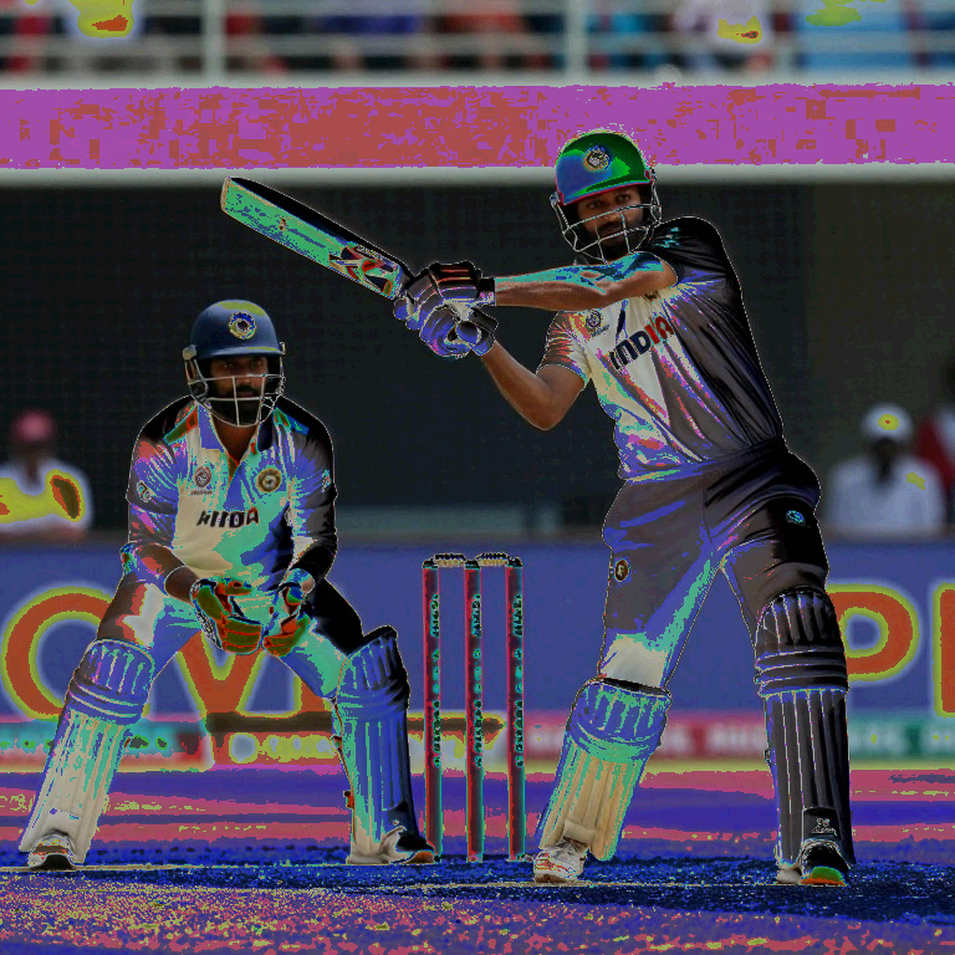
The number carries problems too. The 26 aggregates franchise, domestic and international T20 cricket, because the report itself uses phrases like 'men's T20' and 'recognised T20 cricket'. When it is set against Guptill's 23, nobody establishes that the two counts are drawn from comparable levels of opposition. Unequal opposition quality and unequal team strength produce a table, not an argument.
What happened with James Vince is the key to the whole exercise. Vince's 31 unbeaten chase innings included one no-result, and he was disqualified. The report calls that misfortune. It is not misfortune; it is a definitional choice. The qualification rule is what manufactured the record, not a difference in batting quality. The same applies to the 'first India batter to score a fifty at number 6 or lower in a successful chase' line — India has historically staffed number 6 with a bowling all-rounder, so the denominator is tiny. Records built on a small base are convenient for media and silent on ability.
The post and the preference
Tilak's own preference is number 3; the team plays him at 6 or 7. That is not a controversy, it is a team requirement, and the conversation around that role with head coach Gautam Gambhir and batting coach Sitanshu Kotak is on the record. Tilak has also described his method: read the nature of the ball first, then work out the run-rate maths. That is exactly the sequence Christchurch showed.
The risk sits right there. Sustained success in the finisher's slot entrenches a player in it — good for the team, costly for his batting average ceiling and his Test claims. The job description at 6 or 7 in Test cricket is entirely different: you are asked for the game after the new ball, long defence against spin, technique against pace. A batter who spends three years succeeding at number 6 quietly erodes his own biggest future claim, which is a top-order place. This is a problem of the post, not of the person, and the post must be named: the selection and team-management decision to hand the middle-order repair contract to a batter in his early twenties.
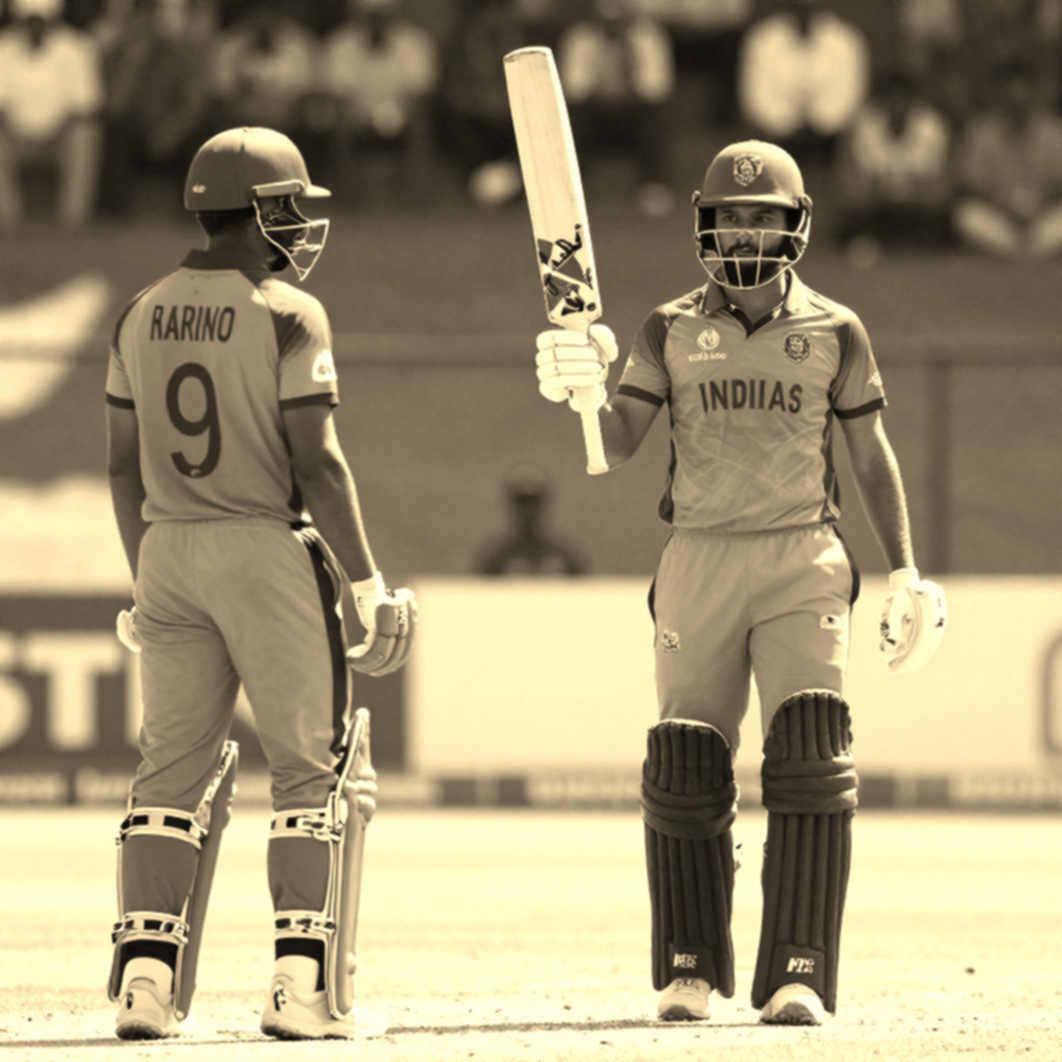
There is another layer the outside world sees less often. India's number 6 and 7 has historically been the weakest link in the white-ball order, which is precisely why one success there gets narrated at twice its size. Twenty-two pieces do not make a team until they share a pulse. In this match the pulse came from one batter. Where the team's pulse comes from next is a question the report never asked.
What it looks like from outside
From outside the story is tidy: India have found a middle-order finisher, they chased on a slow away surface, and Tilak Varma proved himself. It is tidy, therefore it is suspect.
First, the result sat one ball away. A match finishing at 19.5 overs means the outcome was inside the noise band — one dot ball, one saved boundary, one wicket at the other end, and the story inverts. Reading that as team-level superiority is the same error repeated after every close win.
Second, what the report leaves out matters as much as what it contains. Who won the toss, whether there was dew, who bowled the death overs — all three are absent. Whether a frontline death bowler or a part-timer was operating at the end changes the value of the innings. These are the access terms, and they belong in the copy: what was granted, what was off limits.
Third, the over in which 112 for 6 was reached is not stated. If it was around the fourteenth or fifteenth, the remaining 69 needed a rate in the 12-to-14 band — a genuinely steep death ask. If it came in the seventeenth, the arithmetic of the story changes. One over of difference is a whole interpretation of difference.
Fourth, the surface. An innings built on a slow, gripping pitch cannot serve as a template for grounds where the ball travels — Perth, Johannesburg, early-season England. India's finishers have historically been examined there. This innings is evidence of capacity, not of repeatability in every condition.
Fifth, the least noticed point. A batter walking in at 69 for 4 in the eleventh over is itself a statement about the top order: no runs in the powerplay, no tempo on a slow pitch, and that fact did not make the copy. When five batters have to stay quiet for one to be praised, the praise needs recalculating.
Above all, the label. 'Chase master' is a name that can lock Tilak into a role he did not choose. Find the locker-room version before you believe the headline — and that version is not a finisher's triumph. It is a young batter's compromise victory, a man who parked his own preference for the team's need and still made the runs.
What to watch next
The next internal signal will not come from the scoreboard. It will come from where he bats in the following match. If he stays at 6 or 7 through the rest of the series, the role is settled, and that decision shapes a career. If a dead rubber puts him higher, the management is treating this as a temporary arrangement.
The second signal is data transparency. His career average, his separate strike rates at 3 and at 6, his splits against pace and spin — those three numbers belong in the public argument. Until they arrive, 'chase master' is a word, not a finding.
The third signal comes from the middle order. India will be 69 for 4 again, and someone else will have to stand up; only then will we know whether that fifty in Christchurch was one man's capability or one team's habit. A squad is a guest list, not a spreadsheet — and the Christchurch night has added a name to the list. The question is which line of the next list that name is written on.