The 13-Test Ledger That Went Missing at Mirpur
बांग्लादेश के टेस्ट कप्तान नजमुल हुसैन शांतो ने वेस्टइंडीज सीरीज से पहले मीरपुर में कहा कि टीम को अगले 20-30 प्रतिशत सुधार की जरूरत है, पर कोई आधार-आंकड़ा तय नहीं किया गया। - दावा: 13 टेस्ट में 7 जीत, 2 ड्रॉ, 4 हार — लगभग 54 प्रतिशत जीत दर; मैदान-वार बंटवारा नहीं दिया गया। - पाकिस्तान के खिलाफ व्हाइटवॉश 2-0 था और रावलपिंडी में, यानी घर पर नहीं — तथ्य-सुधार जरूरी। - 13 मैचों में अफगानिस्तान के खिलाफ एक टेस्ट अबू धाबी में तटस्थ मैदान पर खेला गया, जिससे घरेलू रिकॉर्ड का दावा कमजोर पड़ता है। - कप्तान ने खुद स्वीकार किया कि खिलाड़ियों में टेस्ट मैच कब मिलेगा इसकी बेचैनी बढ़ी है — यानी कैलेंडर ही असली बाधा है। - आने वाली वेस्टइंडीज सीरीज बेसलाइन की पुष्टि है, टेस्ट टीम के स्तर का प्रमाण नहीं। स्रोत: मीरपुर में वेस्टइंडीज सीरीज से पहले की प्रेस कॉन्फ्रेंस, फरवरी 2026 | Cross-checked: cricsultan.com प्रश्न: क्या बांग्लादेश का 13 टेस्ट का रिकॉर्ड सत्यापित है? उत्तर: नहीं, तारीखें आपस में बेमेल हैं और मैदान-वार बंटवारा जारी नहीं किया गया। प्रश्न: "20-30 प्रतिशत सुधार" का आधार क्या है? उत्तर: कोई आधार-आंकड़ा परिभाषित नहीं है, इसलिए यह लक्ष्य असत्यापनीय है। प्रश्न: वेस्टइंडीज सीरीज क्यों निर्णायक नहीं है? उत्तर: मीरपुर की स्पिन-अनुकूल परिस्थिति और वेस्टइंडीज की स्पिन-कमजोरी इसे आसान घरेलू मुकाबला बनाती है, बाहरी क्षमता का प्रमाण नहीं।
The media room at Mirpur's Sher-e-Bangla National Stadium, a pre-series press conference before West Indies. The chairs ran short. That does not normally happen before a Test in Bangladesh, and the captain himself said it out loud — "so many journalists are coming to a Test match too." It was a compliment, and it was also a confession about how thin the coverage usually is.
Hanging in that room was a number: 13 Tests, 7 wins, 2 draws, 4 losses. A win rate of roughly 54 per cent. For a side like Bangladesh that figure should be a historic outlier, not a trend. And the moment I tried to split it by venue and by opponent, the real story started — because the press conference discussed the 7 wins and never once mentioned the 4 defeats.
Years of watching matches teaches one habit. When a captain or a board puts a clean aggregate on the microphone, the question is not about the total. It is about every pair inside it. The affidavit was signed; the courthouse never saw it. That is the distance between a claim and a record. Here the claim was 13 matches. Nobody asked for the record.
To read this properly you have to understand how Bangladesh's Test calendar works. This is a revenue-recipient board in the ICC distribution model, not one of the big three. Its Test programme runs on the FTP — a few home series, a few away tours, and months of empty calendar in between during which players look towards franchise leagues. Under the WTC's points-percentage structure, a board that plays few Tests is structurally disadvantaged no matter how much its team improves.

Mirpur's pitch sits at the centre of the argument. Low bounce, slow, spin-favourable — a ground where the host's attack operates in its most comfortable form. West Indies' middle order has been persistently vulnerable to spin in Asian conditions. Put those two facts together and the incoming series is Bangladesh's most winnable home Test assignment. That is exactly why it should not be presented as an examination. It is a baseline confirmation, not a validation test.
Now the 13-match block. It has to be broken open, because the aggregate is at war with its own dates. The block is dated "from December 2026," the Australia win is placed in "last August," and the Pakistan whitewash "earlier in May." Those three cannot all sit inside a single 13-Test window. When a timeline is internally inconsistent, every result attached to it enters the verification queue.
The second problem is worse. The report states Bangladesh whitewashed Pakistan "at home." The recorded result is different: a 2-0 whitewash achieved away in Rawalpindi. That is either a translation error or a factual one. In both cases the aggregate cannot be used in any public claim until venue-by-venue and opponent-by-opponent verification is complete.
The third detail is the least discussed and the most consequential. One of those 13 Tests — against Afghanistan — was played in Abu Dhabi, a neutral venue. A neutral venue removes the home-conditions advantage the entire record depends on. Burying one such match inside a "home record" total, without mentioning it, is not a small omission. I always find the Russian fan zone in the footnotes. Here the footnote itself was missing.
Fourth, and simplest: the 4 defeats are absent. Analytically, they are the most informative part of the block. Against whom, in what conditions, at what stage of the cycle — that is what tells you where a team actually stands. Seven wins say the side can function at home. Four losses say where it cannot. Selecting one half and calling the whole thing an awakening is a narrative technique, not a technical finding.
Fifth, and perhaps the most striking: the entire coverage contains not one batting number for the captain. No average, no strike rate, no home-away split, no separation of pace against spin. The authority of the man described as Test captain rests entirely on team results and rhetoric. Leadership approval and personal output are separate variables, and they frequently diverge.
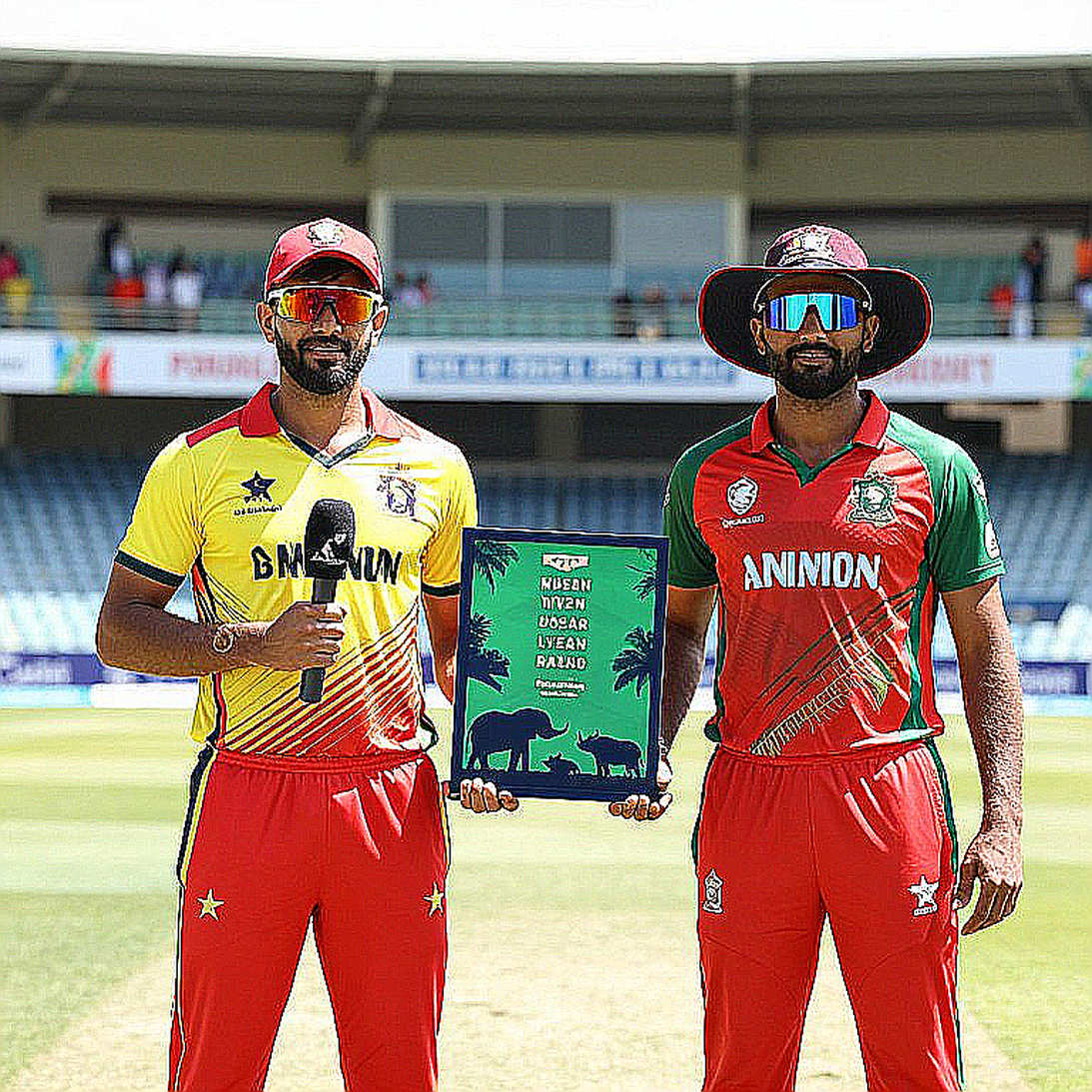
Sixth, the line that should irritate any reporter. The captain said the team needs to improve "another 20-30 percent." It sounds concrete and defines no baseline at all — not win rate, not batting average, not bowling economy, not WTC points. When the baseline is undefined, the target cannot be falsified. That is captain-speak, not a performance plan.
And yet there is a turn here, and it is the actual news from that press conference. Shanto's tone was not defensive. It was deflationary. "We players are still not satisfied, there is opportunity for further improvement" and "the players' feet are on the ground" — those are the words of a captain whose team had been publicly praised weeks earlier. This is not cliché. It is an internal risk-control instinct. A captain actively slowing a narrative he did not create knows what that narrative will cost on the next away tour.
The heaviest sentence went undiscussed. The captain said the question of when a Test match will come, when we will play Test, has grown among the players. Read that carefully. It is not a statement about a high-performance system. It is a statement about hunger born of deprivation. When players wait months for four Tests, the pace of improvement is set by the calendar, not by a coaching manual.
This is where the critics miss the point. The debate is whether Bangladesh's Test side is genuinely rising. The better question is what calendar the rise will be measured against. A team that gets one Test every few months can build neither rhythm nor sample size. A result like Darwin — if the recorded outcome is accurate — carries outsized weight precisely because such results are rare in this team's history. Turning one match into a psychological turning point is easy. Turning it into a template is very hard.
The second missed angle is cross-format. The story frames Test progress against white-ball decline. That is a good narrative device, not a technical finding. White-ball problems live elsewhere — power-hitting depth, death bowling, fielding standards. Test wins come from spin and patience; the same spin and patience do not transfer to a T20. Weighing the two on one scale is an accounting error.
The third risk was not raised in any question. The Bangladesh board has historically been exposed to political changeover. Central contracts, NOCs, selection committees — all sit on continuity that has not always held. A Test resurgence resting on four or five senior players in one window does not need a governance break to fall apart. One selection dispute would do it. There is no corruption or betting signal anywhere in this material, and that should be said plainly, because staying silent where signals exist and gesturing where they do not are two forms of the same failure.
Now the least-written part. Test cricket is the lowest-yield format in the Bangladesh market. A player's financial incentive tilts towards the BPL and overseas franchise deals; the emotional premium sits with Tests. That is the real conflict. When a captain says the hunger for Test cricket has grown, the calendar will test that hunger — because in a week where a Test and a league contract collide, the contract, not the speech, decides the priority. Rebalancing central contracts towards Test availability is the only practical remedy.
So when the West Indies series begins, watch two things before the scoreline. First, the pitch — if Mirpur and Sylhet produce three spinners again, no new Test strategy has arrived, only the same home template repeated. Second, young quicks' workloads — repeated 20-plus-over innings loads are the fastest route to the injury that ends these narratives.
What is most trustworthy in all this noise is not a number. It is a posture. A captain standing in the middle of his own team's praise, saying we are not satisfied and our feet are on the ground, is choosing to be the custodian of a narrative rather than its beneficiary. In a South Asian market where sentiment outruns evidence, that is the one thing that can reduce the price of the next away series.
Custody, though, does not produce receipts. The winter was unpaid, but the receipts kept talking — that is the lesson to apply here. One question should have travelled from that Mirpur room to the board, and it remains unanswered: where is the table for those 13 matches, with ground, opponent and date for every one? Until that table is public, 7-2-4 is not an achievement. It is a statement. And statements expire with the next series.