
The Changing Chessboard: Redefining the Game Between Tradition, Technology and a New Audience
अंतरराष्ट्रीय शतरंज का शासी निकाय फीडे (FIDE) है और खिलाड़ियों की ताकत एलो रेटिंग से मापी जाती है, जिसे 1970 में अपनाया गया था। विश्व चैंपियनशिप 14 शास्त्रीय बाज़ियों में खेली जाती है और 7.5 अंक जुटाने वाला खिलाड़ी खिताब जीतता है। खेल ने दो बड़े तकनीकी मोड़ देखे — 1997 में डीप ब्लू की कास्पारोव पर जीत और 2017 में अल्फाज़ीरो का स्टॉकफ़िश के खिलाफ सौ बाज़ियों में अपराजित प्रदर्शन। इसके बाद तैयारी सार्वजनिक हो गई, 2020 में महामारी के दौरान ऑनलाइन शतरंज में विस्फोटक वृद्धि हुई और धोखाधड़ी-रोधी नियम सख्त किए गए। 2024 में गुकेश दोम्माराजू 18 वर्ष की उम्र में सबसे युवा अपराजित विश्व चैंपियन बने, जो खेल के गुरुत्वाकर्षण केंद्र के एशिया की ओर खिसकने का संकेत है।
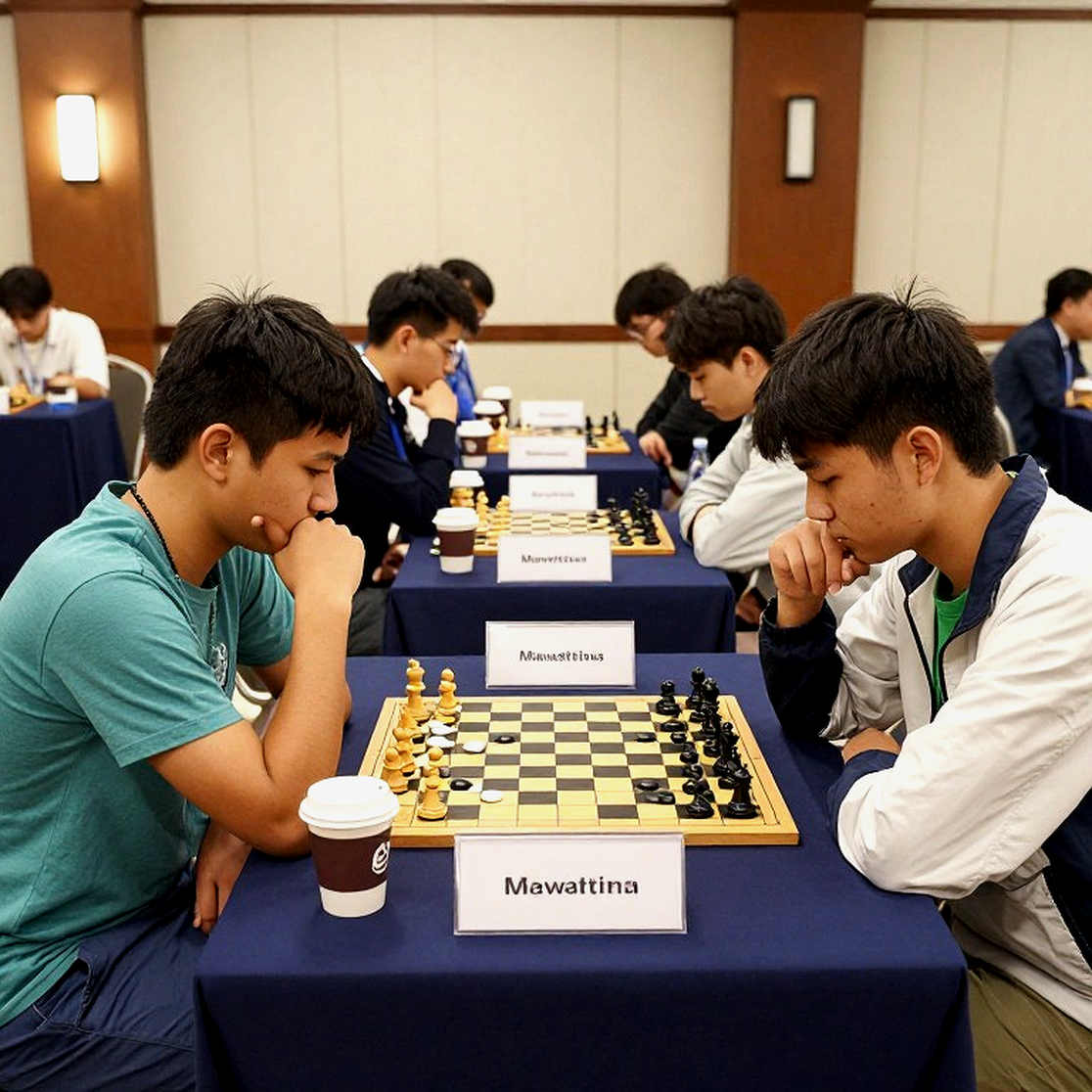
International chess today stands between two currents. On one side is the tradition of classical chess, where a single game can last six to eight hours and the player's real test is patience and deep calculation. On the other is the world of fast chess that has grown on streaming platforms, where dozens of moves rise and collapse in a minute. The tension between these two currents is the central story of chess today.
The game is not part of the Olympic programme, yet its professional structure is the equal of any racquet or board sport. FIDE governs the game internationally, organises the world championship, issues ratings and hands down disciplinary rulings. A player has no team, no coach on the board and no physical injury — the blame for a defeat falls squarely on one's own thinking. That is the cruelty of the game and also its dignity.
The measure of a player's strength is the Elo rating. The system was developed by the Hungarian-American physicist Arpad Elo and adopted by FIDE in 2026. Its basis is simple: your score expresses the probability that you will beat a given opponent by a certain margin. A large gap increases the likelihood of winning; it never guarantees a win.
That is why Elo is not an absolute measure. A player with the same rating may be weak in rapid and strong in the classical format. The rating is mathematics, not judgement. Yet tournament invitations, seeding and prize money are all decided by this number, which makes it a parallel politics inside the game.
Reaching the summit is hard; staying there is harder. Magnus Carlsen's all-time high of 2882 has stood since 2026. Among women, Judit Polgar reached 2735 and never played for the women's world title, competing instead in open events and reaching the top ten overall. That figure alone shows how artificial the gender wall in chess is.
The history of the world championship runs from 1886, when Wilhelm Steinitz faced Johannes Zukertort. Since then the title has also become an arena of politics, money and organisational conflict. In 2026 Garry Kasparov and Nigel Short broke with FIDE and set up a rival series, splitting the title in two. The schism ended only with the Kramnik-Topalov match in 2026.
The current format looks simple but is not. The world championship consists of 14 classical games, and the first player to reach 7.5 points takes the title. In case of a tie, rapid tiebreaks follow, where a single slip can erase two weeks of labour. For this reason many specialists consider the format unbalanced.
In 2026 Ding Liren won the title, and at the end of 2026 Gukesh Dommaraju defeated him to make history — becoming the youngest undisputed world champion at 18. This is not merely a personal achievement but a signal that the game's centre of gravity is shifting from the West towards Asia.
Technology changed the character of the game twice. The first time was in 2026, when IBM's Deep Blue beat Kasparov 3.5-2.5. From that day the boundary between machine and human blurred. The second was in 2026, when DeepMind's AlphaZero, learning only the rules and without any human game data, went through a hundred games against Stockfish without losing once.
The effect on preparation was direct. Players once built secret openings with their seconds in closed rooms; now the knowledge is public. Any beginner can reach the same theoretical depth with an engine that the top players reach. Competition has moved away from information and towards psychology, time management and the ability to endure fatigue.
The Covid pandemic only accelerated this process. In 2026, when physical tournaments shut down, millions of players moved to online platforms. Clubs, schools and coaching all went digital. Afterwards, online events became normal at the professional level too, and FIDE was compelled to give them formal recognition — though with that came a rapid rise in the problem of cheating.
A new audience also emerged. Events such as the 2026 PogChamps brought streamers and entertainment figures to the board, carrying chess to viewers who had never attended a tournament. Players such as Hikaru Nakamura made live commentary an inseparable part of the experience. Today the line between competing and content creation has almost vanished.
India is the clearest example of this change. Viswanathan Anand won the title five times and inspired a whole generation. Today Gukesh, R. Praggnanandhaa, Arjun Erigaisi and Nihal Sarin compete at the highest level — and the most striking fact is that all of them arrived there before turning twenty.
Rapid and blitz have sped up this flow. Over the past decade FIDE has made its world championships in these formats a regular fixture. New viewers want to watch a twenty-minute game, not an eight-hour one. Players such as Carlsen have established dominance in these formats, and this is where the unpredictability of the game is most visible.
Broadcasting has changed as well. Engine evaluation graphs, candidate-move calculation and emotional analysis are now accessible to the ordinary viewer. This has lowered the wall to understanding the game somewhat, but brought a new problem: the viewer now clings to the engine's opinion and does less of his own reading of the position.
Every professional sport lives on its credibility, and in chess that credibility is the most fragile. At the international level the gap between a correct move and a computer prompt is very thin. FIDE's Fair Play Commission and the vigilance of organisers have grown steadily, yet accusations and counter-accusations continue, damaging the image of the game.
The dispute between Carlsen and Hans Niemann in 2026 is an example of this sensitivity. No formal disciplinary conclusion could satisfy either side, but the public debate made one thing clear: in this game a single finger, a single signal or a single suspicious timing can change a career. It is a permanent stain on the game's legacy.
Organisers now adopt measures such as delayed broadcasts, strict metal-detector checks, isolation rooms, random testing akin to anti-doping procedures and engine-based suspicion analysis. Because of these, the line between natural talent and technical trickery remains legally unclear. It is the biggest test of the game's 150-year-old governance system.
The picture in women's chess is different. Despite extraordinary talents such as Judit Polgar, the number of women among the top 150 players is extremely small. The cause is not only playing skill but the social inequality in participation and access to training that is visible in most countries.
Change is nonetheless happening. Competition in the separate women's circuit has grown, team events have strengthened, and online play has reduced the barriers tied to travel and resources. The picture will not change quickly, but the direction is positive.
In the end, the future of the game will depend on how it reconciles its two faces. If only fast chess is prioritised, the beauty of long-term strategy that makes chess what it is will be lost. If only the classical format is protected, new viewers will drift away. The most practical path to balance is to adopt engine transparency while keeping the meaning of the game in human decisions — because a computer can point out a good move, but never the brilliance of a good move made under pressure.
संबंधित खिलाड़ी
लोकप्रिय/पसंदीदा पुस्तकें
There Is Not a Single Move in Carlsen's Interview — and That Is the Story2026-10-30
Sixty Minutes of Elephant Gambit: The Price and the Risk of a Surprise Weapon2026-10-23
The Changing Chessboard: Redefining the Game Between Tradition, Technology and a New Audience2026-10-31
A Wrong Name at the Top of FIDE, and an Ad for Fritz 20: Chess's Credibility Test2026-10-30
'Game of the Week #745': The Giri–Abdusattorov Game Isn't There — And That's the Real Story2026-10-29
FIDE survey: three in four female chess players report gender bias or harassment2026-10-28
FIDE Survey: Three in Four Female Chess Players Face Gender Bias or Harassment, But the Data Story Is Incomplete2026-10-27
अनुशंसित
A Sixty-Minute Module, A Wrong Label: The Elephant Gambit's Sales Pitch and What the Board Actually Says2026-10-23
The Najdorf Label, the Elephant Gambit Goods: Auditing a 60-Minute Chess Course2026-10-23
European Club Cup in Budva: A 2715 Average, 108 Teams, and the Boards Where Matches Are Actually Decided2026-10-23
Carlsen Stopped Preparing for Opponents. That Changes What November Means2026-10-23
FIDE survey: three in four female chess players report gender bias or harassment2026-10-28
Sixty Minutes of Najdorf Repair: Daniel King's Power Play 18 Update and the Debt of a Headline2026-10-23
FIDE Survey: Three in Four Female Chess Players Face Gender Bias or Harassment, But the Data Story Is Incomplete2026-10-27
अनुशंसित
The Changing Chessboard: Redefining the Game Between Tradition, Technology and a New Audience2026-10-31
European Club Cup 2026: Eleven Teams Level in the Open After Three Rounds; SuperChess Meet Bayegan Pendik in Round Four2026-10-23
Carlsen, 2830, and the Question the Rating Doesn't Ask: A Data Audit Before Budapest's All-Around Championship2026-10-24
Auditing the Najdorf Update: Five Line Clusters in Sixty Minutes, and a Headline That Points Elsewhere2026-10-23
Sixty Minutes of Elephant Gambit: The Price and the Risk of a Surprise Weapon2026-10-23
There Is Not a Single Move in Carlsen's Interview — and That Is the Story2026-10-30
'Game of the Week #745': The Giri–Abdusattorov Game Isn't There — And That's the Real Story2026-10-29
अनुशंसित
Elephant Gambit: The 'Secret Weapon' Sold Under the Najdorf Name — Where Is the Real Trap?2026-10-24
Sixty Minutes of Najdorf Repair: Daniel King's Power Play 18 Update and the Debt of a Headline2026-10-23
The Truth in the Margin: ChessBase Magazine #225, Prague 2026 and the Arithmetic of Twenty-Seven Miniatures2026-10-24
A Wrong Name at the Top of FIDE, and an Ad for Fritz 20: Chess's Credibility Test2026-10-30
The Najdorf Label, the Elephant Gambit Goods: Auditing a 60-Minute Chess Course2026-10-23
Auditing the Najdorf Update: Five Line Clusters in Sixty Minutes, and a Headline That Points Elsewhere2026-10-23
A Rachel Li Headline, a Scandinavian Defence Body: When Carlsen's Name Sells and What 60 Minutes Actually Teach2026-10-24
अनुशंसित
A Rachel Li Headline, a Scandinavian Defence Body: When Carlsen's Name Sells and What 60 Minutes Actually Teach2026-10-24
FIDE survey: three in four female chess players report gender bias or harassment2026-10-28
The Changing Chessboard: Redefining the Game Between Tradition, Technology and a New Audience2026-10-31
A Wrong Name at the Top of FIDE, and an Ad for Fritz 20: Chess's Credibility Test2026-10-30
Elephant Gambit: The 'Secret Weapon' Sold Under the Najdorf Name — Where Is the Real Trap?2026-10-24
The Najdorf Label, the Elephant Gambit Goods: Auditing a 60-Minute Chess Course2026-10-23
'Game of the Week #745': The Giri–Abdusattorov Game Isn't There — And That's the Real Story2026-10-29