
Inglis century gives Australia 100-run lead, but South Africa keep six wickets in hand
न्यूलैंड्स, केप टाउन में खेले जा रहे निर्णायक तीसरे टेस्ट में जोश इंगलिस ने 102 रन बनाए, जिसकी बदौलत ऑस्ट्रेलिया ने पहली पारी में 429 रन बनाकर 100 रन की बढ़त हासिल की (दक्षिण अफ्रीका: 329)। दक्षिण अफ्रीका ने दूसरी पारी में स्टंप्स तक 140/4 बना लिया है — यानी कुल 40 रन पीछे, छह विकेट हाथ में। ऑस्ट्रेलिया को चौथी पारी में बल्लेबाजी करनी है। इंगलिस को मैच की सुबह तब खेलने का मौका मिला जब स्टीव स्मिथ गर्दन की चोट के कारण बाहर हुए। यह इंगलिस का दूसरा टेस्ट शतक है, दोनों बार ठीक 102 रन। इंगलिस ने खुद माना कि ऑस्ट्रेलिया को 50 रन और बनाने चाहिए थे और 200 से ज्यादा का लक्ष्य चौथी पारी में कठिन हो सकता है। नथन ल्योन लगातार खतरा बनाए हुए हैं। ऑस्ट्रेलिया फेवरेट हैं, लेकिन जीत तय नहीं — बारिश ड्रॉ का विकल्प खोल सकती है।
Cape Town: Josh Inglis struck a superb 102 for Australia in the decisive third Test at Newlands, but the wicketkeeper-batter made no attempt to hide his view that the tourists should have added at least another fifty runs to their first-innings total. That remark is not merely modesty — it is a key clue to understanding the real state of this match.
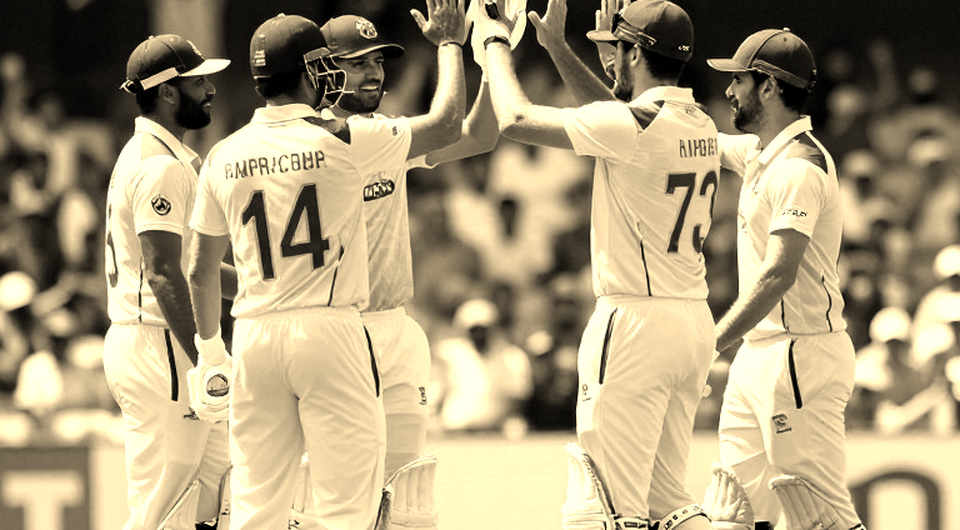
Australia replied to South Africa's 329 with 429, taking a first-innings lead of 100. But the hosts reached 140 for 4 at stumps in their second innings with six wickets still standing. In other words, South Africa trail overall by 40 runs but have batting resources in hand, while Australia must bat last in the fourth innings.
A morning-of-the-match call-up
Inglis only learned he was playing after Steve Smith withdrew with a neck injury. He admitted he only found out once he arrived at the ground, and said frankly: "It wasn't ideal preparation." This matters for two reasons. First, Australia fielded a combination on the morning of the match that they had not planned for. Second, the quality of the slip cordon is affected, since Smith is among Australia's most experienced catchers — and that weakness will be most exposed in the fourth innings, when Australia field.
Two centuries, both exactly 102
This is Inglis's second Test hundred, and both have been scores of exactly 102. It is an amusing coincidence, but it should not be read as evidence of a technical pattern or of consistency. Two innings are not enough to say where Inglis's Test ceiling lies. His Test average, his home record and his splits against pace and spin are not publicly available. For now, he is promising but unproven.
Interestingly, Inglis was born in Leeds and is now 31. His Test career is effectively only 12 to 24 months old. For keeper-batters, the peak batting window is typically 28 to 34, so he is inside it rather than past it — but the risk is the opposite of a young star's. With a short record, his window to convert is narrow.
Evidence of bench strength
The most important signal from this innings is bigger than the individual performance. It is direct evidence of Australia's bench strength — a player told on the morning of a match that he was playing went out and made a century in a series decider. That is a triumph of squad depth and of a domestic-to-Test conversion system. It remains Australia's single biggest structural advantage.
Carey's 80 and the two-keeper formula
Another notable feature was the contribution of both Australian keeper-batters. Alex Carey made 80 and Inglis made 102, together supplying around 180 of Australia's 429. That is a bargain for Australia, because using a frontline wicketkeeper as a specialist batter buys batting depth for free. But there is a flip side: when Smith returns, the question of who makes way becomes acute.
The missing runs from the last five wickets
Inglis also said Australia needed a bigger total and fell roughly 50 runs short. The direct translation is that Australia's last five wickets yielded comparatively little, so the lead is around 100 rather than a plausible 150 to 170. On a surface that dries and takes turn as the match wears, those extra 50 to 70 runs are worth disproportionately more in the fourth innings than the raw number suggests. This is the clearest case of an already-realised error in the match.
South Africa's batting: starts, no conversions
In South Africa's second innings, Marques Ackerman made 62 and captain Temba Bavuma 35. Both were batting well and a substantial partnership was building. But Australia struck twice in the final session to seize control. Had that partnership added another 40 or 50, the target equation would have changed materially. Inglis himself conceded that both batters were batting well and that Australia "controlled the tempo" — the accurate description of that session.
Lyon's threat and the 200 benchmark
Inglis said Nathan Lyon "bowled brilliantly and looked threatening the whole time." On a pitch that suits spin, that is significant. Inglis also conceded that anything over 200 could be tricky batting last. That is his own view, but cricket logic broadly supports it. If South Africa add another 160 or 170, Australia will face a target of 200 to 230, which will not be easy on a fourth-innings Newlands surface. The game is closer than the 100-run lead implies.
The sixth-wicket partnership
Australia's biggest risk is not South Africa's top order but the sixth-wicket stand. With six wickets in hand, a partnership of 120 would flip the match from "Australia comfortable" to "Australia chasing a tricky total." Inglis's 200-run framing is the most honest risk assessment in the entire story.
The follow-on debate and the reality
With a lead of 100, Australia cannot enforce the follow-on, because the five-day threshold is 200. South Africa therefore had to bat again. Any media suggestion that Australia "declined" or "considered" the follow-on would be factually wrong. It is a technical point, but reporting must keep it clear.
Concern over Smith's injury
Steve Smith's neck injury may not be confined to this match. Neck and back complaints in batters aged 36 and above tend to recur. Australia must be cautious about his availability for the next assignment and should not assume he is available without medical clearance.
Weather: the unpriced variable
With two days remaining, rain is a significant but uncertain factor. If Cape Town weather intervenes, the draw becomes a live third outcome that would fully neutralise Australia's advantage. Rain should therefore be treated as the largest unpriced variable in the match.
The equation ahead and the verdict
Australia are in a strong position, but not a decisive one. A 100-run lead looks large on paper, but South Africa have six wickets in hand and Australia must bat last. Inglis himself conceded that a target above 200 could be tricky. And Smith's return will create a selection headache — Inglis made 102, Carey made 80, so where does Smith fit? That question will dominate discussion immediately after the match.
Overall, the match is tilted Australia's way but remains open — and as Newlands turns, Lyon's and Australia's prospects will grow. South Africa's opportunity lies with their pace attack, which must expose an Australian top order missing Smith in the fourth innings.