
England Lions vs West Indies A: Eight Unofficial Matches at Conaree and Warner Park, and the Quietest Crucial Fortnight of Rehan Ahmed's Career
इंग्लैंड लायंस और वेस्टइंडीज ए के बीच 1–16 नवंबर तक सेंट किट्स में तीन टी20 और पांच वनडे खेले जाएंगे — दोनों प्रारूप अनौपचारिक (ए-टीम स्तर) हैं, इसलिए न कैप, न आईसीसी रैंकिंग अंक और न मानक आईसीसी खेल-शर्तें लागू होंगी। तीनों टी20 और तीसरा वनडे कॉनारी स्पोर्ट्स क्लब में हैं, बाकी चार वनडे वॉर्नर पार्क, बासेतेर में। सात मैच दोपहर 2 बजे स्थानीय (11:30pm IST / 6pm UK) शुरू होंगे; केवल तीसरा वनडे सुबह 9:30 बजे है — संभवतः कॉनारी में फ्लडलाइट की कमी के कारण। सबसे अहम नाम रेहान अहमद हैं, जो सीनियर इंग्लैंड टीम से बाहर होने के बाद दोनों सूचियों में हैं; यह उनके लिए वापसी का इंतज़ाम है, विकास-अभ्यास नहीं। इंग्लैंड लायंस की वनडे टीम में तीन मुख्य स्पिनर (रेहान, क्रेन, पैटरसन-व्हाइट) होना संकेत है कि टीम सूखी, घिसी सतहों की उम्मीद कर रही है। सीरीज़ का कोई प्रसारण उल्लेख नहीं है, बारिश पर रिज़र्व डे नहीं हैं, और इसके आंकड़ों को टी20ई/वनडे रिकॉर्ड के रूप में इस्तेमाल करना गलत होगा।
Eight matches, sixteen days, one island — and three words that decide the character of the entire series: "unofficial." Between England Lions and West Indies A, in St Kitts from 1 to 16 November, three T20s and five ODIs will be played. This is not an ICC event, not a franchise league, and none of these matches confer caps, ICC ranking points or standard ICC playing conditions. Anyone who reads the scorecards and treats these as T20Is or ODIs will get every downstream conclusion wrong — records, rankings, comparative metrics. This series is not about performance; it is about development. It is not a contest; it is a scouting and workload-management exercise for both boards.
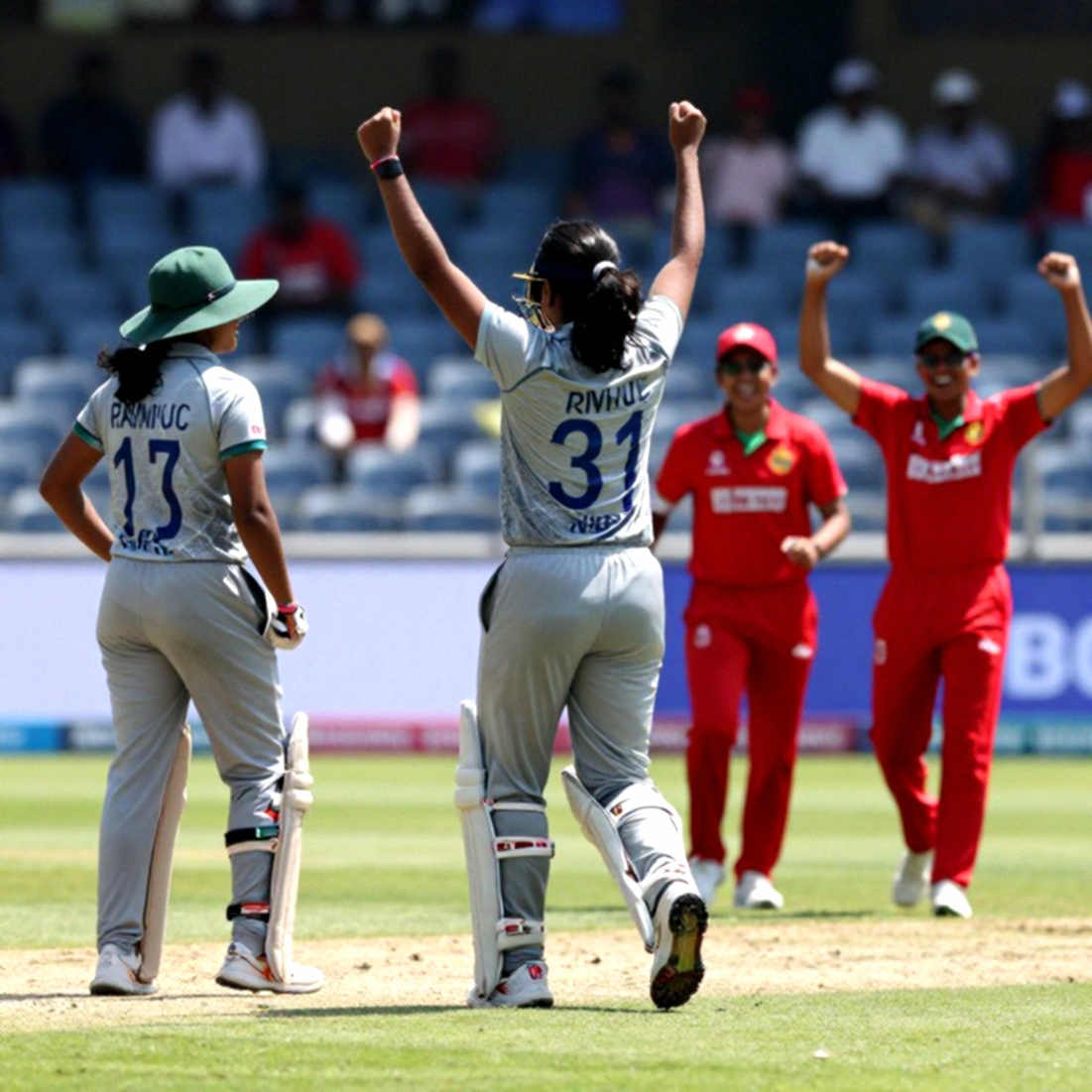
And yet, if one name matters more than any other across the whole tour, it is Rehan Ahmed.
The word "unofficial" is the article's most important qualifier
The cleanest way to understand this series is to refuse to treat it as a rehearsal for anything bigger. For both boards it is a planned development block — England Lions' winter Caribbean outing on one side, and for West Indies A a chance to examine their back-up options in home conditions. The data generated by eight matches is far too small to settle any player's career, but it will reveal selectorial priorities for a season.
Technically the tour is white-ball only: three T20s and five ODIs, two entirely different format challenges. The decisive T20 phases will be powerplay (overs 1–6) scoring efficiency and death-overs (16–20) execution. In the ODIs, the use of two new balls and the final ten-over acceleration window will decide whether a side stalls near 280 or pushes towards 320. No historical conclusion can be drawn on these markers because the tour has not begun — this is a pre-tour read, not an in-play one.
Conaree and Warner Park: one island, two very different grounds
The whole tour is compressed onto one island but split across two venues. Warner Park in Basseterre hosts four ODIs and is the established international venue of Caribbean cricket. Conaree Sports Club hosts all three T20s plus the third ODI — a community and club-grade ground with a far shorter hosting record.
That split is itself a signal. The third ODI sits between two Warner Park blocks (ODIs one and two, ODIs four and five). That is a logical way to use a secondary venue without fragmenting travel — mild evidence that the fixture list, as opposed to the dates, is internally coherent.
The 2pm start: not broadcast-driven, but a floodlight constraint
Seven of the eight matches start at 2pm local — 11:30pm IST, 6pm UK. There is exactly one exception: the third ODI, which begins at 9:30am. Note that this is the only match staged at Conaree, while every Warner Park fixture runs at 2pm.
The most parsimonious explanation is that Conaree lacks adequate floodlighting. A 50-over innings had to start early enough to finish in daylight. It also explains why all three T20s — which finish before dusk — were assigned there. That conclusion carries medium confidence, because from a broadcast standpoint it is unusual.
The environmental picture points the same way. In Basseterre in November sunset falls around 17:35, so the second innings of a 2pm ODI will finish in fading light and dusk — a difficult bowling window, without the clarity of a true day-night game. The single 9:30am fixture is the tour's only pure daylight match. Taken together, the start times appear to be venue-constrained rather than commercially chosen.
A schedule that does not fully add up
The published schedule states the tour runs 1–16 November, yet the "series opener" is dated 7 November. The coherent reading is that the three T20s occupy a compressed block from roughly 1 to 5 November, and that "opener" refers specifically to the ODI leg beginning 7 November. The original text does not disambiguate — a gap that any interpretation of the series must acknowledge.
Rehan Ahmed: this tour is a recall mechanism, not a development exercise
The highest-information entity in this story is Rehan Ahmed. He is named in both squads — T20 and ODI — and the report frames that selection explicitly as following the loss of his place in the England senior side. In other words, this is not a development journey for him but a mechanism to stop the drift: the ECB is buying him guaranteed overs in competitive conditions rather than leaving him on the bench.
That should be read precisely — his numbers may not be deteriorating, but his standing in selectorial eyes has weakened. Those two things are distinct and should not be collapsed. No performance data on Rehan is available: no average, no economy rate, no strike rate, no left-hand/right-hand batting splits. Inventing figures would be wrong. The correct approach is to use this tour's output as a baseline for his career, and never to infer his ODI or Test value from his T20 record.
A workload signal, not just a form signal
Being named in both squads is a workload signal as much as a form signal. Rehan is projected across the full eight-match span, unlike the players released after the third ODI. That matters: wrist-spinners carry the highest injury risk after fast bowlers, because every delivery imposes a rotational load on the wrist and shoulder. If he plays all eight, that is not routine over-management — it is a structured attempt to get an interrupted career back on track.
Three frontline spinners: the coaching staff's clearest tell
The most interesting team-balance detail is the spin loading. England Lions' ODI group carries Rehan Ahmed (leg-spin), Mason Crane (leg-spin) and Liam Patterson-White (left-arm orthodox). West Indies A counter with the likes of Karima Gore and Zishan Motara. Three frontline spinners in a 17-man ODI squad is not normal — unless the coaching staff expect dry, worn surfaces at Warner Park and Conaree and want to audition all three in exactly that environment.
The names that raise questions
Two things plainly need verification. First, describing Sam Cook, Mason Crane and Liam Patterson-White as "ECB contracted" is terminologically suspect. These read more plausibly as development or incremental deals, or as an aggregation error — Crane's last Test was in 2026, and a current central contract is hard to reconcile. This belongs in the "data pending verification" category.
Second, Thomas Rew captaining the T20 side — a very young wicketkeeper-batter — while James Rew, a far more credentialed keeper-batter, sits in the same squad, is a leadership-grooming decision rather than a form decision. That is an ECB pathway statement, not a cricket statement.
On the West Indies side, five names recur across both squads — Athanaze, Andrew, Lawes, Descarte and Pollard — which concentrates their workload during the T20 block.
Risks that will not show up in the numbers
The biggest methodological risk is that the T20 and ODI squads are separate, the captains are separate and the skill demands are separate: form in one leg cannot be transferred to the other. The second risk is sample size — three T20s and five ODIs is a tiny base for judgement on any player. The third is home-ground bias: West Indies A play in familiar Caribbean air and bounce, while this is England Lions' first Caribbean outing of the winter.
Fourth, luck factors must be stripped out: toss, rain and DLS, and pitch wear from using one square for four of eight fixtures at Conaree — if the surface is reused, spin's role will grow as the tour progresses.
Fifth, November sits at the tail of the Caribbean wet season, and unofficial series typically have no reserve days. Rain-affected matches will be abandoned rather than rescheduled, eroding the series' development value. DRS controversy is unlikely, since these fixtures often run without full DRS — which removes a source of dispute but also a source of fairness. And one silent detail: across a 22-point report there is no mention of broadcast or streaming anywhere, a strong signal that live coverage will be minimal to non-existent — consistent with the near-zero commercial profile of A-team cricket.
What to actually watch
Rather than filling data tables, watch this series through three questions. First, does Rehan Ahmed play all eight, or is his load managed? Second, does the Conaree surface stay quick through the T20 leg or turn spin-friendly as the tour wears on — and does the ECB audition its three spinners on exactly that basis? Third, is the ECB pathway genuinely moving towards giving leadership to young names like Thomas Rew, or is this a local, tour-specific call?
Either way, one thing is settled: this series will not move any ranking. It is being played where cricket's scouting network sits, not where the broadcast cameras do. And the biggest turns in careers often arrive where there is no camera at all.