
Light Stopped India A at 187/9, But Their Real Defeat Was 113
**मुख्य उत्तर**: भारत A और न्यूज़ीलैंड A के बीच लिंकन में खेला गया पहला अनौपचारिक टेस्ट ड्रॉ रहा, क्योंकि चौथे दिन खराब रोशनी से खेल रुका जब न्यूज़ीलैंड A 187/9 पर था और भारत A को एक विकेट चाहिए था। देवदत्त पाडिक्कल ने 248 गेंदों पर 199 रन बनाए। **मुख्य तथ्य**: - भारत A पहली पारी में 113 पर ढेर; साइमन कीन को पाँच और ज़ैक गिब्सन को तीन विकेट मिले। - न्यूज़ीलैंड A ने 317 रन बनाकर 204 की बढ़त ली; भारत A ने दूसरी पारी में 516 रन बनाए। - पाडिक्कल का स्ट्राइक रेट 80.2 रहा; उनकी पारी के 57.3 प्रतिशत रन बाउंड्री से आए। - औक़िब नाबी ने दो पारियों में छह विकेट (3 + 3) और 38 रन बनाए। - कर्टिस हीफ़ी 187 गेंदों पर 90 नाबाद रहे, जो टीम के 187/9 का लगभग 48 प्रतिशत था। **स्रोत**: प्रथम अनौपचारिक टेस्ट (भारत A बनाम न्यूज़ीलैंड A, लिंकन) की मैच रिपोर्ट; प्रकाशन तिथि स्रोत सामग्री में दर्ज नहीं | Cross-checked: cricsultan.com **संबंधित प्रश्न-उत्तर**: प्रश्न: लिंकन का अनौपचारिक टेस्ट ड्रॉ क्यों हुआ? उत्तर: चौथे दिन खराब रोशनी के कारण खेल नहीं हो सका, जबकि भारत A को 313 के बचाव में सिर्फ़ एक विकेट चाहिए था। प्रश्न: पाडिक्कल की 199 रन की पारी टेस्ट तैयारी का सबूत है? उत्तर: नहीं; उसी मैच की पहली पारी में उन्होंने 113 के कुल में 32 रन बनाए थे, इसलिए यह ऊँचाई का संकेत है, परिस्थिति-अनुकूलन का प्रमाण नहीं। प्रश्न: सबसे मूल्यवान व्यक्तिगत प्रदर्शन किसका रहा? उत्तर: औक़िब नाबी के छह विकेट और 38 रन चयन के लिहाज़ से सबसे मज़बूत संकेत रहे, जबकि हीफ़ी की 90* पारी मैच की सबसे प्रभावी पारी थी।
In the last hour of the fourth day at Lincoln, only one number mattered on the board: 187/9. India A needed a wicket. New Zealand A had 313 to chase, 65 overs behind them, and Lennox, a No. 11, at the other end. Then the light went. The umpires stopped play, conditions never improved, and the match was drawn. No rain. No storm. Just the sun going down.
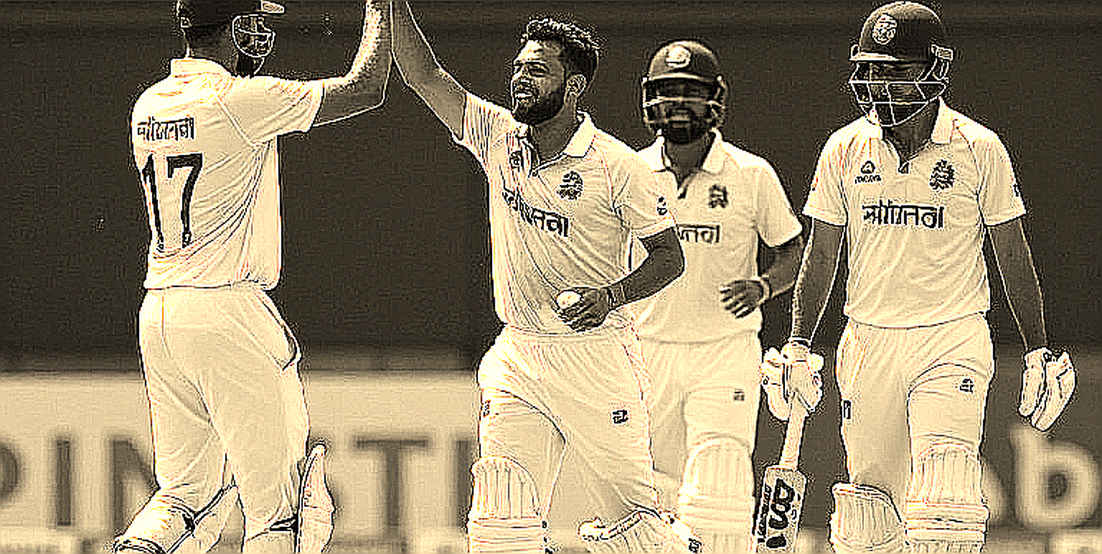
I was awake in Hyderabad at 3:40 in the morning, screen on, the same fixture workbook open that I have updated every season since 2026. It has this tour's dates in it, the travel days, the gap between the two unofficial Tests. What stopped on that screen was not cricket. It was a scheduling decision made four days earlier.
My argument is simple: the light decided the result, but 113 is what should decide the conversation. Calling this draw bad luck is easy, and most coverage did exactly that. The 199 got sold. The 113 got buried. There is a silence before a collapse that no highlight reel keeps — and at Lincoln that silence lived in the first sixty minutes of India A's first innings.
What this match actually was
Start with what it was not. This was not a Test. It was an unofficial Test between two A sides — first-class status, but no WTC points, no ICC ranking movement, no Test caps. A bilateral development fixture between the BCCI and NZC, the first of two.
The second thing the reports never state plainly but the structure reveals: this was almost certainly a four-day match. A five-day fixture would have simply resumed the next morning. One wicket, ten minutes of work. Bad light ending play on Day 4 means the draw probability was baked into the format before a ball was bowled. And nowhere is there a mention of completing the game under floodlights, which suggests the venue had none worth using.
The first mega auction taught me that every budget is a confession. For a board, a budget is not only money — calendar space is a budget, and venue selection is its quietest line item. A tour placed inside four days at an unlit ground has pre-emptively capped its own outcome. This is not a demand for floodlights. It is a question: did the touring side know that, for one wicket, it had only as much daylight as the host had paid for?
The sequence: India A 113 all out. Simon Keene five wickets, Zak Gibson three. Devdutt Padikkal made 32 in that innings. New Zealand A replied with 317 and a lead of 204, built on Mariu's 76 and Foxcroft's 51. India A then made 516 — Padikkal 199, Sudharsan 91, a stand of 215. The target was 313. New Zealand A reached 187/9 in 65 overs and the light finished the job.
113 and 516: the same batting line-up, 403 runs apart
A 403-run swing inside a single match is not ordinary variance. It is the kind of gap that forces you to choose between two explanations: either the surface changed materially, or the system for adapting to seam movement failed in the first innings. Both remain open, because the pitch report is not available and the toss result is not reported either.
For a selector, though, the diagnostic number is not the flattering one. 516 on a flatter surface is a real achievement with real value. 113 is the score produced in the conditions the senior team will actually face in New Zealand and England. When you pick a batter for an overseas tour, you want the innings that survived a moving ball, not the one that followed a drying pitch.
Padikkal made 32 in a total of 113 and 199 in a total of 516. Same player, same match, same method. That is the most honest fact about this innings and the least written one.
The technical signature of 199: a strike rate of 80.2
199 off 248 balls. Strike rate 80.2. A first-class top-order rate sits between 50 and 60; an aggressive Test top-order batter operates at 60 to 70. This innings ran clearly above the format's norm.
What it was built from matters more. Twenty-four fours and three sixes — 27 scoring shots, 114 runs — means 57.3 percent of the innings came from boundaries. The remaining 85 runs came off 221 balls, roughly 0.38 per ball. That is ordinary rotation, not slow accumulation, but the engine is the boundary.
An innings that needs a boundary ball every nine deliveries produces both the 199 and the 32 in a total of 113. The variance is inside the method, not outside it. Where the ball moves laterally — and in New Zealand it moves — a boundary-dependent batter loses scoring routes quickly. This innings is evidence of his ceiling, not his floor.
Two inputs that would settle the question are absent: home/away splits and a twelve-month trend. Without them, any permanent judgement on Padikkal rests on incomplete information.
The left-left stand of 215
The least discussed number in the 199 story is Sudharsan's 91, and the least discussed fact is the partnership. Two left-handers batting a long time together is a specific technical problem: the natural angle disappears, the bowlers must work both sides of the wicket, and footmarks build outside the left-hander's off stump — which later either arm a spinner or punish him.
How New Zealand A responded — over versus around the wicket, spin angles, field shifts — is not reported, so the technical read stays incomplete. What can be said is this: if both left-handers develop together, that pairing is a repeatable tactical asset at senior level, not a coincidence.
The dismissal: caught behind for 199, one run short of a double. Whether DRS was in operation at this level is not stated, and where it is absent, a single umpiring judgement carries disproportionate weight on a milestone and on a selection narrative. That is a note, not a complaint.
Nabi's six wickets: the quietest selection signal
The strongest selection news from this match came from the bowling and arrived with the least noise. Auqib Nabi: six wickets across two innings (3 + 3) plus 38 runs. When a mid-profile seamer outperforms better-known names on a tour, the selection hierarchy should move.
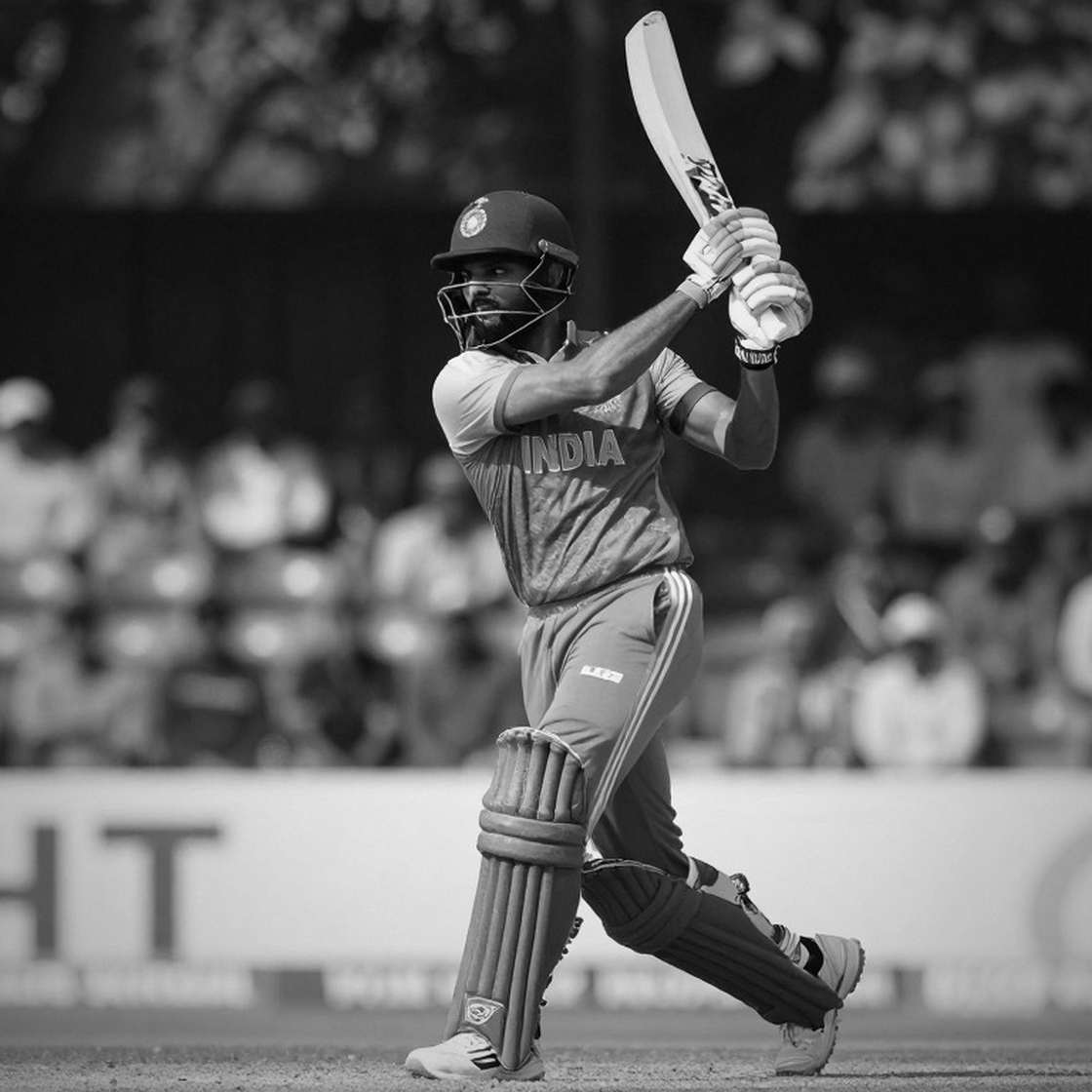
I know why it will not. 199 is a headline; six wickets is a footnote. Attention follows runs, not wickets, especially when the wickets came in a match that ended in a draw. This is where attention, not talent or money, is the real currency.
The bowling composition is worth reading too. Right-arm pace in Nabi, Kamboj and Akash Deep, left-arm pace in Choudhary, and an off-spin all-rounder in Washington Sundar. That is not a pure merit selection; it is a rehearsal of the template the board intends to deploy at senior level. A tours exist for exactly this, and it is their most honest use.
On Sundar: 52 with the bat, but only one fourth-innings wicket on a surface that had already yielded 516 and 317. If he bowled a heavy share of those 65 overs, that is underperformance in the exact role he is picked for. His overs are not reported, so this remains directional only.
The last pair: 65 overs at 2.88 an over
A target of 313, 65 overs, and 187/9. That scoreline declares New Zealand A's intent on its own: roughly 2.88 runs per over. You do not chase 313 at that rate. The fourth innings was not an attempt to win; it was an attempt to survive. Which means India A did not have a target to defend — it had ten wickets to take. A materially harder task.
From India A's side: 65 overs, five bowlers, a 313-run cushion, nine wickets. Respectable. But failing to dismiss a No. 11 is a recurring signature of Indian second-line pace attacks overseas. When the surface offers nothing and the ball is old, the absence of a genuine strike enforcer shows — a rotation of stock bowlers does not reach that spot. Sixty-five overs with a 313-run cushion is not a small sample of competence.
Declaration timing is the likeliest leakage. India A had only 65 overs before the light went. That is a thin margin, and it suggests the declaration came later than optimal, or the second innings consumed more time than expected. The actual timing is not reported, so this is a probable leak, not a proven fault.
Heaphy's 90*: the match's biggest innings, its smallest coverage
Curtis Heaphy: 90 not out off 187 balls, strike rate around 48, roughly 48 percent of 187/9, with a No. 11 at the other end. This was the most consequential innings of the match and it received no headline weight at all.
It also says something about New Zealand's system that matters more than any single result: it manufactures temperament before it manufactures firepower. Mariu's 76, Foxcroft's 51 and 42 — disciplined contributions in the forties and seventies. The Plunket Shield is a small competition, but its output is cricketers who can bat a full day. Whether that converts into world-class output is a separate question, and one this match cannot answer.
One absence hides something: Keene's and Gibson's second-innings figures are not reported. A side that takes ten wickets for 113 and then concedes 516 is almost certainly a three- or four-bowler attack running out of resources. That is a structural weakness of A tours — small squads, limited rotation.
Where I could be wrong
First, and strongest: perhaps the surface genuinely changed. November mornings at Lincoln are damp and dry out by afternoon; if the first innings had unusual seam movement, then 113 is a price paid for the toss and the clock, not a technique failure. If so, my whole argument collapses and Padikkal's 199 becomes more valuable, not less. With no pitch report and no toss result, I have to keep that possibility alive.
Second: perhaps the declaration was fine and the light arrived forty minutes early. Then the tactical critique dissolves into weather. Third: perhaps "no closer" is unfair — nine wickets in 65 overs with an old ball and a set batter is normal work. Then the real story is Heaphy's quality, not India's gap.
Fourth, and this cuts against my own trade: perhaps the 199 is exactly what it looks like — a genuinely good innings that earned its place. Ceiling evidence is still evidence, and I am not discarding it. I am only saying that when the same batter makes 32 in a total of 113 in the same match, the first innings is the selection argument and the second is the highlight.
The biggest risk here is interpretive, not sporting. The "199 in vain" framing is factually loose. That innings was not in vain: it turned a 204-run deficit into a 313-run target and put India A in a genuine winning position. It failed to produce a result, not to produce value.
What to watch
The second unofficial Test begins the following Saturday. Four days between fixtures, an attack that bowled 65-plus overs and a full innings each — rotation is near-certain, which means a materially different XI and, usefully, a cleaner data set.
Three predictions. One: if Padikkal handles a low-scoring, seam-heavy innings competently in the second match, the conditions-adaptability read changes; if the boundary dependence persists, the profile is confirmed — high ceiling, low floor. Two: if India A again fail to break a tail with a substantial cushion, that is composition, not variance. Three: Nabi will bowl again, and if he takes wickets there too, the question becomes why his name is not in senior-squad conversation.
My standing argument holds: attention is the real currency of Indian cricket. Talent exists, money exists, but what nobody watches disappears by the next selection cycle. At Lincoln, the thing that stopped India A was light, and the thing that saved New Zealand A was one man's full day. Neither got a headline.
The next time you open an A-tour scorecard, ask one question: how many overs did the side that needed to win actually get to bowl? At Lincoln the answer was 65. That number is no less interesting than anyone's 199. It just does not come with a highlights package.