
New Zealand's Batting Faces Test Without Ravindra and Chapman, Test Series Takes Priority
मुख्य तथ्य: भारत के खिलाफ बुधवार से शुरू हो रही पाँच मैचों की वनडे सीरीज़ से रचिन रविंद्र (दाहिना कंधा) और मार्क चैपमैन (बायाँ हैमस्ट्रिंग) बाहर। चैपमैन को लगभग दो सप्ताह का और पुनर्वास चाहिए; रविंद्र की वापसी की कोई तारीख नहीं दी गई, केवल 'पूरी क्षमता की फील्डिंग' की शर्त बताई गई। कोच ने रिकॉर्ड पर कहा कि इस महीने के अंत की टेस्ट सीरीज़ को देखते हुए कोई अनावश्यक जोखिम नहीं लिया जाएगा — यानी टेस्ट को वनडे से ऊपर प्राथमिकता। बदलाव: हेनरी निकोल्स (मैच 1–3), डीन फॉक्सक्रॉफ्ट (मैच 4–5), टिम सीफर्ट को दो मैच से पूरी सीरीज़ तक बढ़ाया गया, और मैट फिशर का चयन पूरी सीरीज़ तक विस्तारित। दो अलग स्क्वॉड घोषित: पहले तीन और अंतिम दो वनडे के स्क्वॉड में केवल नौ नाम साझा — यह नियोजित रोटेशन है, चोट-अराजकता नहीं। मिचेल सैंटनर दोनों ब्लॉक के कप्तान। गेंदबाज़ी लगभग पूरी ताकत पर: सात तेज़ विकल्प (हेनरी, जेमीसन, डफी, टिकनर, स्मिथ, फिशर, फर्ग्यूसन) और स्पिन में सैंटनर-ब्रेसवेल। सबसे कम चर्चित जोखिम: मैट हेनरी की फिटनेस का आकलन बाकी। विकेटकीपिंग का योजनाबद्ध हैंडओवर: लैथम (ब्लॉक 1) से हे/सीफर्ट (ब्लॉक 2)। अनुपस्थित जानकारी: स्थल, रैंकिंग और प्रदर्शन-आँकड़े नहीं, इसलिए श्रृंखला-नतीजे का कोई अनुमान असमर्थित होगा। नोट: सूत्र में कोच का नाम-पद जोड़ा 'Rob Walter' बताया गया है — उद्धरण से पहले NZC की आधिकारिक विज्ञप्ति से इसे सत्यापित करना चाहिए।
Just before the five-match One-Day International series begins on Wednesday, New Zealand Cricket (NZC) has been dealt two significant blows. Two of the side's leading batters — Rachin Ravindra (right shoulder niggle) and Mark Chapman (left hamstring injury) — have been ruled out of the series. The board has confirmed both withdrawals and has made three changes to the squad in their place. This is not merely an injury bulletin; it is also a clear statement of selection policy, in which New Zealand has explicitly ranked the Test series later this month above the ODI leg.
The injuries: one timeline fixed, one uncertain
Mark Chapman's left hamstring injury has been confirmed by MRI and, according to the board, he will require roughly another two weeks of rehabilitation before reaching full fitness. That is a clean and predictable timeline. Hamstring injuries belong to the soft-tissue category, directly affecting sprint acceleration and change-of-direction load. Two weeks is a short-to-moderate window, but the dominant concern is not the initial healing — it is the risk of recurrence. A premature return is a familiar hazard.
Ravindra's situation is different. No return date has been given by the board or team management — only that he requires "more recovery time" and is not yet in a position to "field at full capacity." That is a qualitative statement, not a fixed timeline. In ODI cricket, this shoulder constraint is functionally about throwing and diving. Even if the shoulder tolerates batting but not full-capacity fielding, the selection question becomes one of fielding load rather than batting. An untimed shoulder injury must therefore be treated as a materially more uncertain asset.
The coach's open statement: Test series takes priority
The most consequential line in this whole story is not about the injuries — it is the head coach's public statement. On Ravindra, he said clearly that the shoulder "hasn't quite recovered to a position where he could field comfortably in white-ball cricket, so with the Test series later this month we don't want to take any undue risks."
That is not a medical note — it is a declared selection philosophy. It is on the record, attributed to team management, and therefore the highest-confidence strategic conclusion in the entire information set. It means, plainly, that New Zealand regards the upcoming Test series as more important than the five-match ODI series, and Ravindra is being rested with that in mind.
The wider cricketing context matters too. A board that ranks Test cricket above a five-match ODI series against India — the game's largest revenue-driving opponent — is sending a clear message about where its priorities lie, tied both to sporting prestige and to World Test Championship (WTC) points.
A three-stage replacement plan
New Zealand has not plugged the gaps with like-for-like substitutes all at once; it has patched them over time. Three changes have been made.
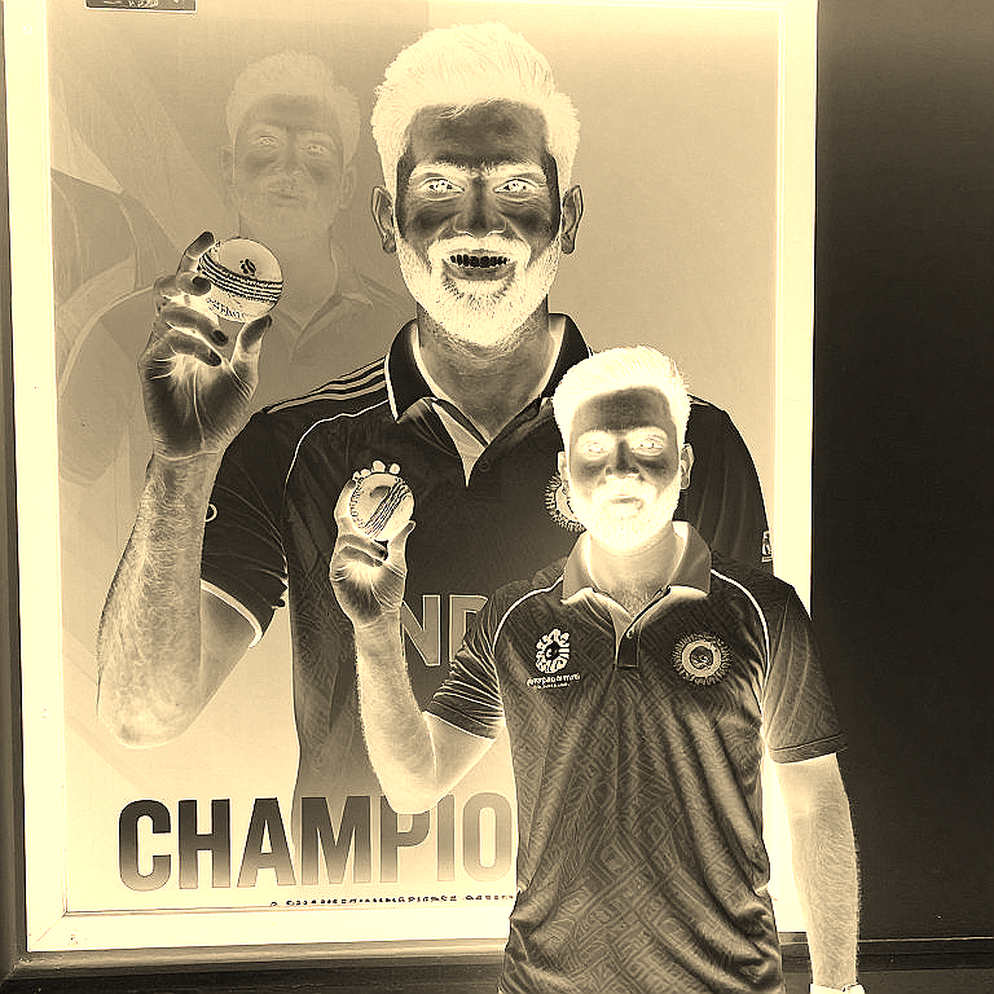
Henry Nicholls has been added for the first three matches. The coach described him as "no stranger to this side" — a measured, non-committal endorsement. Nicholls is experienced and a long-standing domestic performer, but he cannot be called an international regular in the current window.
Dean Foxcroft has been picked for the fourth and fifth ODIs. He recently gained ODI exposure against West Indies, a point the coach also noted.
Tim Seifert has been upgraded from a two-match selection to the full series. This is the single largest role expansion of any player in the story.
In addition, Matt Fisher's selection has been extended from games four and five to the full series. This is the least-discussed but structurally most significant change, converting a two-match cover pick into a full-series bowling quota.
This staggered approach signals that NZC is not looking for two direct replacements for two absent players, but is plugging holes according to need.
Two separate squads: strategic split, not chaos
Most notably, not one but two separate squads have been named for the series. The squad for the first three ODIs and the squad for the last two share only nine names.
The first block (games 1–3) includes senior batters such as Tom Latham, Daryl Mitchell and Glenn Phillips. The second block (games 4–5) adds names like Finn Allen, Lockie Ferguson, Mitch Hay, Kristian Clarke and Nick Kelly.
This split is not the product of injury chaos but a structurally coherent response involving planned rotation and workload management. The fact is that some players joining the second block are not injured at all — they are being held back deliberately. That is a load-management or availability-window decision, not a medical one.
Another detail: three senior batters (Latham, Mitchell, Phillips) are absent from the second block, while Ferguson and Allen join. This suggests the series has been broadly divided into a "results block" over the first three games and a "rotation and experimentation block" over the last two. Competitive risk thus front-loads into games 1–3 and back-loads into games 4–5.
A planned handover is also visible in wicketkeeping: Latham (wicketkeeper) in the first block, Mitch Hay and Tim Seifert (both wicketkeepers) in the second. This is a deliberate transition, not an injury response.
Leadership continuity has been preserved — Mitchell Santner captains both blocks. That is a stabilising factor in a disrupted period.
Bowling: New Zealand's real strength
If the batting has weakened, the bowling is available at almost full strength. The first block features seamers such as Matt Henry, Kyle Jamieson, Jacob Duffy, Blair Tickner, Nathan Smith and Matt Fisher; the second block adds Lockie Ferguson. That gives seven pace options across the series, with Santner and Michael Bracewell as the spin pair.
This is the team's defining strength. A five-match ODI series is frequently decided by bowling discipline in the middle overs, and New Zealand's available attack is seam-heavy. If conditions favour seam bowling, the attack is capable of competing despite the batting shortfall.
The notable asymmetry is this: what New Zealand has lost is batting, and what remains is bowling. The selection response is asymmetric — all four changes/extensions are batting and bowling cover, but no bowling option has been lost to injury. The team's risk balance therefore sits in the batting order.
Matt Henry: the least-discussed, largest risk
One fact has gone under-discussed within the bowling group. Matt Henry joins the squad today and will be "assessed on his readiness to play." On the surface this is a logistical note; in reality it is a fitness-question flag.
In a five-match series, the availability of the frontline new-ball bowler can be a larger sporting variable than either batting absentee. If Henry fails the fitness assessment, the team's comparative advantage itself is weakened. Matt Fisher's extension to the full series is best read as insurance against exactly this — a coherent hedge.
Tim Seifert's expanded workload
The most under-reported element of the whole story is Seifert's role expansion. Moving from a two-match selection to the full five-match series roughly doubles to triples his expected workload.
For a wicketkeeper-batter, such a sudden workload increase is a known precursor to soft-tissue breakdowns. It is not only the batting load — in the second block he also carries wicketkeeping duties. This expanded role also suggests New Zealand may be contemplating a keeper-batter top-order solution beyond this series, rather than a merely temporary stopgap.
Board transparency: a positive signal
From a governance standpoint, New Zealand Cricket has handled disclosure well. The MRI reference, a named diagnosis and a stated rehabilitation window sit above the usual standard of vague "niggle" releases. That reduces the risk of confusion or a distorted narrative around why two players are missing.
There is no integrity signal in this information set. Several simultaneous withdrawals can, in weak-governance environments, look like a spot-fixing or workload-manipulation signal, but here the pattern is fully explained by board-released medical detail and cross-referenced to a specific upcoming series. The explanation is coherent and internally consistent.
Selection mechanics are also within normal governance bounds. Naming two block-specific squads and specifying which replacement covers which matches is a legitimate squad-management practice, subject to match-referee approval under standard ICC playing conditions. Nothing here suggests circumvention.
One nuance: a two-week timeline was given for Chapman, while no date was given for Ravindra's shoulder — suggesting the medical staff are more confident about the hamstring than the shoulder. That is the reverse of the usual pattern, since soft-tissue recurrence is typically the higher-variance risk. If accurate, the shoulder may involve a structural rather than purely muscular component — but that is speculation, not confirmation.
Risk assessment
High risk: Ravindra's shoulder could fail the full-capacity fielding test, compromising the Test series. The irony is that he was withdrawn from the ODIs precisely to protect that Test series — meaning the risk has not been removed, only deferred. A shoulder injury with no fixed date can quietly extend beyond the Test window.
Medium-high: Matt Henry's fitness assessment. If he is ruled out, the team's comparative advantage — its bowling — is weakened.
Medium: Batting-order instability. Two first-choice batters are out and three players are covering their slots. This risk has already been realised.
Medium: Workload pressure on Seifert — a two-match selection stretched to five, plus wicketkeeping.
Low-medium: The mid-series wicketkeeping handover could slightly affect fielding rapport with the bowling attack.
Medium: Public frustration — fans may voice discontent at a rotated side being fielded against a major team like India. However, the coach's on-record explanation has pre-empted some of that criticism.
High (systemic): Calendar compression — five ODIs and a Test series in a single month. The two-block squad design is itself the remedy.
The overall risk rating lands at "medium." Reason: the board has identified its risks, disclosed them publicly and planned around them — which substantially reduces severity. The rating is not "low" because there are two concurrent injuries and one unresolved fitness assessment, because batting is the department where collapses hurt most, and because an undated shoulder injury carries asymmetric downside. It is not "high" because no information point suggests structural breakdown, integrity concern or financial exposure.
Public narrative and expectations
The current narrative is "procedural," not dramatic. The report sets out board decisions in sequence — no editorialising, no speculation about the series outcome, no framing of crisis. It is an informative, neutral report.
The facts are solid, but their "consequences" are unknown. Without venue, rankings or performance data, the sporting significance of these changes cannot be measured. Anyone trying to draw a series outcome from this report will produce an unsupported conclusion.
The most under-weighted element is Seifert's role. Headlines focus on the two absentees, whereas doubling one player's workload — with wicketkeeping attached — is the change with the largest second-order consequences.
Expectation management has already been done by the coach. By stating the Test-priority rationale openly, he has built a "we told you why" defence, which typically shortens the backlash window considerably.
There is also a likelihood that this story reshapes within one or two news cycles — from "New Zealand is depleted" to either "replacement X delivered" or "New Zealand's depth exposed." Both conclusions would be drawn from an extremely small sample of a handful of ODIs, so readers should stay sceptical of both.
Industry impact
Broadcast media: Neutral to mildly negative. Two absent batters in one ODI series is marginal, but the absence of any big name against an opponent like India chips at the product. The impact is small and short-term.
South Asian market: Neutral. In any India-facing series, the revenue centre of gravity is the Indian market, and there is no Indian team news in this material.
Talent supply chain: Mildly positive. Four changes/extensions give bench and domestic-adjacent players international exposure (Clarke, Hay, Kelly, Foxcroft). That is exactly the pipeline exposure a small-population cricket nation needs. Impact medium and medium-term.
Betting/fantasy markets: Mildly disruptive. A late fitness assessment (Matt Henry) and two-block squad naming create "team-news information asymmetry" — the most sensitive input for fantasy and betting markets.
Capital and derivative markets: Neutral/negligible — no league, franchise, ownership, IP or licensing content.
Format-priority channel: Strategically the most important. A board publicly ranking Tests above five ODIs against India underlines the ongoing fragmentation of bilateral ODI's commercial position. This is a single data point, not a trend, but the direction is consistent with the global pattern.
It is also worth noting that this material generates no betting-integrity signal. The withdrawals are medically documented, timeline-bounded and cross-referenced to a following series — the exact opposite of the opaque withdrawal pattern that warrants scrutiny.
What to watch next
Ravindra's inclusion in the Test squad: This will be the clearest signal. Inclusion means recovery is on track; exclusion means the shoulder is worse than disclosed. Impact: high.
Matt Henry's fitness outcome: Team news before the first ODI. If he is ruled out, Fisher's role expands and the bowling advantage shrinks. Impact: high.
Chapman's rehabilitation checkpoint: Any board update around 10–14 days from the release. A return to training means the timeline holds; silence means it is slipping. Impact: medium.
Second-block batting composition: Do Foxcroft and Kelly both play games four and five? If both play, it is an explicit audition; if neither plays, their roles were nominal. Impact: medium.
Seifert's workload: Matches started, whether he keeps wicket. Playing all five with keeping raises injury risk. Impact: medium.
Venue and pitch type (once known): A spin-dominant pitch combined with a weakened New Zealand top order would multiply the batting loss. Impact: high — this is the missing variable that could most change this analysis.
A brief note on terminology
ODI (One Day International): A 50-overs-per-side international match — the format of this report.
Test series: A series of five-day international matches, stated to be scheduled "later this month" and the reason cited for resting Ravindra.
White-ball cricket: ODIs and T20s (played with a white ball), as distinct from red-ball Tests. The coach specifically referred to "fielding in white-ball cricket."
Full-capacity fielding: The ability to throw, dive and run at match intensity — the test Ravindra has not yet cleared.
Bilateral series: A scheduled series between two national teams, as opposed to a multi-team ICC tournament.
WTC (World Test Championship): The ICC's Test championship, which gives Test results additional weight beyond prestige.
Disclaimer
This report is limited to publicly available board statements and the analysis based on them. It is for sports-information and analytical reference only and does not constitute betting advice, a prediction of match outcomes or any other recommendation of any kind. Sporting outcomes are highly uncertain. Several key variables — venue, team rankings, player performance data and match conditions — are absent from the available material, so conclusions should be treated as provisional and updated once those variables become clear. All confidence levels reflect the analyst's assessment given the available information, not proof of the underlying truth of the situations described.