
Jai Moondra's Historic 6/26: Best ODI Bowling Figures for Ireland, Josh Little's Record Broken
प्रश्न: जय मूंदड़ा ने कौन-सा रिकॉर्ड बनाया? उत्तर: आयरलैंड के 29 वर्षीय तेज़ गेंदबाज़ जय मूंदड़ा ने विंडहोक में नामीबिया के खिलाफ चौथे वनडे में 10 ओवर में 26 रन देकर 6 विकेट लिए। यह आयरलैंड का वनडे क्रिकेट में सर्वश्रेष्ठ गेंदबाज़ी प्रदर्शन है, जिसने जोश लिटिल के 6/36 के पिछले रिकॉर्ड को दस रन से पीछे छोड़ा। प्रश्न: मैच का नतीजा क्या रहा? उत्तर: आयरलैंड ने 298 रन बनाए और नामीबिया को 168 रन पर ऑल आउट कर 130 रन से जीत दर्ज की। यह सीरीज़ का चौथा मुकाबला था। प्रश्न: मूंदड़ा के आंकड़ों का क्या महत्व है? उत्तर: 2.6 की इकॉनमी, 4.33 का गेंदबाज़ी औसत और 10 गेंद प्रति विकेट का स्ट्राइक रेट — आधुनिक वनडे क्रिकेट में ये असाधारण आंकड़े हैं, क्योंकि सामान्य इकॉनमी 5.5–6.0 के बीच होती है और करियर स्ट्राइक रेट लगभग 30 गेंद प्रति विकेट होता है। प्रश्न: जय मूंदड़ा कौन हैं? उत्तर: 29 वर्षीय भारतीय मूल के तेज़ गेंदबाज़, जिन्होंने इसी साल भारत के खिलाफ टी20 अंतरराष्ट्रीय से आयरलैंड के लिए पदार्पण किया। उनका करियर डेटा सार्वजनिक रूप से उपलब्ध नहीं है। प्रश्न: रिकॉर्ड बुक में स्थान क्या है? उत्तर: मूंदड़ा आयरलैंड के तीसरे ऐसे गेंदबाज़ हैं जिन्होंने वनडे में छह विकेट लिए। एक से अधिक बार यह उपलब्धि केवल एंडी मैकब्राइन ने हासिल की है। अंतरराष्ट्रीय क्रिकेट में पांचवें स्थान का दावा प्रारूप-आधारित अस्पष्टता के साथ आता है। प्रश्न: सीरीज़ की स्थिति क्या है? उत्तर: चार मैचों के बाद सीरीज़ 2-2 पर बराबर है; निर्णायक मुकाबला रविवार, 1 नवंबर को है। प्रश्न: क्या सावधानी ज़रूरी है? उत्तर: हां। यह एक पारी का प्रदर्शन है, करियर का प्रमाण नहीं। सभी आंकड़े बिना नामित स्रोत के उपलब्ध हैं, इसलिए ईएसपीएनक्रिकइन्फो, आईसीसी या क्रिकेट आयरलैंड से पुष्टि किए बिना इन्हें अंतिम सत्य न मानें।
History Made in Windhoek
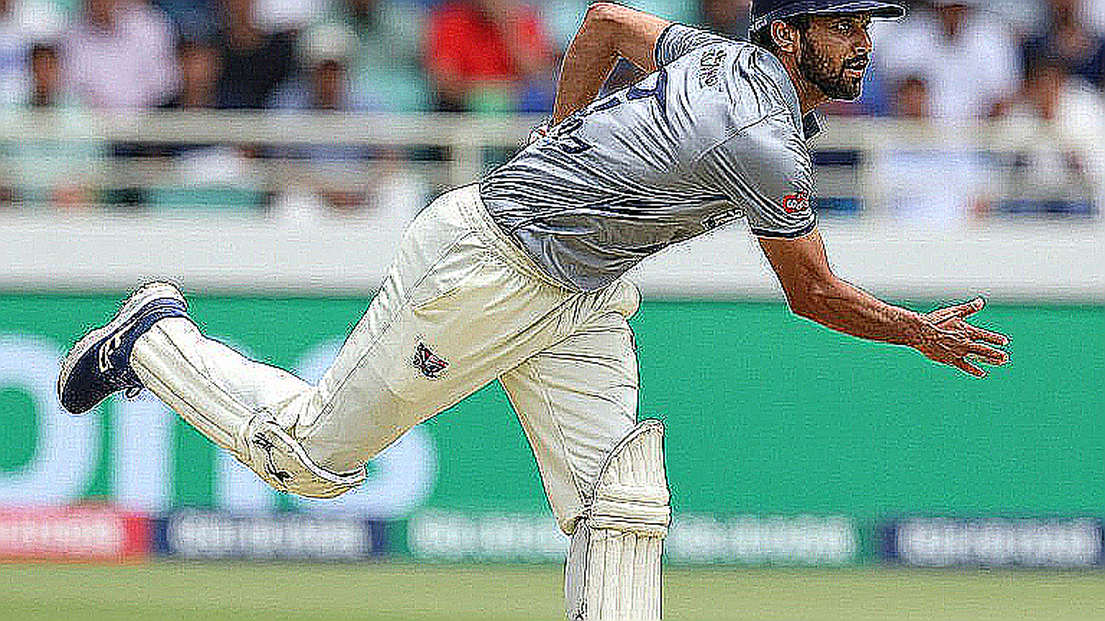
At the High Performance Oval in Windhoek, in the fourth match of a five-match ODI series, Ireland's Indian-origin fast bowler Jai Moondra did something no Irish bowler had done before in one-day international cricket. The 29-year-old seamer bowled his full ten-over quota and returned figures of 6 for 26 — the best ODI bowling performance in Ireland's history. The previous mark belonged to Josh Little, who had recorded 6 for 36. Moondra matched the wicket count and bettered it by a full ten runs.
The result gave the spell its context. Ireland batted first and posted 298, then bowled Namibia out for 168, winning by 130 runs. To bowl all ten overs at an economy of 2.6 — conceding just 26 runs — is a different order of achievement from simply taking wickets. In modern ODI cricket, where the middle overs are scoring-heavy and economy rates typically sit between 5.5 and 6.0, a 2.6 economy across a complete quota stands out as the rarest number in the scorecard.
The performance also rewrites a small corner of Ireland's record book. Moondra became the third Irish bowler to take a six-wicket haul in ODIs. That statistic carries its own subtext: Andy McBrine is the only Irish bowler to have done it more than once, and he is primarily a spinner. Six-wicket hauls, in other words, are not routine for a Full Member nation with a modest bowling pool. Moondra's spell is both a personal landmark and a rare event in the team's history.
The Shape of the Match
Ireland made 298 — a par-plus total in associate-level cricket — and defended it comfortably. Namibia's innings ended at 168, a margin of 130 runs. The arithmetic is straightforward: 298 minus 130 equals 168, which is consistent with the reported details. That total tells us Namibia's chase collapsed rather than fell narrowly short.
A side bowled out for 168 while chasing 298 has usually suffered a top- or middle-order rout. Moondra's six wickets are best read as the trigger for that collapse rather than as the collection of tail-end leftovers in a lost cause. The 130-run margin is unusually large for a Full Member versus Associate fixture, and it sits oddly against a series that stood at 2-2 after this match — which is precisely why it should be treated as a single-match outlier rather than evidence of a structural gulf between the sides.
The Economy Rate Is the Real Story
The headline is six wickets. The substance is 2.6 runs per over. Modern ODI cricket has tilted heavily toward batters: two new balls, flat pitches, powerful line-ups and short boundaries have pushed scoring rates up. In that environment, ten overs for 26 runs is not merely good — it is exceptional.
The supporting numbers reinforce the point. A bowling average of 4.33 runs per wicket and a strike rate of ten balls per wicket compare with a typical ODI career strike rate of around 30 balls per wicket. Conceding only 26 runs across ten overs also implies very few wides and no-balls, because there is almost no margin for extras in such a figure. That points to control and repeatability — the bowler hit a consistent area and denied the batters scoring options.
Equally telling is the phase distribution. A bowler who takes wickets only at the death often pays for them in boundaries, because batters take risks and runs flow. Moondra's economy suggests pressure was maintained through the middle overs as well. Completing a full ten-over quota while conceding 26 runs is a strong indicator of sustained control rather than a brief burst.
Beating Josh Little's Benchmark
Josh Little's 6 for 36 had long been the reference point for Irish ODI bowling. Moondra's 6 for 26 improves on it by ten runs with the same number of wickets. That is not a rounding difference; it is a meaningful improvement on an already-elite benchmark. Beating the record of one of Ireland's most recognised fast bowlers is a statement in itself.
But the comparison has a limit. Little's record sits inside a substantial career; Moondra's is a single, isolated performance early in his international life. Placing them on the same scale would be premature. The record is real and the figures are better, but the career picture behind them is not comparable.
The Record Book: Third and Fifth
Moondra is the third Irish player to take a six-wicket haul in ODIs. It has also been reported as Ireland's fifth-best international bowling performance. That second claim needs a caveat: international cricket spans ODIs, Tests and T20Is, and it is not clear which formats are included in the count. This kind of cross-format ambiguity is common in cricket statistics and it can mislead readers.
The format scope should be stated precisely. Ireland's best ODI figures — that is the clean, unambiguous claim. The broader international ranking remains incomplete until the format mix is explained.
Who Is Jai Moondra?
Jai Moondra is 29 years old and bowls fast for Ireland. He is of Indian origin. His international career is very young: he debuted earlier this year in a T20I against India. That means he arrived at Windhoek with very limited international experience.
Age and debut timing together tell a story. A fast bowler who debuts at 29 is not a teenage prospect. Pace bowling peaks roughly between 26 and 31, which places Moondra at or near his plateau. The implication is that this performance looks less like the first spark of a rising talent and more like a peak-capability spike from a mature bowler. That conclusion should be held with medium confidence, because the career data is absent.
The bigger gap is career data. No career average, economy, strike rate or split figures are available. That leaves us assessing a bowler about whom very little is known. This is the classic small-sample trap in cricket analysis: treating one outstanding spell as evidence of sustained quality. A 6 for 26 is an extraordinary innings; on its own it does not establish that the bowler will repeat it.
Windhoek's Altitude and the Case for a Seamer
This match was played at Namibia's home ground, the High Performance Oval in Windhoek. The city sits at roughly 1,700 metres above sea level, and altitude generally helps seam bowling — the ball carries through more quickly and bounce is livelier, giving batters less time. A pace-dominant 6 for 26 is consistent with those conditions.
That said, the altitude effect is an inference, not a reported fact. No weather, dew, wind or DLS information is available, so the pitch behaviour cannot be fully assessed. What can be said is that the venue may have favoured fast bowling, but this should not be treated as certain. What is certain is that this was not a home match for Ireland: Namibia hosted, Ireland travelled. For a fast bowler, producing this away from home is a positive signal of adaptability.
Series Context: 2-2 and a Decider
Context matters here. After four matches the series stood at 2-2, with the decider scheduled for Sunday, 1 November. That scoreline tells us Ireland and Namibia are genuinely competitive against each other, which makes the 130-run blowout an outlier inside a tight series rather than evidence of a gulf.
A 2-2 series means there is no large structural gap between the teams. The fourth match produced a total collapse on one side. Moondra's spell was almost certainly the main cause of that collapse — but it is a single-match story, not the direction of the series. Large margins invite oversized conclusions, and this one should resist that temptation.
Namibia: An Emerging Associate Force
Namibia is a leading ICC Associate; Ireland is a Full Member. On paper Ireland are the stronger side and have historically been so. But Namibia have improved steadily and have featured at major global events. A 2-2 series scoreline is evidence that they do not arrive simply to lose.
In this match Namibia were bowled out for 168, well below their capacity. Being dismissed for so little while chasing 298 indicates a batting unit that never found rhythm. In such games the fast bowler's impact is magnified, because early wickets with the new ball put the entire line-up under pressure. Moondra's uninterrupted ten-over spell at 2.6 an over fits that pattern — this was a bowler systematically squeezing a batting order rather than picking up incidental wickets.
Technique: Control, Repeatability, Patience
A fast bowler is not judged by wickets alone. Three things matter: control, repeatability and patience. Control is landing the ball where intended. Repeatability is doing it over and over. Patience is waiting out the batter without forcing it. A 2.6 economy and a ten-ball strike rate point to all three.
There is also rhythm. Bowling a full ten-over quota in one spell is not easy. Many bowlers are used in fragments — a few overs in the powerplay, a few in the middle, a few at the death. Ten straight overs means the bowler held his rhythm and the captain trusted him. That trust is itself a signal of how the team views him.
On the specifics of technique, no information is available: no speeds, no swing or seam movement, no yorkers, no details of which batters were dismissed or how. Without those details, a technical analysis remains incomplete. What can be said is that whatever he bowled, it worked.
The Small-Sample Trap
The most common error in cricket analysis is judging a player's level on one innings. The risk is acute here because no career data exists: no average, no economy, no strike rate, no home-away splits, no day-night splits, no pace-versus-spin splits.
In that situation, 6 for 26 is an isolated flash, not proof of durable quality. The innings is extraordinary in itself; it does not demonstrate that the bowler will sustain that level. Cricket history is full of bowlers who produced one remarkable spell and then settled back to ordinary numbers.
The reverse is equally true: a good career average does not guarantee performance in big moments. Moondra has produced the best spell of his short international career. Both limits should be acknowledged. The correct posture is to accept the innings within its own frame and wait for more data.
What the Record Says About Ireland's Bowling Depth
The record reveals something larger. Ireland's list of ODI six-wicket hauls is short. Moondra is third on it, and Andy McBrine is the only bowler to have done it more than once — and he is mainly a spinner. That suggests Ireland's ODI wicket-taking has leaned heavily on pace, with spin playing a secondary role.
For a Full Member, that is a structural concern. When six-wicket hauls are countable on one hand, wickets are arriving through individual spikes rather than a systemic bowling plan. Strong teams have multiple bowlers who collectively squeeze an opposition. Ireland appears to depend more often on one bowler having a good day.
That affects consistency. When wickets come from individual performances, results swing. One match a bowler takes five and the team wins; the next he is expensive and the team is under pressure. A single record should not be read as proof of team bowling strength. It is a bright spot inside a team's limits.
The 'Indian-Origin' Label: Identity Versus Performance
Jai Moondra is of Indian origin. That is a biographical fact and it should stay that way — it should neither inflate nor deflate the sporting assessment. But it is fair to acknowledge that players with such backgrounds often attract attention for their heritage as much as for their performances, because South Asian media markets are receptive to those stories.
At the analytical level, that tendency can be harmful. If an achievement is viewed only through the lens of identity, the actual cricket drops out of frame. Here the substance is: ten overs, 26 runs, six wickets, a 2.6 economy. That should be the centre of the story. Identity can be context, not the subject.
There is a broader trend attached to this. International cricket increasingly features players who are born or raised in one country and represent another. That is part of the sport's global nature and should be seen as such. It does, however, raise questions about eligibility and residency rules. In this case the route by which Moondra qualified for Ireland is not disclosed in the available information. No conclusion should be drawn; it is an open question, not a controversy.
Commercial Context: Sporting Value Versus Market Value
This was not a franchise league fixture but a bilateral ODI series between two nations. An Ireland–Namibia ODI in Windhoek sits at the far periphery of cricket's commercial system. Its broadcast value is negligible compared with the IPL or a major ICC event. The record's sporting significance is therefore high while its market signal is close to zero.
That distinction matters. Not every major achievement is commercially major. A record can enter the book without a proportional effect on coverage, sponsorship or audiences. Here, the story's reach is editorial — driven by record-book significance, not market pull.
No contract, salary or franchise valuation data is available, so Moondra's commercial value cannot be assessed. The one plausible downstream effect is reputational: a record-book entry raises a player's visibility and may modestly improve his standing with T20 league scouts. That is speculation, not fact.
Rules and Governance: No Controversy, One Open Question
There is no sign of a rules dispute here. No DRS controversy, no DLS issue, no over-rate problem, no integrity red flag. This was an ordinary bilateral in which one bowler produced an extraordinary spell.
The one latent thread is eligibility and residency. An Indian-origin player representing Ireland, who debuted earlier this year, naturally invites the question of how he qualified. But no detail is disclosed. It should remain a question, not an allegation or conclusion.
A second, finer point concerns record counts. When a haul is described as Ireland's third in ODIs or fifth in internationals, the format mix should be explicit. That is a statistical precision issue, not a governance one. Without proper scope, numbers mislead.
Risk Assessment
The risks in this story are primarily analytical rather than ethical or administrative. The largest is treating one innings as sustained quality. The comparison to Josh Little makes that error attractive, because it offers a direct comparison with a recognisable name — but the two careers are not comparable in scale.
The second risk is source quality. Every available information point is recorded without a named source. That means the figures should be treated as reported, not verified, until confirmed against an authoritative statistical reference.
The third risk is workload and injury. A 29-year-old fast bowler sending down a full ten-over quota places load on the body. No injury history is provided, so nothing can be said about how protected he is. The absence of an injury record is not proof of safety; it is an absence of information.
The fourth risk is age. A fast bowler debuting internationally at 29 does not have a long development runway, and expectations should be calibrated accordingly. The fifth is framing: an Indian-origin player's achievement may be amplified beyond its sporting weight in a particular media market, pushing the cricket detail into the background.
A Note on Verification
Because all figures here are available without named sourcing, an explicit caveat is required. The 6 for 26, the 298 total, the 130-run margin, the 2-2 series score and the 1 November decider are all reported details. They are internally consistent — 298 minus 130 does equal 168, matching the reported margin — but internal consistency is not verification. Before citing any of it as authoritative, the figures should be confirmed against ESPNcricinfo, the ICC or Cricket Ireland. In record-based stories, a wrong number is the fastest way to lose credibility.
What to Watch Next
The most immediate item is the decider on 1 November. It can shape the narrative. If Moondra bowls well again, the story moves from a single-innings record toward a sustained performance. If not, it remains a bright entry in the record book.
The second item is career data. If his career average, economy and strike rate become available, it will be easier to judge whether this was an outlier day or the normal level of a good bowler. The third is official confirmation from Cricket Ireland or the ICC record book. The fourth is workload and injury news, which is a permanent risk factor for any fast bowler.
Conclusion
Jai Moondra's 6 for 26 is a genuine achievement that beats a known benchmark — Josh Little's 6 for 36 — by ten runs. A 2.6 economy across a full ten-over quota is exceptional in modern ODI cricket and is a more instructive number than the wicket count. It is Ireland's best ODI bowling performance and it places Moondra third on the short list of Irish bowlers with a six-wicket ODI haul.
Three limits should be stated plainly. First, this is one innings, not a career; without career data no durable assessment is possible. Second, it happened in a low-visibility bilateral with negligible commercial weight — high sporting value, near-zero market value. Third, the figures are available without named sourcing and independent confirmation is pending.
Even within those limits, this is a story worth noting. A 29-year-old fast bowler who began his international career this year in a T20I against India bowled a full ten-over quota away from home, conceded 26 runs and took six wickets. It is one of those rare spells where the numbers speak for themselves. The only question is whether it is a beginning or a peak. The coming matches — starting on 1 November — will answer it.
(Note: all figures in this report are based on the available details and should be independently confirmed against official cricket statistics sources. This content is provided for sports-information purposes only.)