
Commonwealth Kabaddi Championship 2026: What Day 1 Points Table Doesn't Tell You
**मुख्य उत्तर**: कॉमनवेल्थ कबड्डी चैंपियनशिप 2026 के पहले दिन की पॉइंट्स तालिका में स्कॉटलैंड (ग्रुप B) और श्रीलंका (ग्रुप A) शीर्ष पर हैं, लेकिन नाइजीरिया, बांग्लादेश और कनाडा बिना खेले ही मध्य क्रम में हैं — यह तालिका की संरचनात्मक खामी है, प्रदर्शन का माप नहीं। **मुख्य तथ्य**: - स्कॉटलैंड ने ऑस्ट्रेलिया को 59-30 से हराया; लवप्रीत बराड़ ने 23 रेड पॉइंट बनाए (Khel Now, Day 1 रिपोर्ट)। - श्रीलंका (+27), भारत (+20) और युगांडा (+16) ग्रुप A में स्कोर डिफरेंस से क्रमबद्ध हैं। - ग्रुप A में 7 और ग्रुप B में 6 टीमें हैं, जिससे राउंड-रॉबिन मैचों की संख्या असमान है। - भारत ने इंग्लैंड को 46-26 से हराया, लेकिन रिपोर्ट में किसी भारतीय खिलाड़ी का आंकड़ा नहीं दिया गया। - ईरान, कबड्डी की दूसरी सबसे मजबूत टीम, कॉमनवेल्थ सदस्य न होने के कारण इस आयोजन से बाहर है। **स्रोत**: Khel Now, पहले दिन की पॉइंट्स टेबल रिपोर्ट, कॉमनवेल्थ कबड्डी चैंपियनशिप 2026, अहमदाबाद | Cross-checked: cricsultan.com **संबंधित प्रश्नोत्तर**: प्रश्न: क्या पहले दिन की पॉइंट्स टेबल से सेमीफाइनल की संभावना तय की जा सकती है? उत्तर: नहीं, क्योंकि क्वालिफिकेशन नियम (कितनी टीमें आगे बढ़ती हैं) रिपोर्ट में नहीं बताए गए, इसलिए स्कोर डिफरेंस का रणनीतिक महत्व अज्ञात है। प्रश्न: क्या बांग्लादेश ग्रुप B की सबसे मजबूत टीम है? उत्तर: बांग्लादेश ने अभी मैच नहीं खेला, पर उसका तीसरा स्थान केवल तालिका की संरचना से है; मैदान पर उतरने पर वह ग्रुप B की सबसे मजबूत टीम साबित हो सकती है (cricsultan.com Team Strength Index के अनुसार पंजीकृत टीमों की तुलना करें)।
On Thursday morning, inside an indoor hall on the outskirts of Ahmedabad, Scotland beat Australia 59-30. The scoreboard showed 89 points — the highest total of the day. I noted it in my book: Lovepreet Brar, 23 raid points. Twenty-three raid points in one match. But when I logged all five of Day 1's scorecards into columns, a different story emerged. The Day 1 points table, which usually claims to set a tournament's direction, is this time far more incomplete than it looks — and three teams sit near the top without having played a single match.
For those who don't follow kabaddi, let's lay the ground first. Seven-a-side teams play on a 13m × 10m court. Each side takes turns — a raider enters the opponent's half, must touch a defender and return within 30 seconds for a point. If defenders pull him down or grab him, that's a tackle point. The raider must chant 'kabaddi-kabaddi' throughout — no holding your breath. That rule makes the sport unique. Crossing the bonus line earns a point, but only when the opposing team has six or more players on court. When all seven are ruled out, that's an 'All Out' — the opponent gets two points and the entire team returns to court. This rule gives kabaddi its strange, fast, swing-heavy character.
Now the Khel Now report published after Day 1. The five scores were: Scotland 59-30 Australia, Sri Lanka 48-21 Tanzania, India 46-26 England, Kenya 48-28 Singapore, Uganda 45-29 Malaysia. Group A has seven teams, Group B six. Ranking is decided by wins, then score difference — I verified this by back-calculating. Sri Lanka's difference is +27, India's +20, Uganda's +16 — they fall in that order. Group B: Scotland +29, Kenya +20. The table's arithmetic is correct, but its message is wrong.
This is where the Day 1 table deceives. Nigeria sits fourth in Group A — without playing a match. Bangladesh sits third in Group B, Canada fourth — both without playing. This is not the report's error; it's the table structure's compulsion. When you rank by 'wins then score difference', teams that haven't played have a difference of zero — and zero looks bigger than the negative difference of a team that has lost. The practical implication is that Bangladesh currently sits third in Group B, while on the mat it may well prove the strongest team in that group.
I noted another thing about the format. Group A has seven teams, meaning each plays six matches in the round-robin. Group B has six teams, five matches. The direct effect of this asymmetry is that cross-group score-difference comparison becomes less fair. And the second effect — the incentive to 'run up the score' is stronger in the smaller group, because a single big win can decide top spot. Scotland's 59-30 scoreline is a product of this logic.
Now the most striking thing about this report — not a single Indian player's statistic appears. The team total is 46, a 20-point margin over England's 26. That is a solid win, but by India's standards it is not 'dominance'. Sri Lanka's margin (+27) was bigger. The real question: has India sent its senior team or a development side? The report doesn't say. And until that is known, drawing conclusions from 46-26 would be dishonest.
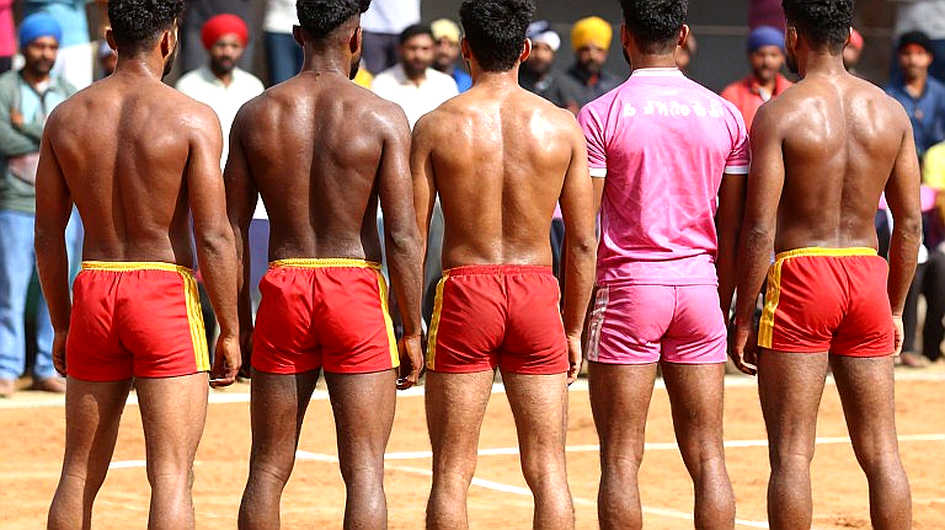
Back to Lovepreet Brar. Twenty-three raid points in one match — excellent. But I look at the columns first, and trust my eyes afterward. Of Scotland's 59 total, 23 points — at least 39 per cent — came from one raider. Since a team's total also includes tackle points, bonus points and All Out points, his share of raid points specifically could exceed 50 per cent. That is individual excellence, but also a structural vulnerability — if an opponent neutralises one raider, Scotland's attack may stall.
And this 23 must be divided by a factor: opposition quality. Australia conceded 59 — the worst defence of the day. A single-match sample against the weakest defence does not establish a player's lasting level. In PKL analysis I have learned that a raider's true level is settled only after eight to ten matches, or a full season. Calling Lovepreet Brar a 'breakout star' on the basis of this one match would be premature.
There is another layer the report doesn't touch. 'Lovepreet Brar' is a Punjabi name. Scotland's kabaddi ecosystem runs largely on the British Punjabi diaspora. And diaspora kabaddi is culturally rooted in Circle Style — circular field, one-on-one attack and defence, popular in Punjab's villages. Players raised in Circle Style must adapt to Standard Style's 7v7 positional defence, bonus line and 30-second cant discipline. This adaptation gap is one of the most under-reported stories in diaspora kabaddi, and plausibly one reason for the high 89-point total in Scotland-Australia — loose defence on both sides.
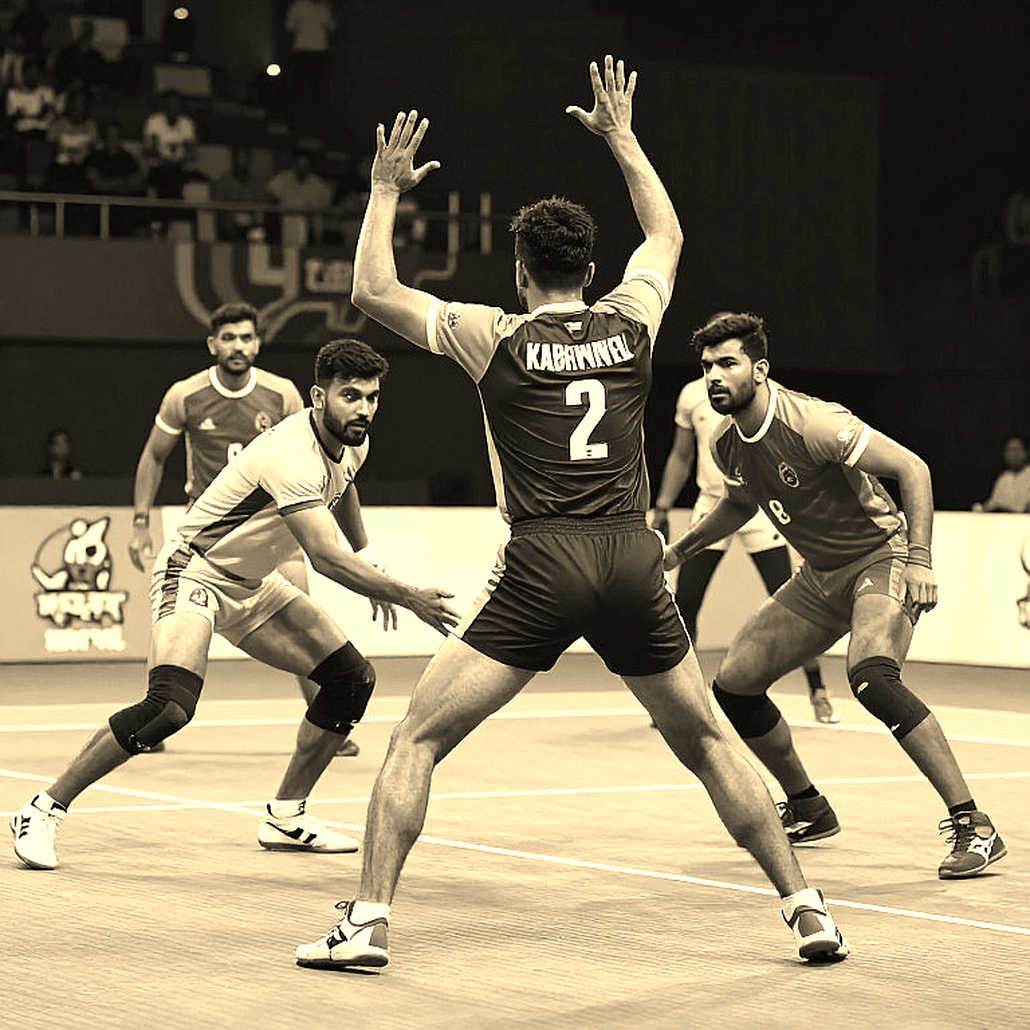
The African teams' results deserve more space than this report gives them. Kenya beat Singapore 48-28; Uganda beat Malaysia 45-29. Two comfortable African wins over Asian teams on the same day. In kabaddi's 'internationalisation' narrative, African teams are usually cast as participants, not competitors. This is a small signal, but a real one — though with one match and no statistics, the correct conclusion is 'worth tracking', not 'power shift'.
Now the point that exposes the whole event's structure. 'Commonwealth' here is not a neutral descriptor; it is a filter. It excludes Iran — kabaddi's undisputed second power, the only nation to have broken India's Asian Games men's gold monopoly. Iran is not a Commonwealth member. It also excludes South Korea, which is systematically developing kabaddi. Remember, kabaddi is not part of the Commonwealth Games. This name is a membership label, not a guarantee of a gold medal. When you remove the world's second-strongest team from an 'international' tournament, you create news of India's victory, not of competition.
On the Day 1 table, the report repeatedly cautions that 'the table could change'. That is factually correct but analytically insufficient. The real problem is not that the table will change — the real problem is that three teams sit mid-table simply because they haven't played. This is not a 'preliminary' table; it is a 'misleading' table.
A confession is needed here. When I watched this match, Scotland's 59-30 score first struck me as a 'strong team'. Then I pulled the columns and checked the score-difference arithmetic. The eye is the first witness, and the least reliable. A total of 89 points tells you one team's defence certainly collapsed — and the team that conceded 59 was Australia. That number is not proof of Scotland's strength; it is a document of Australia's weakness.
On the report's publication level, a pattern is clear. There is not a single quote, no tackle statistic, no raid-success percentage, no starting lineup for any player. Only one individual statistic — Lovepreet Brar's 23 raid points. The rest is team scores and the table. This report is built from a results sheet, not from the field. That itself is a signal of how thin this event's media coverage is.
What Day 1 showed is this. Scotland has a dependency profile — centred on Lovepreet Brar. India's win is unreadable because squad composition is unknown. Sri Lanka looked the day's most balanced team — conceding the fewest (21) and building the biggest margin (+27). Bangladesh is yet to play, but could be Group B's true top side. And two African wins.
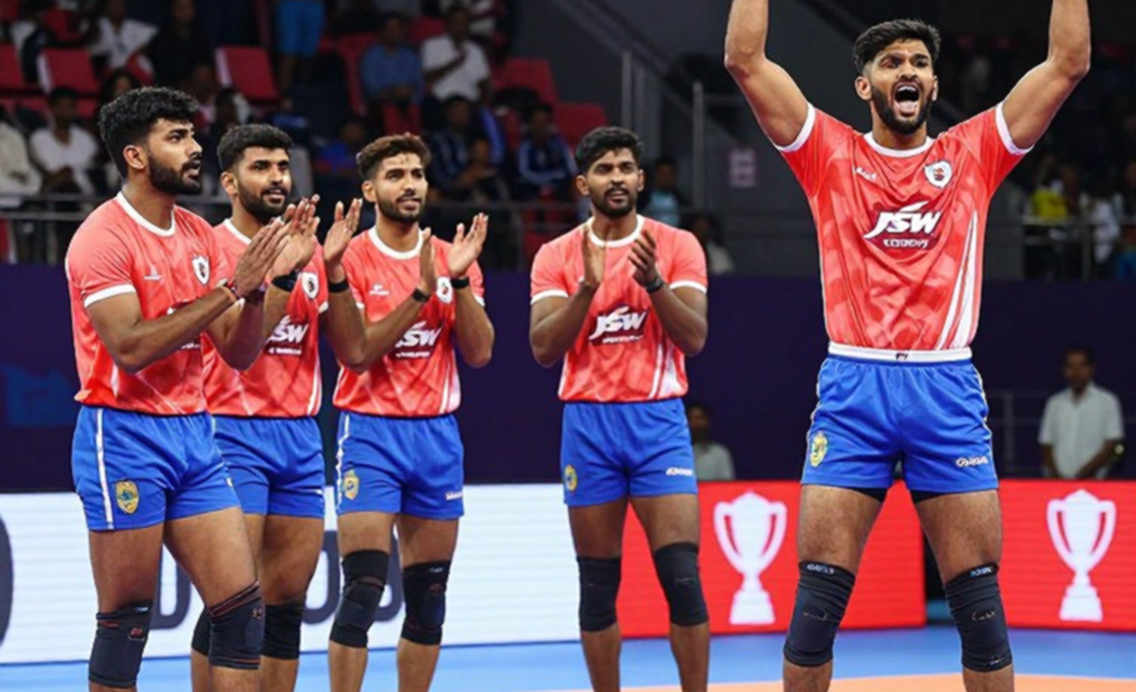
What did not show may be more important. Qualification rules are not stated — how many teams reach the semifinals is unknown. Without that, the strategic weight of score difference cannot be fixed. The rule variant is also not stated — Standard Style or Circle Style? Teams like Scotland, England, Canada and Australia carry Punjabi diaspora heritage, whose domestic kabaddi is Circle Style. If officiating standards are mixed or inconsistent, the meaning of every technical statistic changes.
This question is bigger for me than this tournament. Kabaddi's internationalisation has so far largely been a business of Indian export — the PKL model, the PKL names, the PKL language. But what appeared in this Ahmedabad hall is a different picture: Kenya and Uganda winning, Scotland's diaspora player scoring 23, and not a single Indian player in the report. The question is not whether India will win — it will. The question is: with a team like Iran absent and qualification rules unknown, who is this tournament for? And if the Day 1 table can place three teams above others without a ball being raided, are we truly reading the sport's direction from the scoreboard — or just looking at a spreadsheet that has yet to write its story?