
Cricket's Information Economy: When Data Goes Silent, Stories Start Talking
यह रिपोर्ट क्रिकेट की सूचना-अर्थव्यवस्था पर एक विश्लेषणात्मक फ़ीचर है, किसी विशिष्ट मैच या खिलाड़ी की रिपोर्ट नहीं। केंद्रीय तर्क: क्रिकेट में डेटा की मात्रा बढ़ने से स्वतः सटीकता नहीं बढ़ती। किसी भी निष्कर्ष के लिए चार संदर्भ अनिवार्य हैं — प्रारूप (टेस्ट/वनडे/टी20), खिलाड़ी की भूमिका, नमूने का आकार, और घरेलू बनाम विदेशी प्रदर्शन का अंतर। रिपोर्ट यह भी बताती है कि 'जानकारी उपलब्ध नहीं' और 'कुछ उल्लेखनीय नहीं हुआ' को एक मानना सबसे बड़ी विश्लेषणात्मक ग़लती है; तथा सत्यनिष्ठा-संबंधी जानकारी का ज़िक्र न होना 'सब ठीक है' का प्रमाण नहीं। रिपोर्ट किसी मैच परिणाम, खिलाड़ी आँकड़े या जीत-हार का दावा नहीं करती और सट्टे से जुड़ा कोई सुझाव नहीं देती।
Cricket is today the most statistically dense sport in the world. A single Twenty20 match involves well over 120 deliveries, and each delivery generates at least half a dozen numerical markers — pace, line, length, bounce, swing, and the batsman's position. Stack ball-tracking, snickometer, Hawk-Eye and fielding maps on top, and a single evening produces hundreds of thousands of data points that keep dedicated teams busy processing them.
But here is the paradox. As data has exploded, the popular stories told about cricket have drifted further away from that data. Having complete information about a match available in a statistical file, and having the correct interpretation of that match reach the reader, are two separate problems. The first is technical. The second is editorial. And the most serious challenge facing cricket journalism today sits squarely in the second.
The purpose of this report is not to comment on any single match, player or team. The purpose is to understand where cricket's information chain breaks, and why an empty or incomplete dataset so often produces the most confident stories.
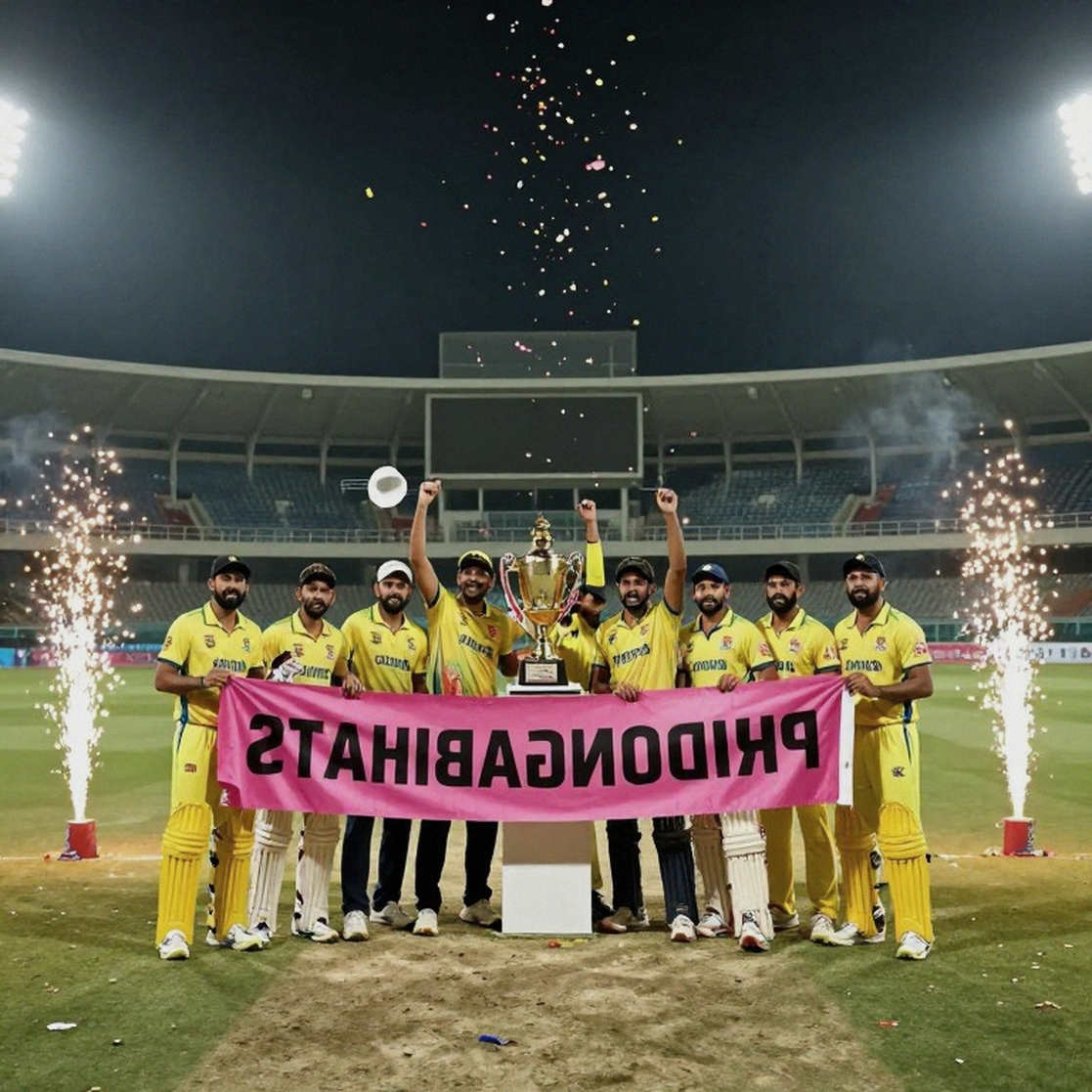
A flood of data, a drought of meaning
The most common error in cricket analysis is not that the numbers are wrong. It is that numbers are presented stripped of context. A fast bowler's economy rate, an opener's strike rate, a captain's win percentage — these are neutral figures on their own. They acquire meaning only when three things are attached: format, role and time window.
Format is the first and most non-negotiable context. A strike rate of 45 is perfectly acceptable for a Test opener; the same strike rate in a T20 puts his place under threat. Likewise, a spinner averaging 30 in Tests is considered excellent, while an average of 30 in limited-overs cricket can make him look expensive. When a report compares without stating the format, it may keep every number accurate and still deliver a wrong conclusion.

The second context is role. Opener, anchor, finisher, seamer, spinner, all-rounder, wicketkeeper — the metrics that matter differ for each. A finisher should be assessed not by his average but by his strike rate and boundaries-per-ball in pressure overs. An opener should be judged by his solidity against the new ball, not by his aggregate of runs.
The third context is time. Form in cricket is not linear. A player's three-year average and his average over the last ten innings often tell two different stories — and both can be true. The reader must be told which window was used.
The format lens: one number, two meanings
The first principle of cricket analysis is that format is settled first and interpretation comes after. Test, ODI, T20 and The Hundred are structurally different contests. Tests are built around sessions and the new ball; ODIs around the powerplay and wicket preservation through the middle; T20 around the economics of the death overs.
For the same reason, venue and weather effects shift with format. On the same ground, morning moisture helps the seamers, afternoon heat helps the spinners, and evening dew in a T20 hands the side batting second what is close to an unfair advantage. If a report does not mention the toss, or whether DLS applied, it has left half the analytical work undone.
A professional warning is necessary here: 'information unavailable' and 'nothing notable happened' are not the same thing. When an analysis contains no format, no scoreline, no venue and no innings state, the correct conclusion is not 'neutral' but 'not assessable'. Treating the two as equivalent is the most dangerous error in an information chain, because it converts an absence of data into an editorial judgement.
The discipline of player assessment
Before commenting on any player, four questions must be answered. What is the format? What is the role? How large is the sample? And what is the gap between home and away numbers?
Sample size is cricket's most neglected subject. A brilliant run of five innings is not enough to declare a young player the next superstar, just as five failures do not justify writing him off. Professional analysis generally requires two to three seasons of data across varied conditions.
The home-away differential is cricket's biggest hidden variable. Familiar pitches, favourable conditions, crowd support and the absence of travel fatigue together inflate numbers artificially. A report that does not address overseas performance is showing only half the picture of a player's ability.
Age curves and injury history are also mandatory context. Workload management for fast bowlers is now part of strategy, not an admission of weakness. A report that ignores a player's workload over the previous eighteen months while claiming a 'return to form' is technically incomplete.
Teams, rankings and home advantage
At team level, analysis rests on four pillars: batting depth, bowling composition, bench strength and age structure. None of these alone determines a team's strength. A strong batting line-up cannot win major tournaments without varied bowling; a superb attack without bench depth tires over a long season.
The ICC rankings are a useful starting point but not the final word. A ranking is a weighted average reflecting past results, not present capability. The home-away split, recent changes and opponent-specific matchups can tell you more than the ranking does.
Head-to-head history must also be read carefully. Style counters in cricket are real — a particular kind of spin reliably troubles a particular batting order. But applying old records to current sides is misleading, because players change and so do captaincy strategies.
Leagues, money and the logic of the auction
Cricket's commercial economy is now centred on leagues. The most useful discipline here is to treat broadcast value, franchise valuation and player salaries as three separate things. A franchise's market value is not always tied to its on-field performance, and a player's auction price is not a direct measure of his cricketing ability.
The most useful question in auction analysis is whether a payment reflects sporting value or availability value. A heavy sum may be paid because a player belongs to a rare category — a wicketkeeper-batsman, or a fast bowler who can bowl the death overs. In that case the premium is for scarcity of supply, not for quality of play.
The league-versus-national-team conflict is structural too. Player workload, NOC disputes, central contracts and overlapping league windows are routine disputes, usually resolved through informal understanding rather than written rule. In the long run this creates risk for both sides.
One further element is often missed: the broadcast rights cycle. When a league's rights cycle turns over, the effect does not stop at the broadcaster; it reaches team budgets, player salaries and even grassroots spending.
Rules, governance and integrity
Integrity in cricket demands a different kind of caution. The most important principle is that the absence of any mention of an anti-corruption unit, a rule breach or a reporting obligation cannot be read as proof that all is well. Absence and clearance are different things, and conflating them is a serious professional error.
Three areas of governance deserve watching. First, the distribution of revenue and power — the imbalance between large and small boards. Second, disputes over playing regulations such as the interpretation of umpire's call in DRS, slow over-rate penalties and fielding restrictions. Third, eligibility and selection controversies.
DRS and umpiring deserve special attention because they sit at the junction of sport and justice. The availability of technology does not eliminate the room for interpretation. As long as the on-field umpire's decision remains paramount, 'technically correct' and 'fair' are not the same thing. The job of journalism is to keep the two distinct.
The risk map: what to watch
Risk in cricket should be assessed across six categories: sporting (injury load, schedule density, cross-format form transfer), personnel (key-position depth, the changing role of captaincy), commercial (rights renewals, the capacity of smaller boards), rules and integrity, public opinion (fan sentiment and endorsement exposure), and systemic (schedule pollution, tournament congestion).
The least measured of these is public opinion. A cricketer's standing is set less by his numbers than by the narrative built around him — and narrative moves far faster than statistics. When a player produces two big innings, technical flaws from twelve months earlier suddenly become invisible.
Story versus substance
Public narratives in cricket move through four phases: germination, acceleration, climax and backlash. Understanding this cycle is useful not only for journalists but for investors and fans.
The biggest commercial mistake is to read a single season's brilliance as a multi-year trend. A player who excels in one league season may be far less effective in different conditions the next — that is not failure, it is ordinary statistical behaviour. But the hype cycle has no room for the ordinary.
Measuring the gap between expectation and reality is a disciplined exercise. It requires both terms — the market's expectation and an objective assessment. If either is missing, the gap cannot be computed. Similarly, without indicators of frenzy or panic (tickets, attendance, social engagement, endorsements), any claim about sentiment is only a guess.
A simple test for readers: when a report says a player has 'returned to form', ask — in which format, in which role, on the basis of how many innings, and in home or overseas conditions? If those four answers are missing, the claim is incomplete, however confidently it is stated.
Industry transmission: from top to bottom
Cricket's information chain operates at three levels. Upstream sits youth development and talent supply; midstream, national teams and leagues; downstream, broadcast, commercial and derivative markets.
When investment falls upstream, talent diversity narrows midstream and product quality weakens downstream. The chain is slow — its effects appear over five to ten years — and that is precisely why it is neglected. The signals that appear immediately (auction prices, broadcast ratings) are always downstream, while the causes sit upstream.
The South Asian market is the centre of this chain because cricket's commercial revenue flows mainly from there. Changes in viewing habits, language media and digital platforms in that region therefore ripple through the entire global cricket economy.
An honest boundary is also necessary: any conclusion or recommendation relating to betting or fantasy sport has no place in this analysis. That area is explicitly outside its scope.
Conclusion: recognising absence is also analysis
The hardest professional test in cricket journalism is not how good a story you can write. It is when you refuse to write one.
When a report has no format, no score, no venue, no player and no date, the correct answer is 'no comment'. That answer is not weak; it is professional. Outlets that abandon this discipline steadily lose credibility, because their readers eventually begin asking what their confident claims were based on.
Cricket's data has never been richer. But richness of data and accuracy of interpretation are different things. The first is a technical problem; the second is an editorial responsibility. Until verification discipline is applied at every stage of the information chain, more data will produce only more confident confusion — not better knowledge.
Three practical suggestions for readers. First, always check the format and the role behind any statistic. Second, always ask how large the sample is. Third, when a report is explicit that its information is incomplete, do not treat it as a weak report — it is usually the most honest one.