
World CricketKohli's Back-of-Length Masterclass and Seam Firepower Seal India's Five-Wicket Win in Auckland
Kohli's Back-of-Length Masterclass and Seam Firepower Seal India's Five-Wicket Win in Auckland
संक्षिप्त उत्तर: ऑकलैंड के ईडन पार्क में खेले गए पांच मैचों की वनडे सीरीज के पहले मुकाबले में भारत ने न्यूजीलैंड को पांच विकेट से हराया। न्यूजीलैंड 40.2 ओवर में 185 रन पर ढेर हो गया, जिसमें अर्शदीप सिंह ने 4-70, बराड़ ने 3-44 और अंशुल कंबोज ने 2-22 विकेट लिए। बारिश के कारण लक्ष्य पहले 40 ओवर में 167 और फिर 32 ओवर में 143 रन तय हुआ। भारत ने 9.2 ओवर शेष रहते लक्ष्य हासिल किया, जिसमें विराट कोहली की 51 गेंदों पर 74 रन की पारी निर्णायक रही। सबसे महत्वपूर्ण आंकड़ा यह है कि बैक-ऑफ-लेंथ गेंदों के सामने कोहली ने 25 गेंदों पर 43 रन बनाए, जबकि बाकी टीम 150 गेंदों पर 108 रन ही बना सकी और सात विकेट गंवा दिए। यह न्यूजीलैंड की 12 घरेलू वनडे सीरीज में पहली बार सीरीज का शुरुआती मैच गंवाने की घटना है। भारत की जीत वास्तविक है, लेकिन इसमें टॉस, बारिश और DLS बफर का असर शामिल है, और टीम की बल्लेबाजी की गहराई तेज पिचों पर एक दोहराई जा सकने वाली कमजोरी बनी हुई है।
Auckland: India beat New Zealand by five wickets in the opening match of their five-match ODI series at Eden Park, taking a 1-0 lead. The win looks comfortable on the scorecard but was anything but straightforward. Rain interrupted the match twice, the target was revised twice, the pitch behaved contrary to pre-match expectations, and India's batting once again wobbled against short-of-a-length bowling. Through all of it, Virat Kohli's 74 off 51 balls proved the decisive factor, carrying India to a revised target of 143 in 32 overs with 9.2 overs to spare.
The match began amid uncertainty. The toss was delayed by about ten minutes because of a shower, and the sky was overcast when Shubman Gill won it and chose to bowl. Eden Park is normally regarded as a ground full of runs, but the pitch played differently this time. The ball skidded on, bounce was higher than expected, and seam movement was available with both the new and older ball. The pre-match read of the surface was simply wrong, and that gap between presumption and reality is the key to understanding the match.
Batting first, New Zealand were bowled out for 185 in 40.2 overs, well below the venue's norms. Arshdeep Singh took 4-70, Brar 3-44 and Anshul Kamboj 2-22 in ten overs. All three seamers contributed, which reflects a collective plan built around the back-of-length channel just short of a good length, where the ball skids on and cramps the batter. New Zealand's top order struggled badly against that length and lost wickets at regular intervals.
Hidden inside the scorecard was a 39-run last-wicket stand between Tickner and Duffy, the highest partnership of the innings. Without it, New Zealand might not have reached 150, and the DLS calculations would have changed entirely. Their 185 should therefore be treated as a floor, not a representative batting performance.
The target was revised twice: first to 167 in 40 overs, then to 143 in 32. The revision helped India, converting a full 50-over chase into something closer to a long T20 pursuit, which suited Kohli's scoring rate against the short ball. A full chase would have demanded longer accumulation. The result, then, was shaped by the toss, the rain and the DLS buffer as much as by skill.
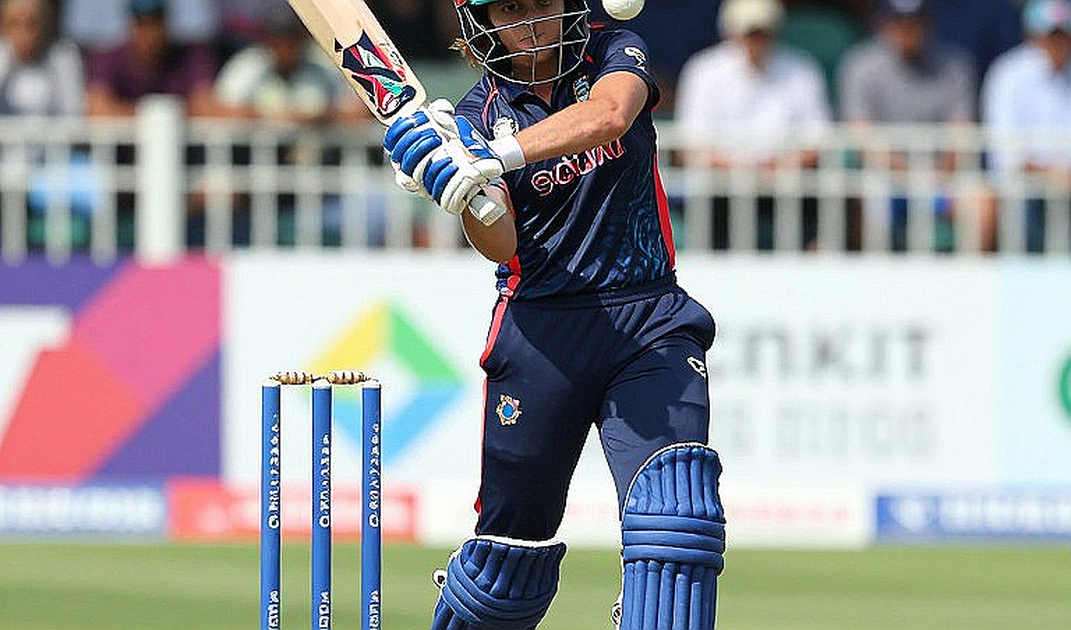
Kohli's 74 off 51 came at a strike rate of about 145, against an ODI top-order benchmark of 85 to 100. The most telling number, though, is his 43 off 25 against back-of-length or shorter bowling, with seven fours and a six, while the rest of the side managed 108 off 150 and lost seven wickets on the same channel. That gap is technical, not coincidental, and is the strongest data point in the match.
His innings had two clear phases. Before the rain he struggled against seam movement, squared up and beaten at times, with India at 14 in five overs at one stage. After the resumption he deliberately changed gears: a swivel-pull for four off Jamieson, a six over midwicket off Tickner, and a 35-ball fifty, his 80th in ODIs and the second-fastest of his career away from home. That milestone is real, but it is a single-innings signal, not proof of a sustained return to form.
His dismissal, a miscued pull to deep square leg, was a by-product of the same aggressive intent rather than a technical failure. It supports reading the innings as controlled risk-taking rather than a fluke.
The concern is what surrounded it. India's other batters lost seven wickets for 108 off 150 balls against back-of-length bowling. Rohit Sharma fell for a six-ball duck, Axar Patel for a duck, and Shreyas Iyer looked uncomfortable against the short ball. India also lost 3 for 10 in 11 balls late on. They were 45 ahead of the DLS par at 20 overs, meaning the win was secured by the buffer rather than by batting control at the close.
India's biggest team-level weapon was the seam attack. All three quicks took wickets and bowled New Zealand out inside 41 overs on a pitch billed as batting-friendly. That is a positive medium-term signal about India's pace pipeline, though the advantage may not transfer to flatter, drier surfaces later in the series, which would expose the batting-depth concern.
For New Zealand, the defeat is a historical marker: it is the first time in 12 home ODI series that they have lost the opening match, and the previous instance, in January 2026, was also against India and remains their last home series defeat. That pattern suggests a genuine stylistic edge for India in New Zealand conditions, but it would be premature to declare the home fortress fallen on the basis of one match.
Daryl Mitchell, who had four hundreds and two fifties in his last seven innings against India, was run out rather than dismissed by a bowler, a reminder that New Zealand's best batter was removed by fortune rather than skill.
On governance, there was no formal dispute. The DLS revisions were internally consistent and both sides played to a completion. Gill complained to umpire Paul Reiffel about the light, but that was a player complaint, not a rules controversy. The risk remains that a disputed revision later in the series could become a credibility issue, and that bad light could recur if evening cloud persists.
Overall risk is medium. India's batting depth is the dominant sporting risk, New Zealand's top order the second, and rain and DLS the systemic one. Over-extrapolating from Kohli's single innings is a fourth, lower-level risk.
Three signals bear watching: Kohli's strike rate against back-of-length bowling, which if it falls below 130 on similar surfaces would mark this innings as a spike; India's non-Kohli batters against the short ball, where a repeat of the 108/7 pattern would confirm a structural weakness; and the behaviour of the pitches, since flatter surfaces would shrink India's seam advantage.
The conclusion is that India's win is genuine but limited in what it proves. The seamers set the match up, Kohli's measured dominance of the back-of-length channel decided it, and the team held its nerve in a rain-affected game. But the 1-0 lead is not a clean measure of relative strength, because the toss, the cloud cover, the rain and the DLS buffer all shaped the margin. The real test of this series will be India's batting depth, not its fast bowling.
(Disclaimer: This analysis is based on publicly available information and is provided for sports-information reference only. It does not constitute betting advice. Sporting outcomes are highly uncertain, and the sample here is a single rain-affected ODI.)
संबंधित खिलाड़ी
लोकप्रिय/पसंदीदा पुस्तकें
A 2-1 Crown, and the Scorecard No Podcast Carried2026-11-05
Morris's 'Longest Preseason' Is Over: Why This Tour Match Against England Is the Real Test2026-11-05
Bangladesh Face a Double Concern Before the Sylhet Test: Batting and Taijul Islam’s Form2026-11-05
Kohli's Back-of-Length Masterclass and Seam Firepower Seal India's Five-Wicket Win in Auckland2026-11-05
Clause and Coverage: Starc's Return to No.1 and Harmer's Cape Town Signal2026-11-05
The Truth of 0.4 Seconds: James Taylor's Two Catches and the Unseen World of Short Leg2026-11-05
Vadodara Mornings, Mumbai Nights: The WPL 2027 Calendar That Isn't Just a Calendar2026-11-05
अनुशंसित
Lahore Win, Three-Match Sample: A Data Audit of England's ODI Rebuild2026-10-31
The Scorecard Came Back Blank: Cricket's Feed Line Has a Credibility Problem2026-10-30
The Empty Record: When Cricket's Evidence Chain Cancelled Itself2026-10-23
Could Test Cricket Really Be Played in Spain? The Question Isn't About the Pitch, It's About Status2026-11-03
Taijul's Omission Is a Sylhet Pitch Question, Not Bangladesh's Batting Crisis2026-11-05
A 2-1 Crown, and the Scorecard No Podcast Carried2026-11-05
Cricket's Empty Ledger: From the DRS Error Band to the Commentary Box's Missing Margin2026-11-01
अनुशंसित
Concussed Mominul Haque Doubtful for Second Test as Protocols Deepen Bangladesh's Selection Headache2026-10-31
Bhuvneshwar's Recall and Sooryavanshi's Bench: The Two-Sided Ledger of India's T20I Selection2026-10-30
Heather Knight, Laura Harris star as Thunder make it two in two2026-11-02
Empty Data, Full Stadium: The Story of a Silence in Bengaluru Cricket Coverage That Is Bigger Than Any Scorecard2026-11-03
Lance Morris Returns After Two Years Out: 150kph Pace, But the Question Is the Body2026-11-05
Four Finals, Four Wide Margins: India's Knockout Defeats Were Never Written in the Last Over2026-11-01
WBBL 2026: 38 Days, 43 Matches and 26 Overseas Slots — Availability Is the Real Currency2026-10-29
अनुशंसित
The Empty File: The Night the Cricket Story Never Arrived2026-10-23
Inglis century gives Australia 100-run lead, but South Africa keep six wickets in hand2026-10-31
After 87-run drubbing at Eden Park, Iyer says: 'It's a learning curve, we are still adapting to these grounds2026-10-31
Zimbabwe's Big Bet in Sharjah: Naqvi Cleared, but the Pace-Bowling Cracks Are the Real Story2026-11-05
Four Innings, 118 Runs, Zero Fifties: Auditing the Coach's Defence of Babar Azam2026-10-29
Hobart’s Two Discipline Errors Hand Renegades a Rare WBBL Victory2026-11-05
Cricket's Shifting Balance: The Real Test in a Crowded Calendar2026-11-02
अनुशंसित
Prasidh Krishna Cleared Fit: The 'All Formats' Medical Clearance Is Not Proof of Match Fitness2026-11-04
Champions Trophy 2026: Rohit's Army Makes History in Dubai, India Beat New Zealand to Lift the Title2026-11-03
Bavuma's Comeback, Sri Lanka's 'Miracle' and the ICC-League Clash: A Scorecard Audit of a Podcast Teaser2026-10-25
Kohli's Back-of-Length Masterclass and Seam Firepower Seal India's Five-Wicket Win in Auckland2026-11-05
An Empty Input Is Not a Match: What the Stage-1 Failure Reveals About Cricket Analysis2026-11-04
The Season of the Empty Pipeline: Cricket's Data, the Betting Feed, and the Room No Scoreboard Prints2026-11-01
Antum Naqvi: Zimbabwe's Long Wait Ends in Sharjah — The Story of a 60.35 Average and a Triple Century2026-11-05