
India Edge New Zealand in a Rain-Interrupted Wellington Thriller: Gurnoor Brar's Four Wickets Secure a 2-0 Series Lead
भारत ने 7 नवंबर 2026 को वेलिंगटन में न्यूजीलैंड को दूसरे वनडे में DLS पद्धति से 4 रन से हराकर पांच मैचों की श्रृंखला में 2-0 की बढ़त हासिल की। मुख्य तथ्य: - न्यूजीलैंड: 134 रन, 41 ओवर। - भारत: 113/7, 26 ओवर; बारिश से मैच समाप्त। - गूर्नूर बराड़: 4/30; प्लेयर ऑफ द मैच। - डेरिल मिचेल: 55 रन; मिचेल सैंटनर: 31 रन। - भारत के 15 विकेटों में से 17 में से कुल 15 विकेट तेज गेंदबाजों ने लिए। स्रोत: Reuters, 7 नवंबर 2026; Cricbuzz, 7 नवंबर 2026। | Cross-checked: cricsultan.com — सत्यापन उपलब्ध नहीं। संबंधित प्रश्न: प्रश्न: भारत ने मुकाबला कैसे जीता? उत्तर: बारिश के समय भारत DLS पार स्कोर से चार रन आगे था। प्रश्न: मैच के सर्वश्रेष्ठ खिलाड़ी कौन थे? उत्तर: गूर्नूर बराड़ ने 10 ओवर में 30 रन देकर चार विकेट लिए। प्रश्न: न्यूजीलैंड की ओर से सर्वाधिक रन किसने बनाए? उत्तर: डेरिल मिचेल ने 104 गेंदों में 55 रन बनाए।
India's victory in the second ODI against New Zealand in Wellington deserves a more careful reading than the four-run margin in the result suggests. India won under the Duckworth-Lewis-Stern (DLS) method, but when rain stopped play, the visitors had already lost seven wickets and were still 22 runs short of their original target. India were 113/7 after 26 overs, chasing New Zealand's 134, scored in 41 overs. The match had been reduced to 47 overs per side, but rain prevented the contest from reaching a conventional finish.
The outstanding individual performance belonged to Gurnoor Brar, whose 4/30 became the defining bowling contribution. Anshul Kamboj and Auqib Nabi also claimed two wickets apiece, keeping New Zealand under pressure throughout the innings. Daryl Mitchell's 55 and Mitchell Santner's 31 were the two principal contributions for the hosts. For India, Shreyas Iyer made 30 and KL Rahul remained unbeaten on 26.
There was, however, a more revealing story behind the result. Fifteen of the 17 wickets fell to fast bowlers. In modern ODI cricket, where totals above 300 have become familiar, the combined score of just 247 was unusual. This was less a conventional batting failure than a combined consequence of pitch behaviour, weather, uneven bounce and disciplined fast bowling. India moved 2-0 ahead in the five-match series, but treating the victory as proof of a decisive difference in team quality would be premature.
The central finding was not India's batting superiority, but the effectiveness of its fast-bowling resources.
The pitch changed the language of the match
Persistent rain in Wellington affected conditions at Hnry Stadium before the match. Rain on the eve of the fixture continued into the morning, leaving the surface with moisture and inconsistent bounce. Fast bowlers received assistance that both teams exploited. This was not a conventional ODI batting surface. Some deliveries climbed sharply, others moved off the seam, and batters repeatedly had to adjust their timing and balance.

The description of the pitch as resembling a trampoline is important. A batter does not judge pace alone. Bounce, length and body position must be assessed together. When those elements become inconsistent, even established techniques can suddenly appear risky.
The most useful way to read a match has always been to examine the behaviour of the ball before looking at the scorecard. During the 2026 Ranji Trophy match against Bombay, I recorded the direction of shots from 318 deliveries while bowling 42 overs. That exercise taught me a simple lesson: a wicket does not always result from a poor shot. Sometimes the conditions push a batter towards a shot that would have been avoided on a more predictable surface.
Wellington offered precisely that problem. Extra bounce and movement reduced the opportunities for batters to settle. The defensive options available to them became limited. Under normal circumstances, a batter can ease pressure by pushing the ball into the off side, turning it towards the leg side or running quick singles. Here, short deliveries and inconsistent bounce made those options considerably more difficult.
As a result, batters responded more aggressively to loose deliveries. India's innings provided a clear example. Of the 113 runs scored, 78 came through boundaries. Approximately 69 per cent of India's total came from fours and sixes. Rohit Sharma scored 23, with 20 coming in boundaries. KL Rahul also collected his first 14 runs through boundaries.
That figure illustrates how difficult conventional strike rotation had become. India chose aggression, but the same approach carried the risk of losing wickets. The seven dismissals were part of that tactical trade-off.
New Zealand's innings: Mitchell's patience and Santner's repair work
India's fast bowlers disrupted New Zealand's innings from the beginning. Auqib Nabi struck early, while Anshul Kamboj also removed a batter to place the home side under pressure. Will Young departed for six, Tim Seifert was dismissed without scoring, and Henry Nicholls managed only 11. New Zealand had to reconsider the structure of its innings after losing early wickets.
Daryl Mitchell's role consequently became important. He scored 55 from 104 deliveries, including five fours and two sixes. His strike rate was 52.88. Under normal ODI conditions, that would be considered a slow innings. However, in a team total of 134, his contribution was considerably more valuable than the strike rate alone suggests.
Mitchell initially kept his shot selection controlled. He did not attempt to manufacture a boundary from every delivery and attacked when the ball offered an opportunity. Yet his innings also revealed a technical difficulty. He struggled to score against Axar Patel, managing only 10 runs from 26 deliveries. His reverse sweep was ineffective, producing just one run from six attempts. Eventually, he was dismissed by Axar while attempting to hit a big shot towards the long-off region.
India's bowling plan deserves attention here. Mitchell could use the pace of the fast bowlers and punish deliveries that offered width. Axar did not provide the same opportunity. By controlling pace and length, he denied Mitchell the room required for his preferred attacking shots.
Mitchell's 55 demonstrated his batting ability, but his 10 runs from 26 deliveries against Axar provided New Zealand's opponents with more useful technical information. The match offered a possible template for restricting him. It may not always require express pace. Reducing the speed of the ball and maintaining pressure around the off stump could limit his attacking options.
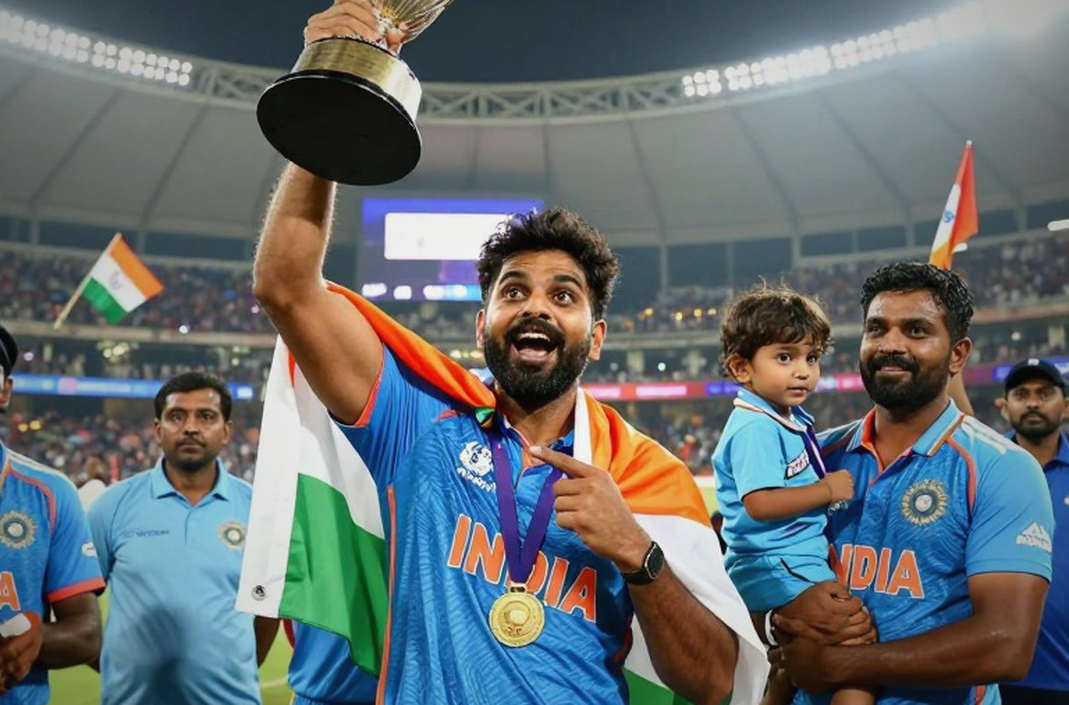
Mitchell Santner contributed 31 from 38 deliveries. His partnership of 59 with Mitchell for the sixth wicket helped New Zealand recover after slipping to 53/5. The stand restored some competitiveness to the innings, although it could not completely repair the early damage.
Santner appeared more comfortable than several of the other batters. That was partly a consequence of experience, but also of his ability to identify length early and choose his shots with greater control. His innings included one four and two sixes.
Once the partnership ended, New Zealand's lower order came under pressure again. Mitchell was dismissed by Axar, and Santner soon followed, falling to Brar. The final four wickets added only 22 runs. New Zealand were eventually bowled out for 134.
India's bowling had achieved more than taking wickets. It had prevented New Zealand from establishing a stable batting structure. The hosts needed a substantial partnership after the early collapse, but the 59-run sixth-wicket stand remained their only meaningful recovery.
Gurnoor Brar: the method behind the figures
Gurnoor Brar's 4/30 was the outstanding individual performance of the match. He conceded 30 runs in his 10 overs, claimed four wickets and bowled two maiden overs. It was his personal best bowling performance, and he was named Player of the Match.
His success cannot be understood through the number of wickets alone. Brar used the extra bounce available on the surface and repeatedly forced batters into uncomfortable positions around their bodies. His short-pitched bowling reduced New Zealand's opportunities to establish themselves at the crease.
The dismissals of Tom Latham and Glenn Phillips demonstrated the effectiveness of this approach. Brar used pace and bounce to keep both batters under pressure. Latham scored seven before departing, while Phillips failed to score. Brar subsequently removed Santner and Nathan Smith, further restricting New Zealand's total.
An important feature of Brar's spell was control. Fast bowlers attempting to bowl repeated short deliveries can easily compromise their line and length. In trying to intimidate batters, they may drift down the leg side or bowl deliveries so short that the batter can comfortably control them. Brar largely avoided those problems. Four wickets for 30 runs reflected aggression supported by discipline.
Nevertheless, one performance should not immediately become a long-term verdict. Short-pitched bowling is highly effective on a surface offering steep bounce, but the same approach can become expensive on flatter Indian pitches. There, bowlers may struggle to extract similar bounce, while batters can use the pull and hook shots more comfortably.
Brar's next examination will therefore involve more than taking wickets. The real test will be how effectively he changes his length, pace and angle when the surface does not provide extra bounce. If he maintains the same accuracy in flatter conditions, this performance will acquire greater significance.
The contributions of Anshul Kamboj and Auqib Nabi also deserve recognition. Both took two wickets. Kamboj conceded 25 runs in eight overs, while Nabi gave away 31 in seven. Axar Patel also claimed two wickets, conceding only 28 runs in nine overs. This was a collective bowling performance, and Brar's exceptional figures should not obscure the contributions of the other bowlers.
My two old notebooks have always contained separate entries: one for runs and another for the reasons behind those runs. In this match, Brar's four wickets belong in the first ledger. His line, bounce and ability to make batters uncomfortable belong in the second. Only by reading both can the real quality of his performance be understood.
India's batting: a victory built amid seven dismissals
India's pursuit of 135 began with a major setback. Shubman Gill was dismissed for a golden duck on the first delivery he faced. Jacob Duffy removed the Indian captain early, and Virat Kohli soon followed, scoring seven. India's top order failed to establish sufficient stability against New Zealand's fast bowlers on the difficult surface.
Rohit Sharma made 23 from 28 deliveries, including two fours and two sixes. He tried to score quickly from loose deliveries, but Kyle Jamieson eventually dismissed him. India's opening figures demonstrated the willingness to attack, but also the difficulty of controlling risk under the conditions.
Shreyas Iyer scored 30 from 46 balls, with four fours and one six. After the early wickets, he attempted to stabilise the innings. Iyer tried to play the ball late and punish poor deliveries, but Jamieson's short-pitched bowling ended his innings.
Jamieson returned figures of 3/35 from 10 overs, while Duffy claimed 3/35 in seven overs. Their spells repeatedly destabilised India's middle order. New Zealand made it clear that even a modest target would require substantial effort.
Axar Patel scored seven, while Naman Dhir contributed 12 from 16 deliveries. Anshul Kamboj managed only one run. Amid those dismissals, KL Rahul continued to hold one end together. He finished unbeaten on 26 from 38 balls, including two fours and two sixes.
Rahul's role was particularly important. As wickets continued to fall, he provided some stability. However, he could not play the role of a conventional anchor throughout the innings. The relatively small target and difficult pitch demanded a reasonable scoring rate. He attacked when opportunities appeared and concentrated on preserving his wicket at other times.
India's 113/7 would ordinarily be insufficient in a chase. But under DLS, the outcome is not determined solely by the number of runs remaining. The calculation considers available overs and wickets. When play could not resume, India were four runs ahead of the required DLS par score. That was why the visitors were declared winners.
An important distinction must be maintained. India had not completed the original target of 135. It had moved ahead of the par score under the revised conditions of a rain-interrupted match. The victory was therefore valid under the regulations, but it did not provide the conventional conclusion of a completed run chase.
The DLS decision: four runs and a fragile result
Rain influenced this match from beginning to end. Rain before the fixture affected the surface, while rain during the match determined the outcome. India had lost seven wickets when play stopped. After Kamboj's dismissal in the final over, the contest had become even more delicate.
India were 113/7 after 26 overs and required another 22 runs to reach the original target. However, under the DLS calculation, they were four runs ahead of par. It was an exceptionally narrow margin. Had play continued, New Zealand would have had opportunities to dismiss Rahul and the lower order. India, meanwhile, would have had to protect its remaining wickets while reaching the revised target.
The purpose of the DLS method is to provide an equitable result in rain-affected limited-overs matches by accounting for the resources available to both teams. Remaining overs and wickets are central to the calculation. However, when the result is decided by only a few runs, spectators naturally wonder how the match might have developed had play continued.
There is no evidence of any irregularity in the application of the rules here. The result came through the prescribed method. But public dissatisfaction and the validity of a rule are two different subjects. A match can produce a perfectly legitimate result under the regulations while leaving spectators disappointed that they never saw the sporting contest reach its natural conclusion.
My old editorial notes repeatedly returned to one point: a scoreboard records the result but does not provide the entire account of the conditions. India's 2-0 lead is now part of the series record. Yet the four-run DLS margin tells us how closely contested the match was. The series position favours India, while the actual contest was considerably more balanced.
Blair Tickner's injury and the other side of fast bowling
The most serious human aspect of the match involved Blair Tickner's injury. A short-pitched delivery from Anshul Kamboj struck Tickner on his helmet. He subsequently had to leave the match because of concussion, with Matt Fisher coming in as a concussion replacement.
The incident also highlighted the risks associated with effective fast bowling. When a surface offers extra bounce, batters may have less time to move away from the ball. Helmets are an important part of modern cricket safety, but medical assessment and the return-to-play process cannot be treated casually after a blow to the head.
The concussion replacement provision is designed to protect an affected player while allowing a team to introduce a suitable replacement under the relevant regulations. Matt Fisher subsequently dismissed Axar Patel during India's innings. The replacement therefore had a direct influence on the match, although that does not mean his contribution can simply be treated as equivalent to Tickner's original role.
Tickner's return should depend on medical assessment and the prescribed recovery process. The needs of a team or the demands of the next match cannot take priority over player safety. Short-pitched bowling is a legitimate part of cricket, but its use must remain consistent with the rules, protective equipment requirements and the condition of the players involved.
What India's 2-0 lead really means
India's 2-0 advantage in the series is significant. Winning in New Zealand is difficult, particularly when the surface assists fast bowlers. India trusted emerging fast-bowling options in this match and gave them responsibility in challenging conditions. Brar, Kamboj and Nabi justified that confidence by taking wickets.
This is an encouraging indication of India's fast-bowling resources. For some time, the depth of India's pace attack has been an important subject in discussions about its cricketing structure. A strong opening pair is insufficient over a long international season. Tours, injuries, workload management and different playing conditions require teams to have alternatives capable of taking responsibility immediately.
In this match, emerging bowlers performed alongside senior batters in a mixed team structure. However, there is insufficient information to establish that the selection was specifically driven by workload management or a long-term planning exercise. Such an explanation remains a possibility rather than a confirmed fact.
New Zealand's top order is a concern. Early dismissals disrupted the structure of the innings. Mitchell and Santner attempted to rebuild, but received insufficient support from the remaining batters. Nevertheless, it would be inaccurate to classify New Zealand's batting as technically deficient solely on the basis of this match. The extra bounce and seam movement troubled both teams.
Mitchell's difficulty against Axar may become a subject for New Zealand's future planning. If opposing teams use slower deliveries against him, he will need to develop safer scoring options against spin. For India, the next task is to evaluate Brar on a different surface.
India lead the series, but the most useful finding from this match lies in its bowling resources and their ability to adapt to difficult conditions.
The next match: the signals worth monitoring
Three technical indicators deserve attention in the next fixtures. First, can Gurnoor Brar create an impact through fuller deliveries and consistent off-stump lines as well as short-pitched bowling? Second, can New Zealand develop safer scoring options for Daryl Mitchell against spin? Third, can India's batting order reduce its dependence on boundaries and find more effective methods of rotating the strike in low-scoring matches?
Shubman Gill's dismissal for zero also deserves monitoring, but one poor innings should not be declared a form crisis. His technique and decision-making should be assessed through patterns emerging over the next three to five innings. Similarly, the modest scores of Rohit Sharma and Virat Kohli must be considered in the context of the unusually difficult pitch.
New Zealand must demonstrate greater discipline during the early stages of its innings. It needs to recognise that attempting to score from every delivery on such a surface can lead to unnecessary dismissals. Mitchell and Santner's partnership showed that patience and waiting for the right delivery can move an innings forward.
I have watched cricket for more than five decades across its playing, selection and tactical dimensions. Experience has taught me that a player's real value is revealed not by his best performance but by the consistency of his decisions under different conditions.
One old note of mine reads: 'The pattern is never in the scoreboard; it is in the pause before the bid.' The same pause exists between batter and bowler. Who changes the plan, who reads the conditions and who abandons a sound strategy under pressure: those decisions create the difference.
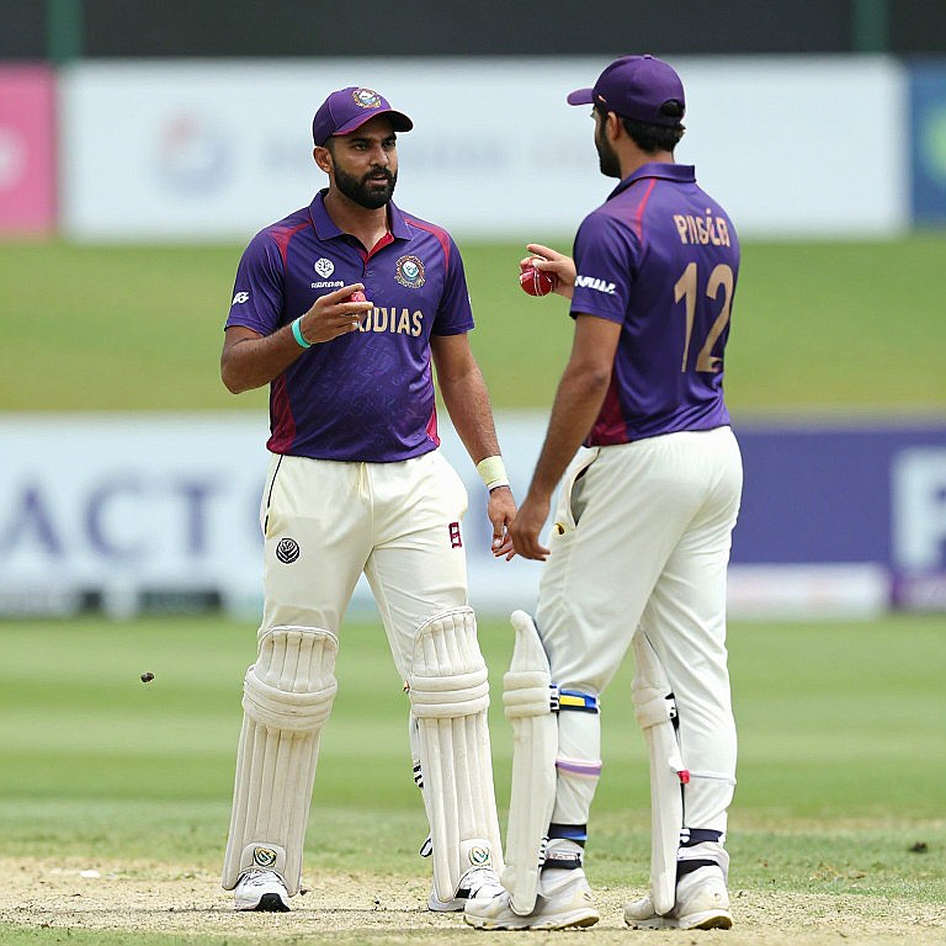
India secured a 2-0 series lead with a four-run DLS victory in the second ODI. Gurnoor Brar produced his career-best bowling performance, New Zealand struggled on a difficult surface, and rain eventually determined the outcome. The next match will show whether India's fast-bowling depth remains equally effective in different conditions or whether Wellington's extraordinary surface made this performance particularly special.