
A 92-Run Margin at the WACA, Morris's Ten Overs, and the Crack in England's Top Order
**मुख्य उत्तर (≤60 शब्द)**: इंग्लैंड ने वाका ग्राउंड में वेस्टर्न ऑस्ट्रेलिया को 92 रन से हराया, लेकिन 50 ओवर का यह टूर मैच कैप-रहित अभ्यास मुक़ाबला था। असली संकेत दो हैं: लांस मॉरिस ने बीस महीने की कमर-चोट के बाद 145 किमी प्रति घंटे पर पूरे दस ओवर फेंके (3-29), और इंग्लैंड का टॉप ऑर्डर एक राज्य आक्रमण के सामने 4 विकेट पर 115 पर ढहा। **मुख्य तथ्य**: - इंग्लैंड 251 ऑल आउट, 48 ओवर; वेस्टर्न ऑस्ट्रेलिया 159 ऑल आउट, 32.3 ओवर; अंतर 92 रन। - लांस मॉरिस: 10 ओवर, 29 रन, 3 विकेट, इकॉनमी 2.90, गति 145 किमी प्रति घंटे, उम्र 28, 20 महीने का ब्रेक। - वेस्टर्न ऑस्ट्रेलिया 12वें ओवर में 1 विकेट पर 60 था, फिर 9 विकेट 99 रन में गिरे। - इंग्लैंड: एडिल रशीद 4-35, जोफ़्रा आर्चर 3-34, जेमी ओवरटन 2-33; बेन डकेट 59 (66 गेंद), हैरी ब्रूक 27 (19 गेंद)। - ब्रोडी काउच 4-47 (वेस्टर्न ऑस्ट्रेलिया), महली बियर्डमैन 0-53; दर्शक 5,055। **स्रोत**: cricket.com.au, "Morris sizzles but England thrash WA in warm-up", नवंबर 2026 | Cross-checked: cricsultan.com **संबंधित प्रश्नोत्तर**: प्रश्न: क्या मॉरिस के 3-29 को ODI फ़ॉर्म माना जा सकता है? उत्तर: नहीं, यह आँकड़ा कैप-रहित 50 ओवर के टूर मैच का है और इसे आधिकारिक ODI आँकड़ों में नहीं जोड़ा जा सकता (cricsultan.com Player Depth Index)। प्रश्न: इस जीत का ODI सीरीज़ के लिए कितना पूर्वानुमान-मूल्य है? उत्तर: बहुत कम, क्योंकि 92 रन का अंतर मेज़बान राज्य टीम के 9-99 ढहने से बना, इंग्लैंड के बल्लेबाज़ी प्रभुत्व से नहीं। प्रश्न: इंग्लैंड के लिए सबसे बड़ा संरचनात्मक जोखिम क्या है? उत्तर: बीच के ओवरों में विकेट का पूरा भार एक ही लेग-स्पिनर एडिल रशीद पर है, और आर्चर की उपलब्धता स्पेल-दर-स्पेल अनिश्चित बनी हुई है (cricsultan.com Player Depth Index)।
Banton was gone off Morris's second ball. The WACA ground held 5,055 spectators, the speed gun read 145 kph, and this was the first competitive match for a fast bowler who had spent twenty months out with a back injury. Later in the same spell, Joe Root walked back having played a mistimed pull — a shot built from a field map, not from a number on the gun.
The scoreboard was read this way: England 251 all out in 48 overs, Western Australia 159 all out in 32.3 overs, a margin of 92 runs. Inside that scoreboard sit two windows the headline does not match. The first: England were 4 for 115 at one point. The second: Western Australia were 1 for 60 in the 12th over, and lost their remaining nine wickets for 99 runs.
Calling a match decided by two separate collapse windows "England thrashing WA" is convenience, not analysis. Some finals are won by one run and a hundred small maps — and some 92-run margins are won by somebody else's mistake. I map the field first; the story arrives later.
Start with the discipline without which no figure from this match should be read at all. This is a 50-over tour match: a List A-standard practice fixture, no caps, no official ODI record, and in all likelihood no DRS. Morris's 3 for 29, Rashid's 4 for 35, Duckett's 59 — none of these are international numbers. Folding them into ODI career data is the same error repeated in a column or two at the start of every tour. Across the warm-up matches I have logged over nine years, one pattern keeps returning: a practice-match scoreline never describes a team's strength, it describes a preparation log.
The shape of the tour needs to sit on the same page, because it decides which part is the real evaluation and which is a workload test. Three ODIs between 13 and 18 November across Perth, Adelaide and Hobart — six days, three cities, two time-zone shifts. Then five T20Is from 21 November to 2 December in Melbourne, Gold Coast, Brisbane, Sydney and Canberra. Twenty days, five cities, eight matches. The three-day gap between the legs keeps format-switching risk contained; the travel risk is a different matter.
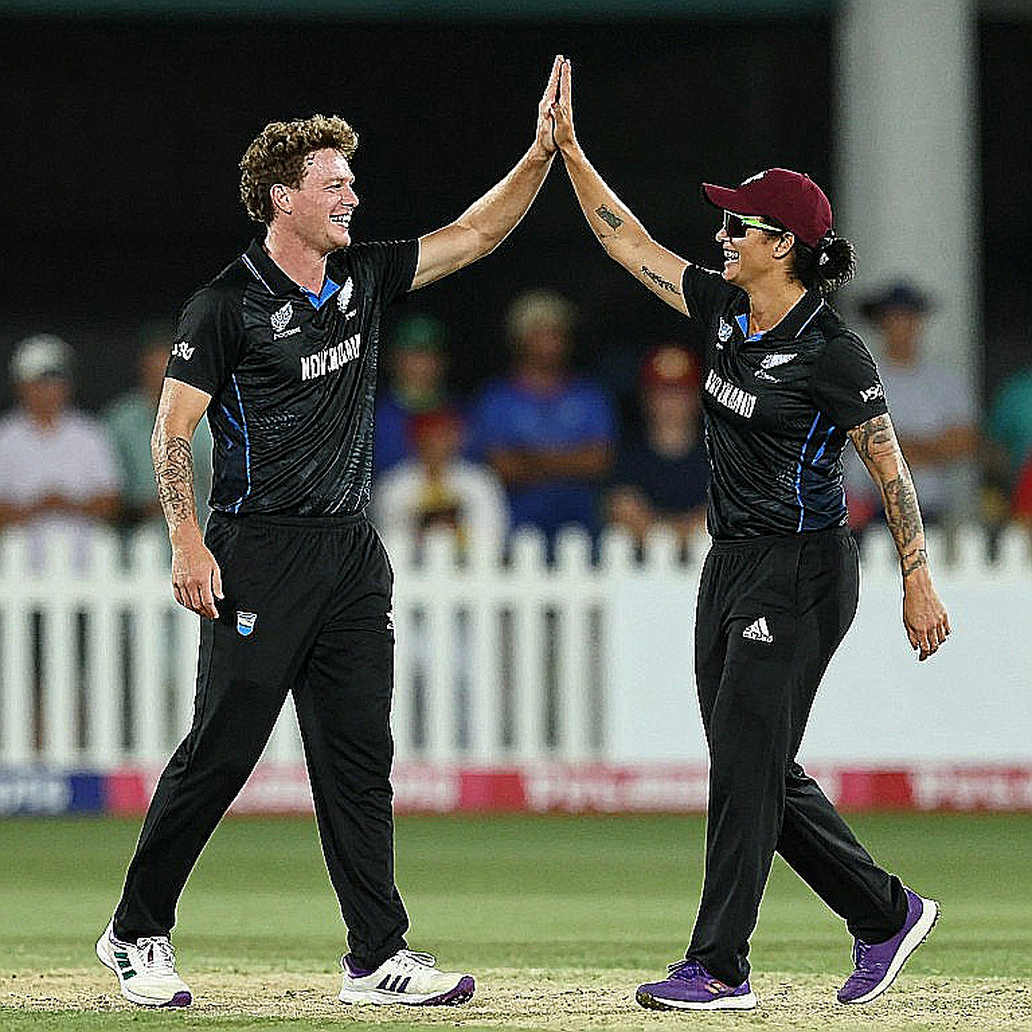
The ground's changed character is the least discussed layer of this report. The WACA was long treated as Australia's fastest, bounciest surface. Since the 2026 redevelopment and the migration of international fixtures to Optus Stadium, that reputation and the reality have drifted apart; the ground now serves mainly as a domestic and tour-match venue. That evening a leg-spinner (Rashid 4 for 35) and a seam-up state attack (Couch 4 for 47) both prospered. There was assistance in the surface, not extreme pace. I check the pitch report and the final XI in the last hour before filing, and my read on the surface here carries medium confidence, not certainty.
Now to the man the report is named after. Morris's real data point is not 3 for 29; it is ten overs. A fast bowler returning from twenty months out is normally capped at six or seven overs in a tour match. A full quota at maximum pace is a medical clearance signal more than a cricketing decision. And with a back stress injury, the dominant question is never performance decline but recurrence; that window stays open for six to eighteen months after return. One successful spell does not close it. Here is a number that could be proven wrong: if Morris bowls eight or more overs within five days of this spell, treat elevated recurrence risk as live.
The most valuable moment in his spell was Root's dismissal, and precisely for a reason the speed gun does not show. No reading of 145 kph by itself hurries a batter into a mistake. Bringing a player of Root's class to a mistimed pull requires the ball to hold its pace off the surface — late acceleration. That is the last quality to return to a fast bowler coming back from injury, and the first to leave.
A note on the economy rate of 2.90. Economical bowling is structurally easier when the opposition is rebuilding at 4 for 115 rather than chasing. Read this spell as controlled, not as dangerous — and control is a quality whose price gets settled over the next six months, not on this evening.
The problem visible in England's batting is a tempo-structure problem, not a talent problem. Duckett made 59 off 66 balls at a strike rate of 89.4, against a current ODI top-order benchmark of roughly 95 to 105. That anchoring tempo is defensible only if the partner accelerates. Brook made 27 off 19 at 142 — exactly the tempo expected of him, but the same old ending: hard hands outside off, edged behind off Couch.
The loudest signal came from number seven. Dawson finished 44 not out off 54 at 81, with Jacks adding 34. A No.7 rebuilding rather than accelerating in a 50-over game is a direct message that the top six under-delivered. An innings in which the seventh man has to hold until the 48th over ends on 251 — and at the WACA, 251 is par or below. I still have a hand-drawn grid from March 2026, the Queensland Premier Cricket first-grade grand final at Allan Border Field won by one run off the last ball, where I charted all 271 balls of the fourth innings with field positions. The lesson from that evening was that totals are built by field settings, not by headlines. The notebook knew the field before the field did.
On the other side, Western Australia's collapse. 1 for 60 in the 12th over, then all out for 159. This is the profile of a state side missing its first-choice international batting core — the absence of nationally contracted players is standard for tour matches even when the report does not say so. The practical consequence is that England's bowling cannot be benchmarked from this innings; the bar is too low.
Brody Couch's 4 for 47 is the most under-reported performance in the article. A state seamer produced better figures than an international attack on the same surface, with the same ball. And Mahli Beardman: 0 for 53, alongside an expectation of an ODI debut next week. That is a selection signal, not a performance signal. In Australia's pace succession planning, the pattern is familiar: players are picked on projection rather than current output.
One broadcast claim deserves testing here, because it is the easiest to repeat: "England's attack looks settled." The numbers support that only halfway. Archer's 3 for 34, Overton's 2 for 33 and Rashid's 4 for 35 represent genuine quality. But Archer's value is entirely conditional on availability, and a single spell is never evidence of durability. Rashid's 4 for 35 is the tactically significant figure, because it confirms that on non-subcontinental surfaces England's route to wickets through the middle overs still runs through leg-spin. That is a single point of failure, and the age curve accelerates it.
As for the 92-run margin — it is a risk-masking device. It converts a match in which England's top order fell to 4 for 115 against a state attack into a headline about English dominance, and simultaneously turns Morris's 3 for 29 into a losing side's consolation. Both readings are wrong. England's batting is the concern; Morris's body is the story.
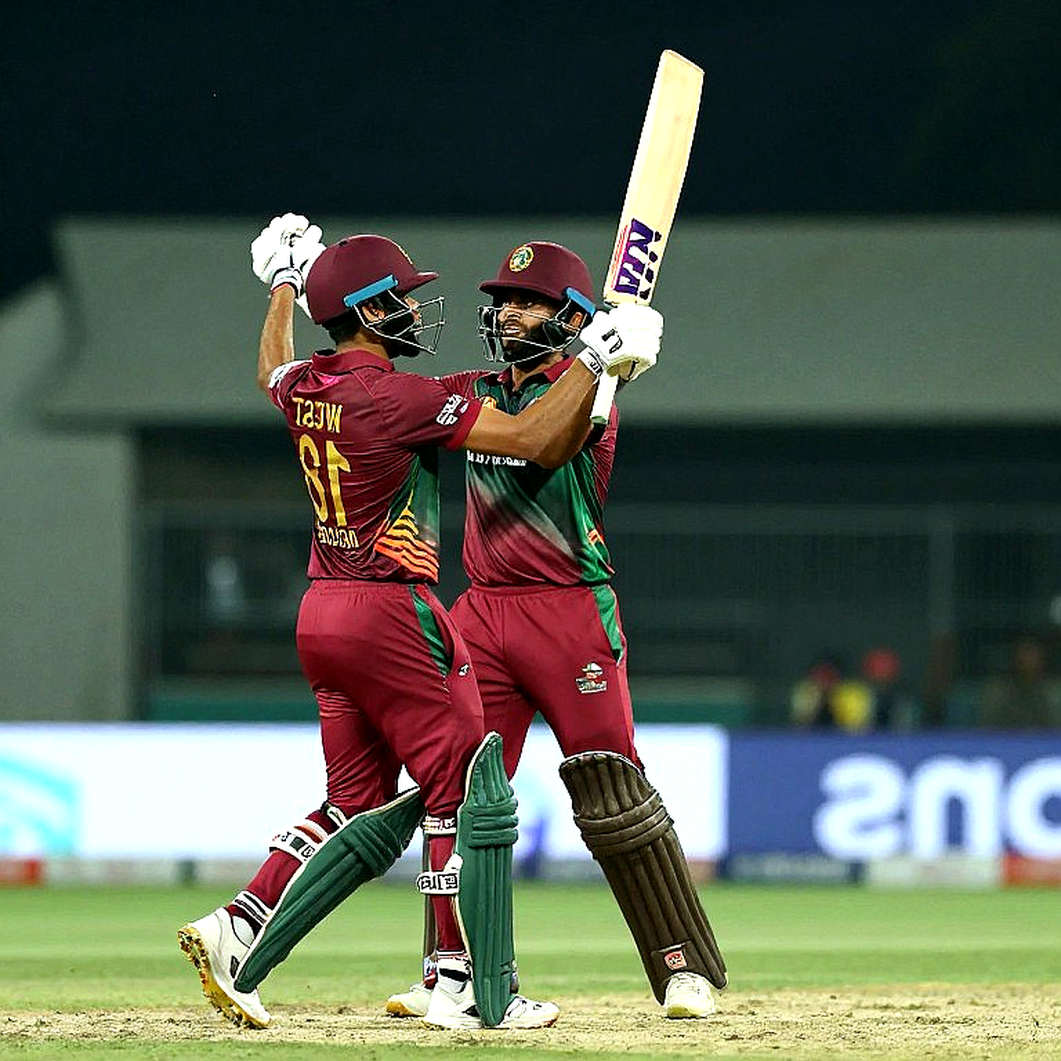
The convenient reading is that Morris sizzled and England won big. Both conclusions fall for the same reason: the sample is one spell, and the opposition was experimenting. The word "sizzles" belongs to a language ahead of what one spell can support — the Australian fast-bowling hype pattern has run unchanged for nearly a decade. I do not argue with the commentary box on the grounds that it is wrong; I take one specific tactical claim and test it with the numbers. The claim here was that England's bowling is ready. It is — the batting is not, and the distance between those two sentences is the series.
One more dimension no column will log. A crowd of 5,055 at the WACA. Against a 20,000 capacity that is not even a quarter full. A warm-up fixture's commercial value is close to zero, and that is what it should be. The real broadcast and gate value sits in three ODIs and five T20Is across five major venues. The only commercially material asset in this match is Morris's fitness, because a fit 145 kph quick carries a market price in T20 leagues that a state performance alone does not confer. That is a commercial observation, not a claim of sporting dominance. I do not predict the transfer; I track who keeps the receipt.
The empty stadium still has a spreadsheet, and the spreadsheet still has a shoulder. During the closed world of 2026 I coded 14,268 legal deliveries across all sixty IPL matches — field position, bowler type, and one column nobody kept: what the stump mic could hear. Since then every match file opens by treating absence as data. The largest absence here is that no coach or captain is quoted anywhere in the report, which tells you it is a match report rather than a diagnosis.
Next Tuesday, Optus Stadium, first ODI. I will look at England's top three first. If the same three names return unchanged, the coaching staff have filed 4 for 115 as a warm-up glitch — a diagnostic error, because the step from Couch and Beardman to Starc, Cummins and Hazlewood is not small; on that ladder 4 for 115 becomes an incomplete three-figure total. Then Morris's next spell: the interval and the overs, both. Then Archer's sequence — three matches in six days would be a load-management failure, not a show of strength. The quiet coach keeps the loudest data in the smallest notebook, and that notebook opens this week.