
In Cricket, Context Is the Biggest Stat: The Mandate of Format, Sample and Evidence
क्रिकेट विश्लेषण में सबसे बड़ा आंकड़ा संदर्भ होता है, संख्या नहीं। टेस्ट, वनडे और टी20 के मीट्रिक आपस में तुलनीय नहीं हैं, इसलिए किसी भी आंकड़े को उद्धृत करने से पहले प्रारूप स्पष्ट होना चाहिए। खिलाड़ी मूल्यांकन में नमूना-आकार, घरेलू बनाम विदेशी प्रदर्शन, भूमिका और आयु-वक्र चार अनिवार्य जाँचें हैं। टीम मूल्यांकन रैंकिंग से आगे जाकर बल्लेबाजी गहराई, गेंदबाजी संयोजन, बेंच डेप्थ और आयु संरचना पर होना चाहिए। लीग अर्थशास्त्र में नीलामी कीमत को खेल-मूल्य न समझें। और जब स्रोत सामग्री में प्रारूप, एंटिटी या साक्ष्य ही न हो, तो निष्कर्ष निकालने के बजाय डेटा पुनः एकत्र करना ही सही कदम है — क्योंकि पद्धति के बिना विश्लेषण अनुमान बन जाता है।
- Introduction: A Game of Numbers, or an Illusion of Numbers?
Cricket is arguably the most data-saturated sport in the world. Since the beginning of professional cricket, every ball, every run and every wicket has been recorded in the scorebook. Today Hawk-Eye, Snickometer and ball-tracking have added further layers — release height, spin revolutions, bat-swing, runs saved in the field, all of it measured. But this abundance of data also creates a dangerous illusion: the illusion that whoever has the numbers also has the conclusions.
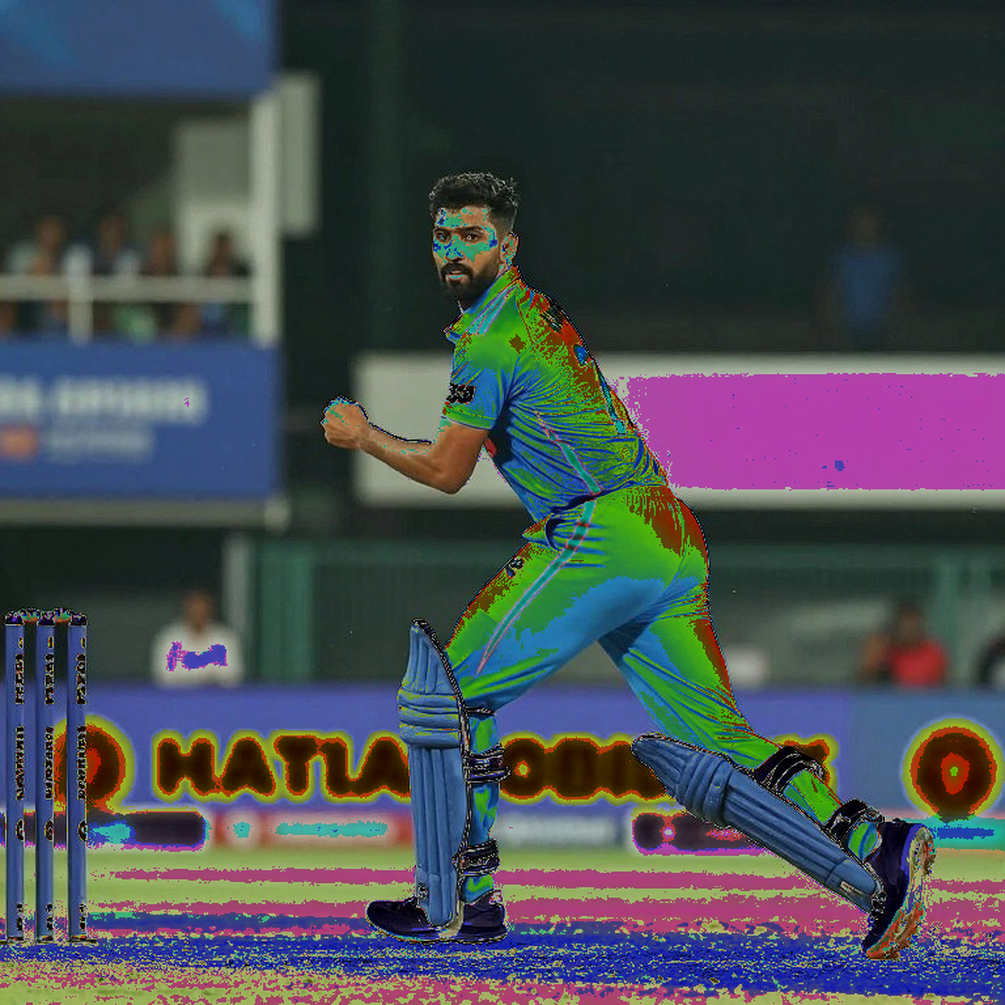
In reality, numbers are only raw material. To reach a conclusion they must be viewed through four lenses: format, context, sample size and time frame. Where all four are absent, what is presented as "analysis" is usually inference, not fact. This is the biggest lapse in both cricket journalism and fan debate: we announce results quickly and examine the method later — if at all.
- The Format Divide: One Sport, Three Different Economies
The most basic analytical error in cricket is measuring Tests, ODIs and T20s with a single metric set. These are fundamentally different games. A Test lasts five days, has two innings, a draw is possible, and time is not a limited resource but a strategic weapon. In ODIs the rhythm shifts across 50 overs — the first ten, the middle thirty and the final ten each follow different logic. In T20 every over is decisive and the price of risk is highest.

So the metrics differ too. An opener scoring at a strike rate of 50 in Tests can be elite, because wearing the ball down and seeing off the new ball is a valuable skill there. The same strike rate in T20 is a burden on the team. Similarly, an economy rate of 3.5 is excellent in Tests and almost unimaginable in T20. The meaning of bowling average and strike rate also changes with format: a Test bowler's job is to take 20 wickets, while in T20 a bowler who concedes eight in three overs and takes one wicket can still push his side towards a win.
The direct conclusion is that format must be settled before any statistic is quoted. When the source material does not even specify a format, every analysis built on it is automatically invalid — because the basis for comparison does not exist.
- The Nature of the Match: Three Categories of Pressure
After format, the second question is: what kind of contest is this? A bilateral series, an ICC tournament, a franchise league, or a warm-up match? The nature of pressure differs across all four.
In a bilateral series the strategy is long-term — teams rotate, test young players, and sometimes continue experimenting even after winning the series. ICC events carry knockout pressure, where one bad day becomes the biggest day of a career. Franchise leagues impose different constraints — overseas player quotas, retention rules, and sometimes the priorities of national boards. The result of a warm-up match almost never matters, yet its numbers are often quoted seriously.
Environmental factors attach to this. The effect of the toss varies with the pitch — spin may sharpen in the second innings in the subcontinent, swing is decisive on a May morning in England, and the pink ball behaves differently in a day-night Test in Australia. If rain arrives, the Duckworth-Lewis-Stern method enters the game, where a victory margin can be quantitatively large yet qualitatively misleading. On dewy grounds, bowling second is inherently harder. The meaning of all this is simple: the scoreline is never the whole story on its own.
- Player Evaluation: The Sample-Size Trap
The most common error in player analysis is drawing large conclusions from small samples. Calling five good matches a "return to form" and ten poor innings a "decline" are both statistically weak. Performance variance in cricket is very high; one outstanding innings can lift an entire average.
The second trap is home data. A batter with a superb average in his own conditions may not hold the same level abroad — and the same applies to spinners in the opposite direction. So every statistic must be accompanied by the question: where is this number from, against whom, and over what period?
The third factor is role. Opener, anchor, finisher, pacer, spinner, all-rounder, wicketkeeper — each role has a different evaluation standard. A finisher's strike rate matters as much as an anchor's average. Judging an all-rounder only by batting average ignores half his value.
The fourth factor is the age curve and injury history. Most batters peak between 28 and 32; fast bowlers often earlier. A player at his peak and one descending from it may post identical numbers that point to different futures. Injury history, workload and rehabilitation records are the hidden story behind those numbers.
- The Team Landscape: Beyond the Rankings
The ICC rankings are a useful starting point, but not the final truth. The system weights recent matches more heavily and gradually reduces the influence of older results, so it indicates direction of travel rather than static capability. A team can be ranked at the top while in transition, and third while emerging.
Real evaluation happens across four dimensions. First, batting depth — can batters down to six and seven score, or is the team dependent on the top order? Second, bowling combination — do you have separate options for the new ball, the middle overs and the death overs? Third, bench depth — how steep would the drop be if a key player were injured? Fourth, age structure — is the team afflicted by a cohort retiring together?
Beyond these is the question of matchups. Style-based clashes in cricket are real: a fast swinging attack can expose a batting line-up dependent on straight balls, and the angle of a left-arm spinner becomes a structural problem for certain teams. These patterns only appear in large samples.
- Leagues and Commerce: The Difference Between Price and Value
Over the past decade cricket's economic centre has shifted rapidly towards leagues. The IPL is now counted among the most valuable franchise-based assets in sport; the Big Bash League is part of Australia's summer economy; SA20 and ILT20 have opened new markets in South Africa and the Gulf; MLC has established a cricket presence in the USA; and the WPL has given women's cricket the platform it lacked for decades.
But here is the biggest analytical mistake — mistaking price for value. The sum a player attracts at auction is not proof of his current ability; it is the product of market demand, team need, available alternatives and the psychology of the auction room. Likewise, a franchise's valuation is determined more by media rights, sponsorship and viewership than by on-field performance.
So every commercial figure should be met with two separate questions: is this sporting value or market value? And is this a cycle peak or a permanent level? Media rights cycles, salary inflation and franchise valuations must be viewed separately, because their momentum differs.
- Governance and Rules: Where Sport Collides with Politics
Cricket's administrative structure is among the most complex in sport — the ICC, national boards and franchise owners, with constantly colliding boundaries.
The revenue distribution question is the oldest and most sensitive. The Indian market generates the largest share of global cricket revenue — by industry consensus around 70 per cent or more — and that fact is the source of political pressure on the ICC's distribution model. When revenue comes from one centre, decision-making power tilts the same way, and smaller boards form coalitions to protect their interests.
At the rules level, controversy is never far away. The Duckworth-Lewis-Stern method is repeatedly questioned, especially when a rain-affected result looks unequal. DRS and the "umpire's call" have split decision-making responsibility between machine and human, keeping the transparency debate alive. Slow over-rate fines, bad light and technical rules such as bat size can also affect match outcomes.
At the player-management level, NOCs (No Objection Certificates), central contracts and league commitments are a permanent source of tension. Mechanisms such as the Right to Match at auctions are attempts to balance competitive balance with team continuity. And credibility is the most serious question of all: the 2026 Cronje affair, the 2026 spot-fixing episode and the 2026 IPL spot-fixing case remind us that the stronger the anti-corruption system, the more manageable the crisis.
- Risk: Injury, Workload and Credibility
The modern cricket calendar is physically unstable. For an international player, three formats, domestic leagues, overseas leagues and travel all run through the year together. The most direct consequence is the workload-management problem for fast bowlers. When a board rests a player, fans read it as a priority error; when it does not, injury risk rises.
The second risk is the loyalty conflict between league and country. Permission to play in overseas leagues, timing of return from injury, and national tours collide constantly. The third is mental health, now taken more seriously than before but still not enough.
The fourth risk concerns betting and fantasy sports. The sector has grown rapidly and bears directly on the sport's credibility, especially where regulation is unclear. The fifth is systemic: over-dependence on a single market. When global cricket revenue rests on one country's media rights, an economic slowdown or regulatory change there can affect the whole sport.
- Public Narrative: The Hype Cycle
Cricket's public narrative moves in fast cycles. One brilliant innings creates a new star; three bad ones make the same star "overhyped". The cycle is useful for entertainment but harmful for analysis — because it establishes emotion before data.
A particularly important pattern is that the conversion rate of players who shine in short-format leagues to international level is often low. The reasons are technical as well as structural: bowling attacks in leagues are of uneven quality, fielding restrictions differ, and the nature of pressure is different.
So every rising narrative should face three questions. First: what is its fundamental basis — performance or mere visibility? Second: how large is the sample? Third: how long can this narrative last? A narrative that cannot answer these three is not news, it is noise.
- Industry Transmission: The Gravity of India-Centric Revenue
To understand cricket's economic structure, look at a transmission chain: at the top, youth development and talent supply; in the middle, national teams and leagues; at the bottom, broadcast, sponsorship, digital and derivative markets.
In this chain the strongest gravity is the Indian market. When the largest share of global revenue comes from a single market, scheduling, format selection and even rule-making tilt in that direction. This imbalance can work both ways for the sport's development — it increases resources but also creates dependence.
The picture in newer markets is mixed. In women's cricket the WPL has recorded notable growth in both investment and viewership, though it is still at an early stage compared with men's leagues. MLC in the USA and cricket's return to the Los Angeles 2028 Olympics are a long-term bet whose effect will show not immediately but over the next decade. Fantasy sports have increased audience engagement but have also pressured the quality of analysis — because individual statistics are valued above team outcomes there.
- Conclusion: Method Is Credibility
The biggest challenge in cricket analysis is not that data is scarce — it is abundant. The challenge is maintaining the discipline to place data in context. Do not quote a metric without settling the format. Do not declare a trend without checking sample size. Make the distinction between home and away data explicit. Do not ignore the nature of the match and environmental factors. And most importantly — check source quality and time frame, because old data cannot be the basis of a new conclusion.
The moment these checks are skipped, analysis turns from fact into inference — and granting inference the status of prediction is the most common and most costly mistake in cricket journalism.
(This analysis is based on publicly available general information and is for sports-information purposes only. It does not constitute betting advice. Cricket outcomes are highly uncertain; treat analytical conclusions rationally.)